
Iconic Key Monastery:
We were supposed to stay in Chicham for two nights. However, the hotel’s inconvenient location forced us to leave after a night’s stay and to reshuffle our itinerary.
‘We have to go to the next destination for the overnight stay. Arpit, can we stay in Losar or Chandrataal?’ I was determined to leave the place after one night’s stay.
‘Chandrattal offers tent accommodation only, and that too has to be booked beforehand, I guess.’ Arpit wasn’t sure about either of these places. ‘I think staying overnight in Sissu is a better idea.’ Arpit recommended.
For the first time, Arpit asked for the altitude sickness pills from us last night. He wasn’t feeling well. We offered him the pills before, but he was confident that he didn’t need them. In this situation, we were worried about the long drive for him.
‘After visiting the places on today’s itinerary, reaching Sissu would take the whole day. We don’t think you should drive for so long.’ We reminded him, but Arpit felt better and said he could drive up to Sissu.
‘Will you be okay to drive? Okay, let’s see how it goes. We will leave Chicham only after visiting the iconic Key Monastery, taking it as we go and seeing how you feel.’ We were in two minds.
Chicham village, nestled in the remote corners of Spiti, is a hidden gem waiting to be discovered. Part of Lahaul and Spiti, this village sits at a breathtaking 13,615 ft. Despite its remote location, Chicham village is gaining popularity among tourists, all thanks to its enchanting landscapes that leave everyone in awe.
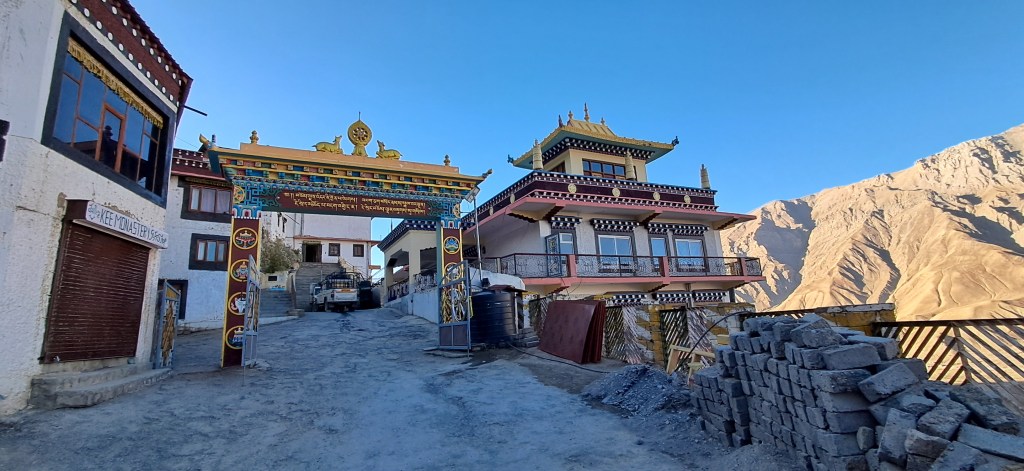
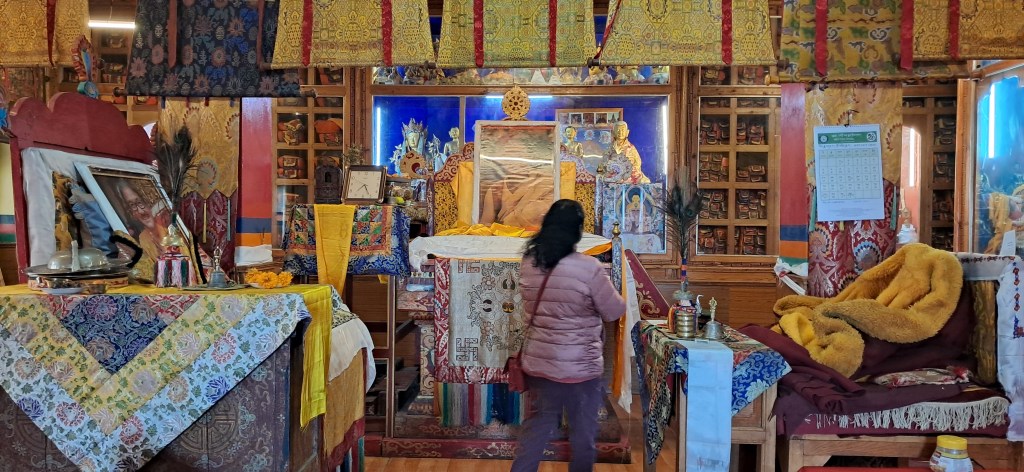
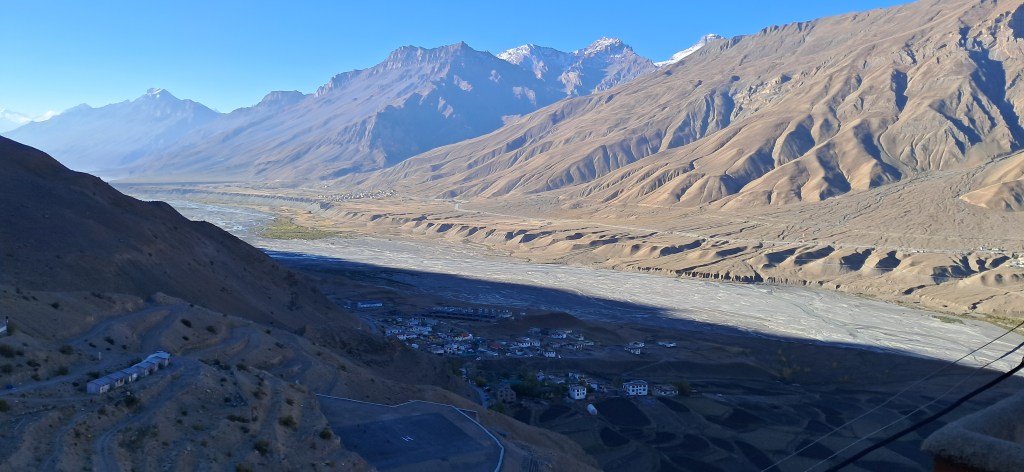
The Key Monastery, a high-altitude and well-respected centre, is the most significant Buddhist learning centre in the Spiti Valley. It is over 1000 years old and is 13,668 feet above sea level. The monastery has three floors: underground, ground, and first floor. It is famous for keeping old murals, rare thangkas (Buddhist paintings on cotton or silk), and ancient weapons. We were filled with anticipation to see them. Arpit parked our car on the ground floor car park, and we strolled up to the first floor. It was early morning, and to our surprise, we were the only visitors. We relished the tranquillity and the feeling of being the chosen few. The main shrine was closed, but a kind Lama noticed us and opened it. The images of Gautam Buddha in the meditation were exquisite. The scenic landscape behind Key Monastery is stunning. No wonder it attracts many visitors who want to see the remote monastery. Surrounded by snow-covered mountains and glaciers, the valley’s beauty is breathtaking. The route to Key Monastery is also scenically beautiful.
The unique fusion of Buddhist culture fascinated me. The magnificent monasteries with prayer flags dancing in the wind captivated me. The rugged, snow-topped mountains drew me in. The sparsely populated villages at long distances intrigued me. The stunning blue Spiti River always allured me. The harsh, desolate, inhospitable terrain, the barren mountain changing its hue every second, showcases tranquillity and enchantment.
Magnificent Chicham Bridge – the world’s highest suspension bridge:
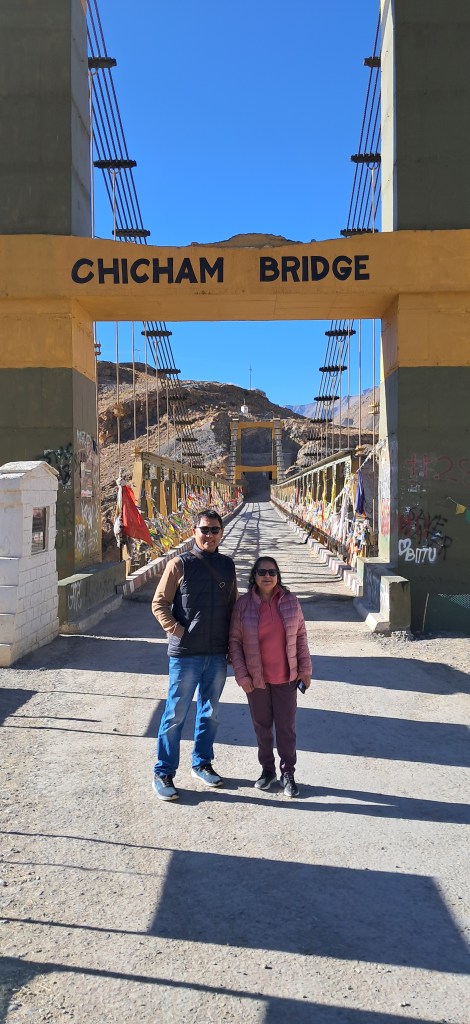
We had to cross the Chicham Bridge again to reach Chandrataal. This time, we stopped here to enjoy this wonder. Chicham Bridge is Asia’s highest bridge. This accolade adds to its attraction. The bridge is not just a marvel of engineering but also an essential link between the villages of Chicham and Kibber. It facilitates travel and connects communities in this remote, rugged terrain by reducing distances. The bridge is a lifeline for local communities, enabling them to access essential services and connect with one another. Chicham Bridge crosses a 1000 ft deep gorge. It is 420 meters long over the deep Samba Lamba Nallah canyon. The bridge’s location in this remote and rugged area of the Spiti Valley only intensifies its allure and beauty. Crossing Chicham Bridge by car was an exhilarating experience; we did it a few times, but walking in the air was thrilling, especially with the deep gorge below. We were a bit scared. The panoramic views of the surrounding mountains and valleys were humbling. Our heads swung every time we peeped through the bridge and looked at the gorge. The experience of walking across was unique.

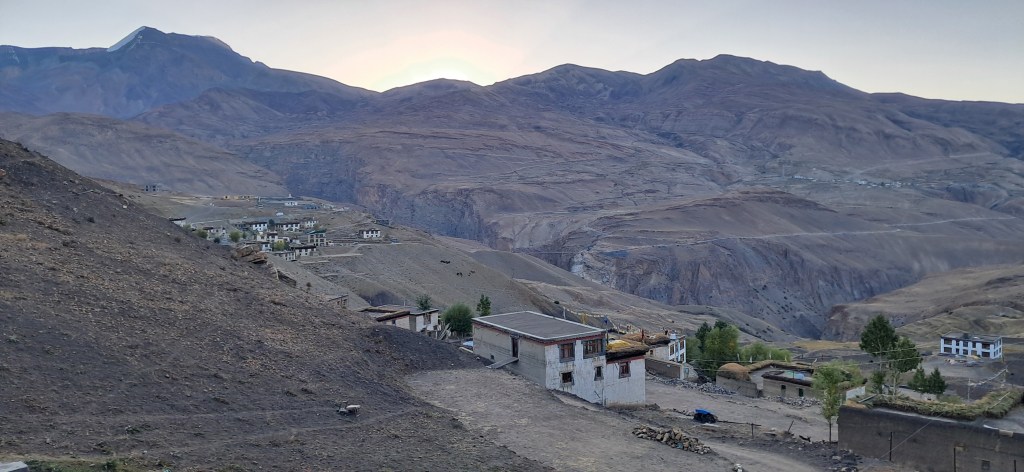
Our journey to Losar via Kiato was a truly unique experience. Kiato’s rugged, yellow, barren terrain is reminiscent of the moonlike landscape of Lamayaru in Ladakh. We passed small villages, each with its unique charm. We encountered local shepherds with their flock. We waved to them, and they waved back, a simple but authentic experience. We had a quick but eventful breakfast at Losar. We were waiting for our breakfast in the open area of a roadside restaurant, and suddenly, the plastic chair I was sitting on gave way and snapped. There was nothing to hold on to avoid the fall. So I fell to the ground. A couple was seated nearby, and the gentleman came to my rescue, picked me up, and helped me. Arpan was inside checking the order.
‘Thank you!’ I said, embarrassed. Everybody found out what had happened and wanted to know how, which caused more embarrassment. After resting for a few minutes, we set out to visit Kunzum Pass through the zig-zag road. Eager for more unique experiences.

Mesmerising Kunzum Pass:
The view from Kunzum Pass was truly mesmerising. The beautiful snow peaks and valleys stretched endlessly, inspiring awe. The pass was adorned with colourful prayer flags dancing in the wind, adding to its spiritual aura. We felt deeply connected to nature.
‘Wow! Out of the world.’ We both said at the same time.
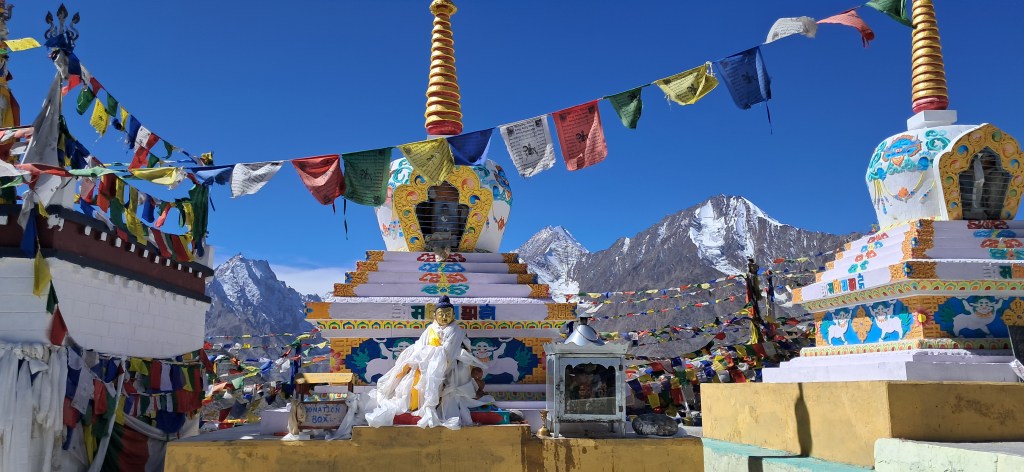

The incredible views and the presence of the Stupas made the place feel genuinely mystic and spiritual. We stayed there in silence for what felt like ages. Kunzum Pass’s spiritual tranquillity, infused in the air, fully absorbed us, leaving us deeply connected to nature. This unique experience is sure to leave you intrigued and eager to visit.
Chandrataal – a high altitude moon-shaped lake with unparalleled beauty:
The road to Chandrataal was entirely off-road, high above the scary gorge of the Spiti and Chandra rivers. We travelled via some lower roads, but they were bumpy, too. Chandrataal (Chandra Lake) was a sight to behold. The drops of blue heaven that twinkle through the boundless sky break up the repetitiveness of rugged rocky mountains. Chandratal defines beauty. Despite the cold wind, mystical energy spread around the place. Dancing Buddhist prayer flags symbolised peace and harmony. They revealed the secret of Lahaul and Spiti’s surreal yet magical topography. Chandrataal is the origin of the River Chandra. As the name suggests, the crescent-shaped moon lake is linked to many intriguing legends. These legends and folktales unravel the mystery of Chandratal Lake and its breathtaking beauty.
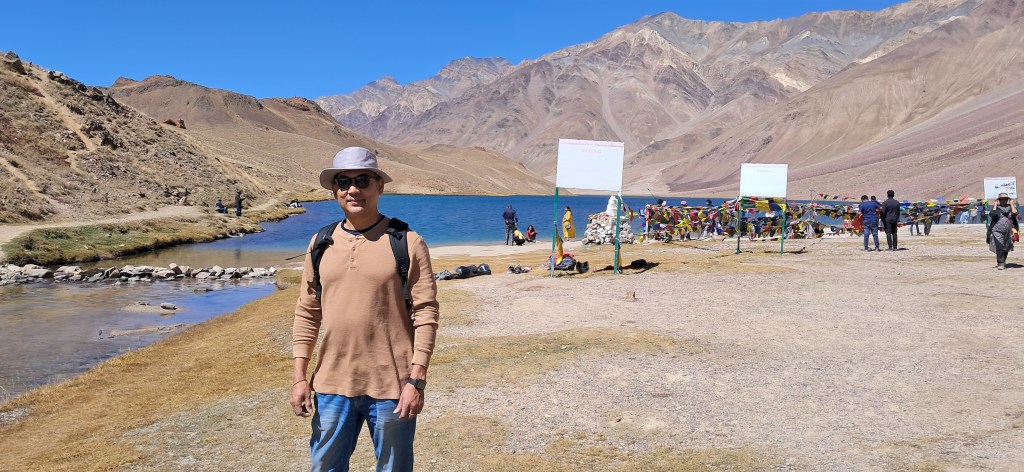


There is no doubt that Chandratal holds its magic. Swimming in Chandratal Lake is strictly prohibited. It not only hurts the religious sentiments of locals, but it is also risky. High altitudes and cold water can lead to hypothermia. A 1.5 km return trek felt like a medium gradient, even though it was 14100 ft. We puffed a bit. It was warm during the day. Fresh mountain air worked magic, cooling us down quickly. On the way, we drove past the camping grounds, with many tents of different colours scattered across the mountains where people could stay overnight.
‘I will check whether any accommodation is available here.’ I discussed this with Arpan, thinking Arpit had had enough driving for the day.
‘No, I feel okay driving to Sissu.’ Arpit was adamant about driving us to Sissu.
Walking back from Chandratal, we overheard a group discussing their lunch. Their travel agents had thoughtfully arranged their meals, a luxury we envied. The conversation about their delicious lunch left us hungry, but there was nowhere to buy food. We noticed other groups enjoying their meals together, all brought by their travel agents. This highlighted the importance of planning meals on high-altitude journeys with limited food options. The aroma of the group’s freshly cooked lunch teased our senses, making the disappointment even more apparent.
Arpan didn’t believe me when I told him, ‘The travel agents cook their customers’ lunches and bring them with the sightseeing.’
‘I don’t think they bother to cook and bring lunch.’ But he believed Arpit when he confirmed what I said.
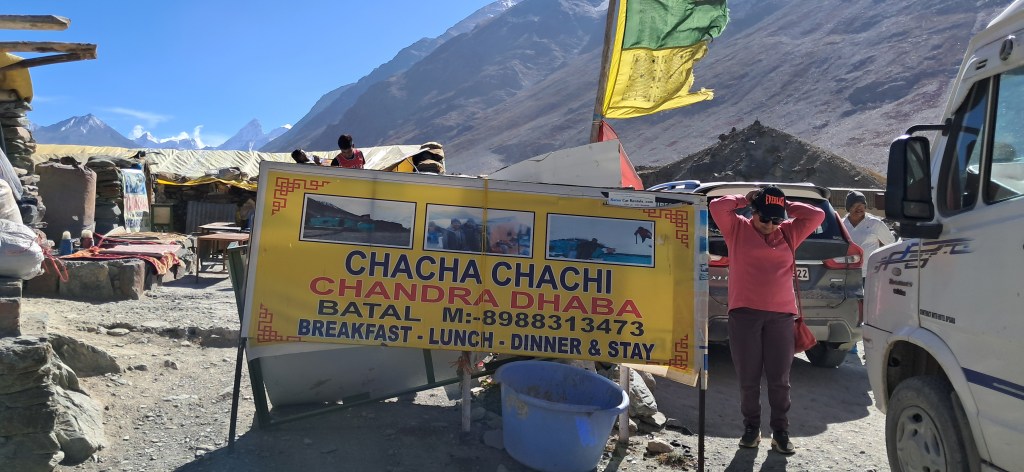
Arpit had been telling us about our lunch at Chacha Chachis Dhaba at Batal.
‘We will soon reach there, ‘ he comforted us. We were excited to have good home-cooked food, but it took 1.5 hours to reach Batal. I was starving. By the time we arrived, all the good food was gone, leaving us to feed on Rajma Chawl. ‘It isn’t ideal, but something is better than nothing,’ Arpan sympathised with my disappointment.
From Batal, the mountain roadwork started on the Gramphu-Batal-Kaza Road, and we got stuck in traffic a few times. It was the end of September, and the roads would be closed from mid-October as the snow set in. So, the people of BRO were working day and night to fix the roads. They were letting people pass at intervals while they could work in between. We were worried. Night set in, and, scared to travel in this rough, mountainous terrain, we asked, “Can we find any hotel nearby?” Arpit couldn’t recommend any accommodation nearby. So we had to continue the drive to Sissu.
Soon after Batal, we crossed significant water crossings, one after another. We kept coming across streams from the river to the point that the watercourses created small puddles throughout the journey. We were absolutely terrified to skid. Our hearts were in our mouths while travelling through the deep Chandra gorge at night. If the wheel skidded just one bit, our car would fall into the deep gorge. The road condition deteriorated steadily; sometimes it was just rocks substituting for the road, with just enough space for the car’s wheels. There were no lights other than those from the car passing by rarely. I tried to calm myself by not looking down into the valley on the side, but keeping my eyes straight ahead, on the small puddles we were crossing. However, I couldn’t take my eyes off the ethereal beauty of the silver-lined Chandra River flowing deep down the valley. The sound of the rushing water added to the eerie atmosphere. Everyone was quiet in the car, feeling God guiding us through. If we saw any light ray, our heart said, ‘This is it. We are nearly there.’ No, still a long way to go. Though tensed, Arpit drove with heightened care and caution, but the scary road was never-ending.
When we reached Gramphu, we breathed a sigh of relief. The road was concrete and excellent. We got a glimpse of the Atal tunnel on the left-hand side of our drive through Gramphu, Khoksar, and Sissu via the Leh-Manali Highway. Our destination was Sissu.
It took 5 hours to reach Sissu from Batal. A couple of kilometres from the town, we saw a long queue of cars. Our car stopped, and nobody could tell us what had happened. Everyone was guessing but patiently waiting. We couldn’t contain ourselves to their calmness.
‘What happened? Can we get accommodation in Sissu?’ we asked. It was 8:20 pm, and we had yet to book any accommodation.
Arpit was calm as well and assured us that we would. ‘It looks like the front section is flooded with gush of water still falling from the waterfall on the roadside. Don’t worry. Lots of tekkars arrive here very late. These hotels are open 24/7.’
Finally, at 9.30 pm, we reached the town after our turn to pass the flooded section. The military ensured a smooth passage for us with efficient traffic management. We quickly booked the first hotel Arpit suggested, feeling relieved and grateful for their assistance.
Summing up our day, we thought the uncertainty of the situation added a thrilling element to our journey, and we felt excited and engaged.
 callofthefar.com
Part 4 – Spiti Valley was the best of the best. It was a spiritual connection with mother nature.
LikeLike
Great coverage of local culture and monasteries—very insightful.
Get a complete cultural experience with our Spiti Valley tour packages at Sage Holidays.
LikeLike
Thank you for your feedback. Spiti Valley is amazingly beautiful.
LikeLike