
Continued from Call of the Mountains – Enchanting Himachal Pradesh Part 1
Amazingly beautiful Shimla:
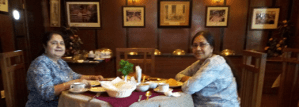
The hotel staff at Woodville Palace Hotel went above and beyond to make us feel like royalty. Three dedicated individuals served us at the breakfast table, ensuring our every need was met. Their exceptional service made us feel truly special, and we both agreed that we would love to return to this hotel.
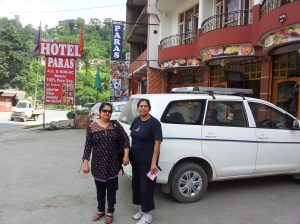
The seven-seater Toyota Innova car we’ll be travelling in for the next few days arrived. Our driver/guide for a few days was a very polite and humble gentleman named Anil Kumar. We discussed our itinerary with Anil. Suvra had a few more places in mind, but sadly, we did not have enough time to cover them all. Anil would work out the best possible route to cover as much as possible.
“Let’s visit Kufri first, a famous hill station only 13 km from here. You will like the place”, Anil suggested. We decided to travel to Kufri for its natural beauty. The scenery on the way was terrific, with winding roads, passing through Cedar and Himalayan Oak trees, mountains covered with vegetation, rhododendrons on the roadside, firs, and mist-covered peaks, with the sun playing hide-and-seek as we passed by – the journey was out of this world. We felt like sitting by the roadside, enjoying the scenery forever, and wishing the journey never ended.
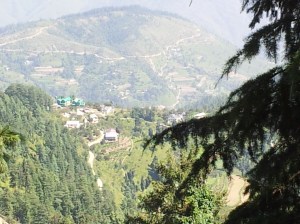

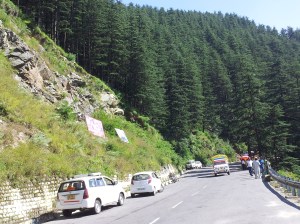
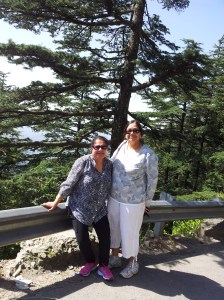
After reaching Kufri, we headed towards the Himalayan Zoo. Located in dense forests, the Himalayan Zoo houses the Tibetan Wolf, Brown Bear, Black Bear, Musk Deer, and Barking Deer, which are native to the Himalayan terrain. It was heartwarming to realise how the Zoo was headed out to provide more extensive and natural enclosures for most animals. All the compounds offered sufficient protection to the animals against climatic differences, meeting their biological needs. The animals were kept in the best possible natural environment here. The Zoo had Zooew quiet walking trails inside. We were enthralled to walk the trails, enjoying the picturesque scenery around the cedar trees. Kufri was an excellent place to visit.
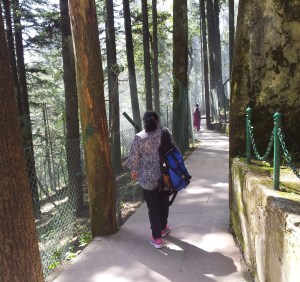
On the way to Chail, Anil narrated a bit of its history. Maharaja of Patiala Bhupinder Singh established Chail as his summer capital. Located at 2250 meters, with a thick cover of pine and cedar trees, mesmerising natural beauty with its lush green meadows and stunning mountain views, and a peaceful ambience to complement, Chail felt like nothing less than a wonderland. Chail Palace was a magnificent building set on a manicured lawn. We had a break first and ordered morning tea at the Palace.
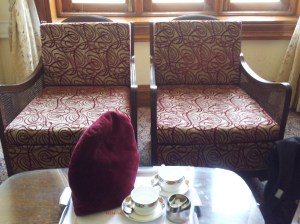
We loved how the Palace still preserved the feel of a bygone period, with its long, dark hallways and large decorative chandeliers. Even the rooms had the names of Maharajas (King), Maharanis (Queen), and Rajkumaris (Princess). The Himachal Pradesh Government now uses the Palace for Tourist accommodation.
We loved the architecture and the museum’s collections. After visiting the museum and seeing local artwork, we decided to have lunch.
“Let’s have lunch at the Kings’ Dining Hall and experience a bit more royalty, ha?” I was waiting for Suvra’s response.
“Let’s do it,” Suvra replied, and we took our seats at the Kings’ Dining Hall, now a restaurant.
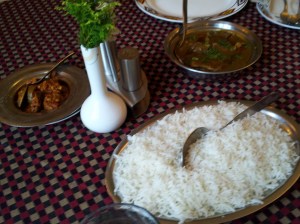
The restaurant was decorated with royal wooden furniture. Surprisingly, the food was not too expensive, and the menu offered many options. We ordered malai kofta, a creamy and flavorful vegetarian dish, karahi chicken, a spicy and tangy chicken curry, and rice. Even though they took a bit longer to serve, the staff were polite. The serving portions were enormous, and we thoroughly enjoyed the food’s taste and the room’s ambience.

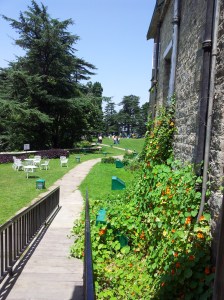
We sat down on the lush, green, and neat lawn of the Palace Garden for some time, absorbing the bliss and divinity of the blooming rhododendron, seasonal flowers, maple trees, and faraway, faraway-covered thick forests. We could even smell the wood, which added to the peaceful vibes. We found Chail Palace rustic, but the surroundings were scenic and tranquil.
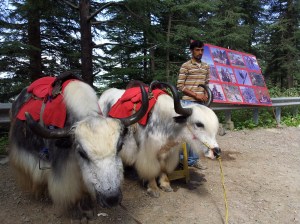
We met a few locals on the way who were requesting us to pay for a ride on a Shimla Yak. The Yak is an essential animal for the people living up in the mountains. They drink yak’s milk, use it to transport luggage, and use leather to protect them from the cold. The locals wear overcoats made with yak leather to keep them warm. Yaks are heavily built and have fur that hangs below their bellies. We didn’t particularly like riding on any animal, but we didn’t want to miss the chance to go up close to the beautiful creatures and help the locals. We took photos instead of taking the ride and gave them the fee.
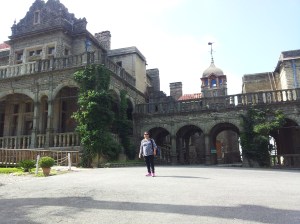
Viceregal Lodge played a vital role in Indian history. The Lodge endorsed the famous Shimla Convention in 1945 and the Shimla Treaty in 1972. Located on the top of Observatory Hill, the place provided beautiful panoramic views. The site was constructed in 1888 and features incredible architecture, with exquisite walnut, Burma teak, and local cedar. The history of Imperial India was well documented and preserved. It was saddening to be reminded that the country’s partition deals were signed in this building. As we walked through the halls, I couldn’t help but reflect on the weight of the decisions made within these walls.
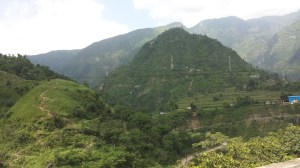
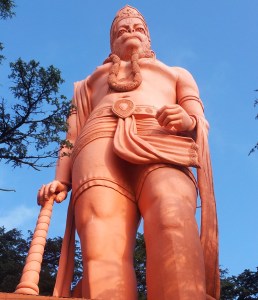
Anyone entering Shimla can see from afar a giant 108-foot-high statue of Hanuman (the Monkey God) nestled on Jakhoo Hill.
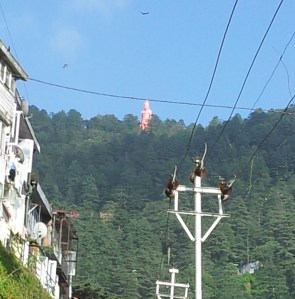
The Myth: In keeping with the legend of the Ramayana, Lord Hanuman took a break at this spot and rested before continuing his search for the Sanjeevani Booti (medicine) to resuscitate Lord Lakshmana.
The temple’s fantastic setting amid the hills, with thick, mighty Cedar trees, attracted me the most. I didn’t want to miss the chance to appreciate the statue of Lord Hanuman up close and to enjoy the 360-degree panoramic view of Shimla from the lookout.
Monkeys were abundant in this place. Anil warned, “Don’t take your sunglasses or the camera”. Suvra decided to stay back. Anil said, “Take a stick, Ma’am”, but I didn’t find it necessary. As I started climbing the stairs, someone called, “Can we come with you?” I turned to see a couple, scared of the wild monkeys, wanting to accompany me. I giggled to myself! They asked, “Aren’t you scared?” “Hide your sunglasses or cameras. You won’t be a target”. They then followed me. I hid my mobile in my pocket and made sure the monkeys couldn’t see me taking photos with it. The actual temple was small but very nice and clean. The views from the top were breathtaking, with glorious landscapes of lush green hills, patches of woods, and a peaceful atmosphere, all overlooking the city. I was glad that I made it.
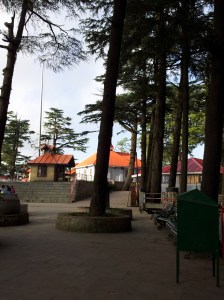
The Shimla lift was an excellent concept for tired tourists. Anil dropped us off on Cart Road as there was no parking on the busy Mall Road. So, we took the lift to go up to Mall Road. We found that Mall Road was constructed at the heart of the town in a very strategic, planned way, while banning vehicle entry. Although cycles and rickshaws were allowed, the place was mainly built for people who liked walking around, like us, and for enjoying the city’s scenic beauty. Being in the busiest commercial area, we noticed Mall Road offered Restaurants, woollen clothes, handicrafts and pottery items, jewellery, and books, along with its famous wooden furniture shops selling exquisite wooden articles.
We went to The Ridges, the famous Shimla Mall, in the evening. We were trying to find the shortcut to the Ridge but were a bit lost. Then, we located an uphill road and started following the people. Wow!!! What a vast, beautiful, flat spot on the top!!! While walking through the Ridge, we saw Shimla city on one side and the mountains on the other. The Ridge appeared to us as a place with shops selling exclusive artifacts and beautiful restaurants offering an incredible view of the snow-capped mountain ranges set against the twilight. Everybody enjoyed the outing there, making it the centre of all social activities. We took photos in front of the Ridge’s most famous landmark, Christ Church, a Neo-Gothic structure.

Restaurants on the Mall specialise in local cuisines and delicacies from nearby cultures. The area was a joy to wander around. We didn’t even know how the time passed us by. We took a walk, soaking up the atmosphere, and decided to have our afternoon tea at a famous restaurant called Ashiana. With the glass window surrounding us, we were ideally placed to enjoy the view of Shimla city on one side and the Mall on the other, not to mention the delicious Chicken cutlet we ordered.


Tale of two Rivers (the Sutlej and the Beas)
The next day, we left Shimla for Kullu, vowing to return. We were excited to see the Sutlej and Beas Rivers on the way. It was thrilling to drive up the winding road, past quaint villages and uninterrupted views of lush green hills. We met the mud-coloured Sutlej River first on our left-hand side. The Sutlej originates from Rakshasa Lake (Rakshastal) in Tibet and is the longest of the famous five tributaries (the Five Rivers – Sutlej, Beas, Chenab, Ravi & Jhelum) of the Indus River.
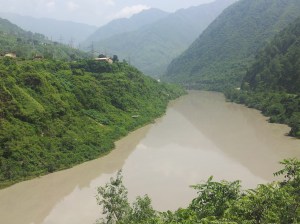
We stopped at the junction where the Sutlej crossed the road and flowed to the right-hand side (the actual direction of flow is right to left). The water seemed stagnant and calm on the surface. After taking a few photos, we were back on the road. We first met the gorgeous Beas River at Mandi, a small country town.

Visiting Pan Doh Dam was on the itinerary. The Pan Doh dam nearby was created mainly to generate hydroelectric power on the Beas River. It was so depressing to learn so many lives had been lost when Anil showed us the place where the tragic incident of 24 engineering students drowned when the Beas authority released the water from the dam.
The aqua blue Beas sparkled along its bed, over rocks and tree branches. Imagining the ferociously flowing water from the Rohtang Pass, we were immediately drawn to the Beas River’s beauty and serenity. Anil informed, “Beas River has two sources; the source to the right of the Rohtang Pass is the Beas Rishi, considered to be the place where Sage Veda Vyasa meditated, and the second source is located to the south of the Beas Rishi, that is, the Beas Kund. The river landscape’s appealing look hypnotised us, and it was truly awe-inspiring. The beauty of the Beas River was so captivating that it left us in awe of nature’s grandeur.

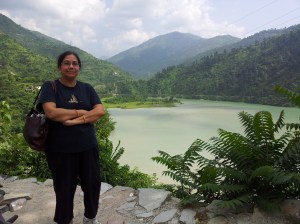
On the right-hand side of the river (which was also on our right-hand side from Shimla to Kullu on the Kullu-Manali Highway), we came across a village called Thalot. We saw only some very narrow suspension bridges. They are the only way to cross the furiously flowing Beas River to the mountain village of Thalot. There was no proper road to the top of the hill where the locals work in the fruit orchards.
“Can you see the trollies going up and down on the right-hand side?” Anil explained the residents’ unique lifestyle. “The villagers use the trolley to transport the fruits down. They receive general stores and other things needed for living sent up by the cart”. We stopped for a while and watched the transfers – quite a rigorous way of life!!! They couldn’t come down the road without access to the road. You had to see it for yourself to understand the way they live. It looked like a lot of effort. They had to depend on their feet to climb up and down the mountains otherwise. This unique way of life was intriguing and inspiring, making us respect the villagers’ resilience and adaptability.
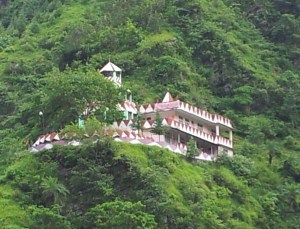
On the way, an attractive red-and-white-coloured building tucked into the hills, relatively high up on the other side of the Beas, caught our attention immediately. “The temple looks vibrant in this green setting. How do people visit”? I asked. Anil informed, “This is Anokhi Maa Temple, and only the priests go there using a boat to cross the river and then walk up to the temple”.
The wanderlust inside me imagined walking alone to the temple along the steep, narrow path and enjoying every bit of the lush green vegetation.
Sublime Kullu Valley
We were sceptical about our hotel in Kullu, but it turned out to be perfect. As we came out of our room, we found an open terrace with a spectacular view of the Kullu Mountains and winding roads, with the River Beas in the foreground. We spent our afternoon having tea on the balcony overlooking the magnificent Kullu. The terrace garden was beautifully decorated. The tranquillity of the hotel and the serene view of the Kullu Mountains made us feel relaxed and at peace.
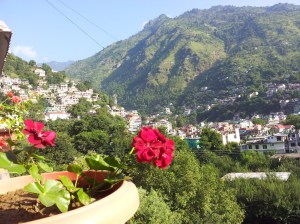
Looking at the mountains and winding roads up to and across them, I felt my heart fly past away across the sky to an unknown path. I sat quietly for some time.

In the evening, we decided to visit the Beas up close. The hotel is close to Kullu Maidan (Kullu Field Grounds), famous for the Daserra (Religious Fair), held annually. So we caught an auto from the ground to the riverbank.

The Beas was flowing ferociously and needed to be fenced
Alas! We couldn’t go near the Beas, as it was flowing ferociously and required fencing. So we went to visit the marketplace instead. The Market was very crowded and noisy. We spent the evening watching the locals shop for groceries and talking to them.
To be continued…..
Apologies for the poor photo quality
Photos: Self and Suvra Mitra
 callofthefar.com
Looks beautiful. Love the pics! Greetings from London.
LikeLike
Thanks a lot!
LikeLiked by 1 person