
Our first-night stay in my favourite Lahaul:
When we arrived in Sissu at 9:30 p.m., Ajay, one of the hotel staff, explained the reason for the long queue before entering the city and how the situation was handled.
‘A landslide at a nearby waterfall had dislodged large chunks of stone, creating a waterlogged path. Engineers managed the situation by cutting some barriers on the lower side of the mountains. This allowed the water to flow into the valley.’
While a testimony to the valley’s natural challenges, this incident highlighted the local community’s resilience and adaptability.
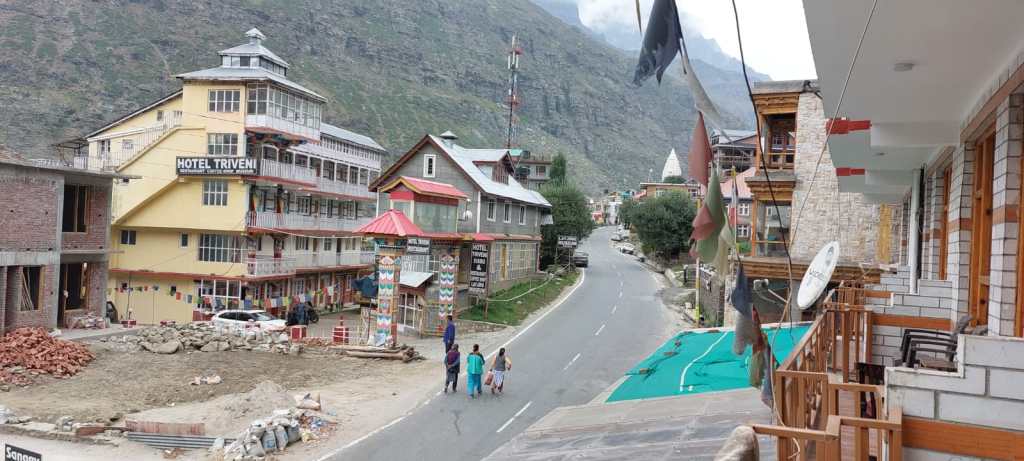
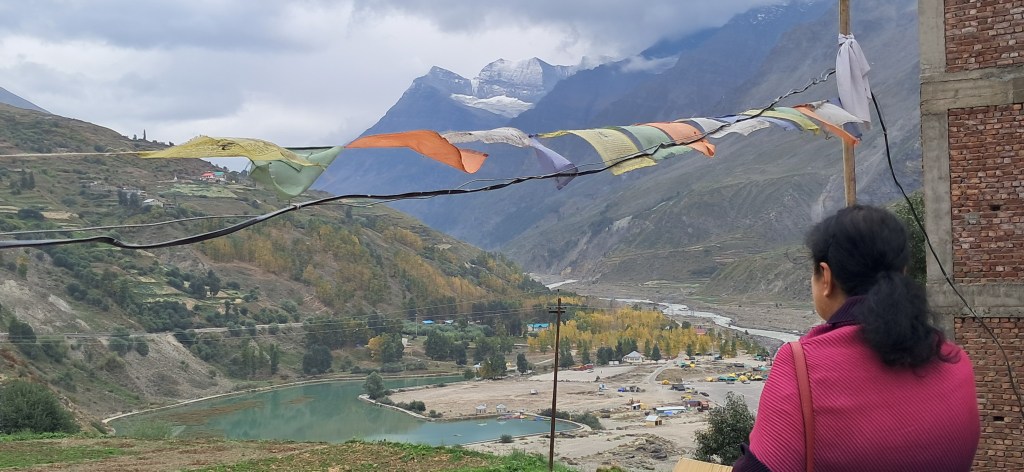
Today, we woke up to a breathtaking view of Sissu Lake and the majestic waterfalls from our window and balcony. The sight of people camping near the Lake added to the charm, set against a stunning scenery. It was a well-deserved day off after yesterday’s long journey. Arpit had been at the wheel for a considerable time, navigating the treacherous roads at night. We decided to take it easy and enjoy the beauty that surrounded us.
On the way to Keylong:
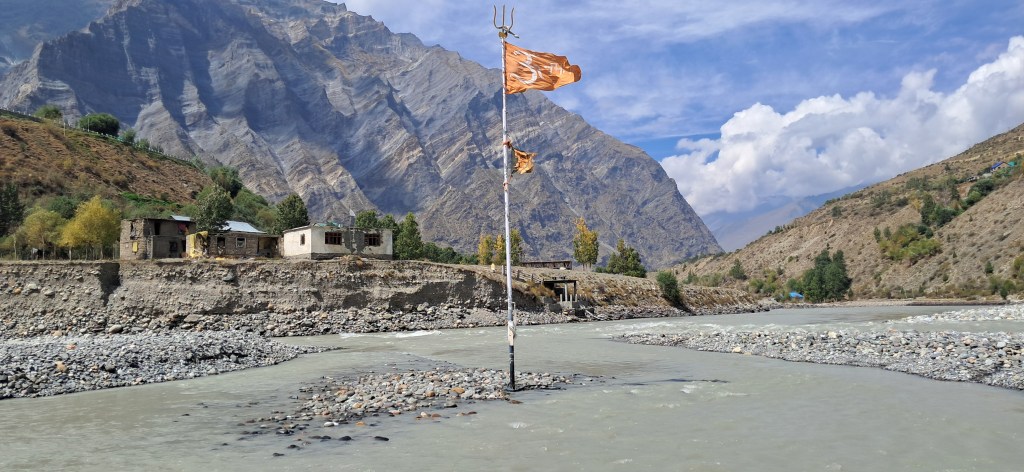
The confluence of the Chandra and Bhaga rivers at Tandi stands as a vital cultural and geographical landmark. This meeting point, where the Chandrabhaga River originates, presents a spectacular sight, as it later flows into Kashmir as the Chenab River. The Chandra and Bhaga rivers, each showcasing a distinct colour, emerge from opposite sides of the Barlacha Pass in Lahaul. We eagerly descended to the confluence to fully experience the serene sounds of the flowing water and witness the dramatic merging of these two rivers. The tranquil atmosphere at this confluence instilled in us a sense of calm, showcasing the diverse and awe-inspiring natural beauty of Himachal Pradesh. We wrapped up our time in Tandi with a satisfying lunch at a roadside dhaba near the confluence before continuing our journey to Keylong.
Keylong, at last, took me so long to visit:
Keylong is the administrative centre of the Lahaul and Spiti districts and, perched at a staggering altitude of 10100 ft on the Manali-Leh highway, is a place of unparalleled beauty. This serene hamlet is often called the Land of Gods. It showcases the awe-inspiring beauty of its pristine landscapes, snow-covered peaks, and crystal-clear rivers, leaving us deeply appreciative of Himachal Pradesh’s natural wonders. I felt nostalgic arriving at Keylong. This is my first time, but I read so many books about Keylong that it felt like a revisit.
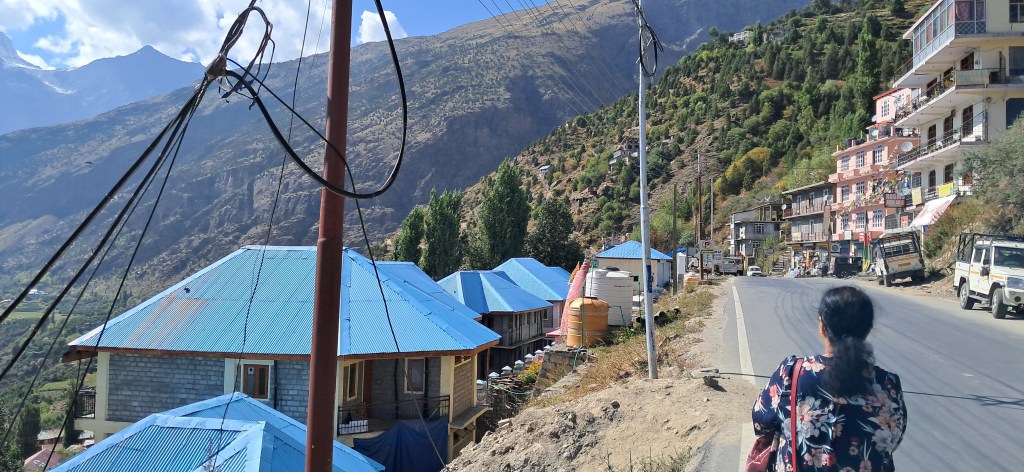
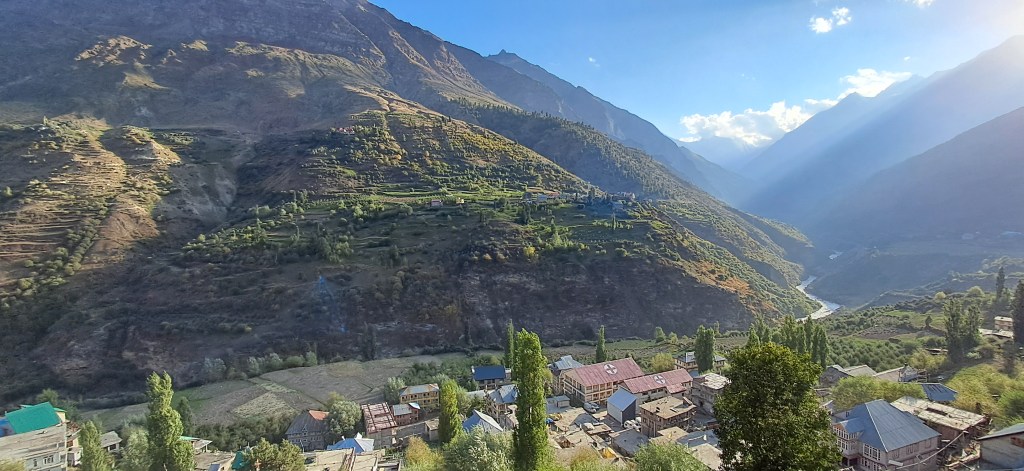
The homestay we booked at Keylong was deep in the valley, offering a unique perspective of the surrounding beauty, but it lacked parking, and we had luggage. So we were drawn to another simple homestay on the roadside that boasted a breathtaking view. Named after the Lahaul mountain peak, Drilbury, it featured a balcony overlooking the entire valley with the Bhaga River meandering through. The homestay, though basic, provided a million-dollar view from its terrace. The rooms were clean, cosy, and comfortable, and the owner, Manu, was a gracious host, making us feel completely at ease.
‘I’m sorry, but my wife has gone to her parents’ house.’ Manu apologised when asked about lunch and dinner.
‘Never mind. It allowed us to explore beautiful Keylong, looking for where to eat.’ We comforted him.
We had a simple lunch at roadside restaurants.
A beautiful mountain road lay on one side, with mountains and a valley on the other, a sight that filled us with admiration and a deep sense of connection to nature. Manu made us nice cups of tea in the evening and gave us some pomegranates. ‘Where are you going from here?’ Manu asked us and was delighted to know that we were visiting Trilokinath. ‘Hardly anyone visits Trilokinath. It is great that you thought of visiting this beautiful temple.’ Knowing our itinerary, he added, ‘Instead of Mandi, I recommend you go to Rewalsar and stay overnight. There is a beautiful Buddha statue and a serene lake. The place is a confluence of Buddhist, Hindu and Sikh religions. It is a lovely hill station as well.’
He lured us to visit the beautiful Buddha statue on the Lake there. A few days later, we changed our stay from Mandi to Rewalswar on his recommendation.
We spent the night in Keylong, a gateway to the Trilokinath temple, a revered site known for its unique blend of Hindu and Buddhist architecture.
Pattan Valley and Trilokinath – a long-time wish came true:
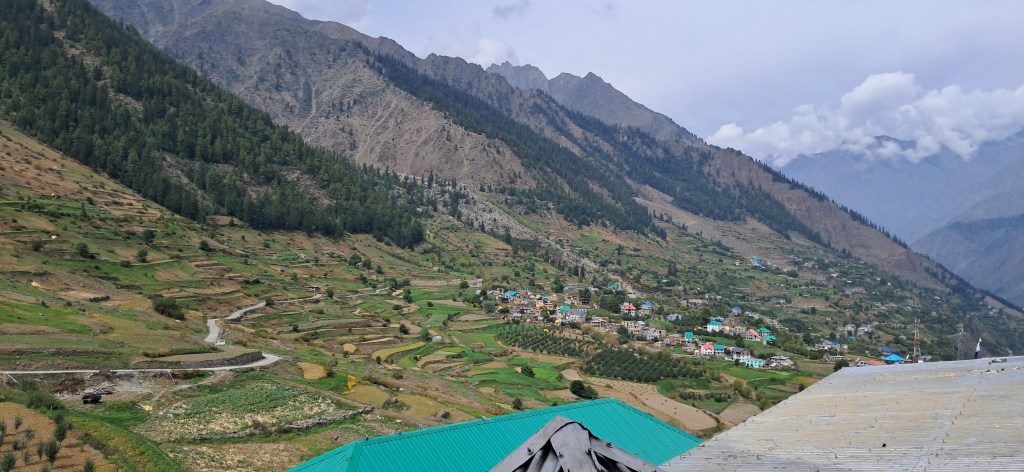
Two main roads started from Keylong. One is NH 3, travelling to Ladakh, and the other is the Tandi-Kishtwar road, travelling to Kashmir via the Pattan Valley. Pattan Valley is one of the most beautiful valleys in Himachal Pradesh. We were lucky to experience the picturesque valley on both sides of the Chandrabhaga River on our way to the Trilokinath Temple. Pattan Valley is less explored. The landscape changes as we drop in altitude to an average of 6000 ft, down from Keylong’s 10100 ft. It becomes scintillating green once we enter this beautiful valley. This fertile valley becomes greener and more serene as we travel deeper into it. Every turn on those winding roads offers something new to take with you. The colourful little houses stood among the agricultural fields. Chandrabhaga ran beside them. I felt like I was travelling through a fairyland. We stopped at Jholing and had a tea break beside an apple orchard. I was excited to see the different-coloured hanging apples and couldn’t get enough of them. We turned left onto Trilokinath Road, primarily off-road, and reached the temple at the top by going through the village.
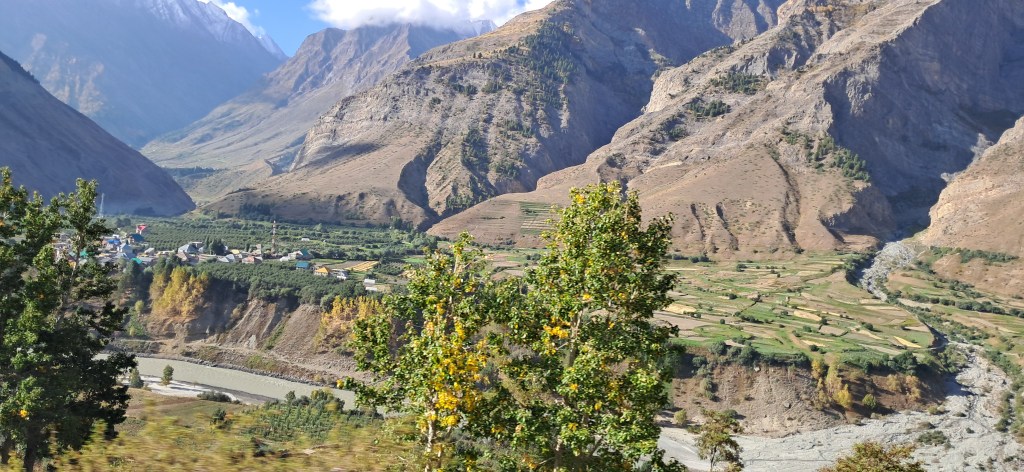
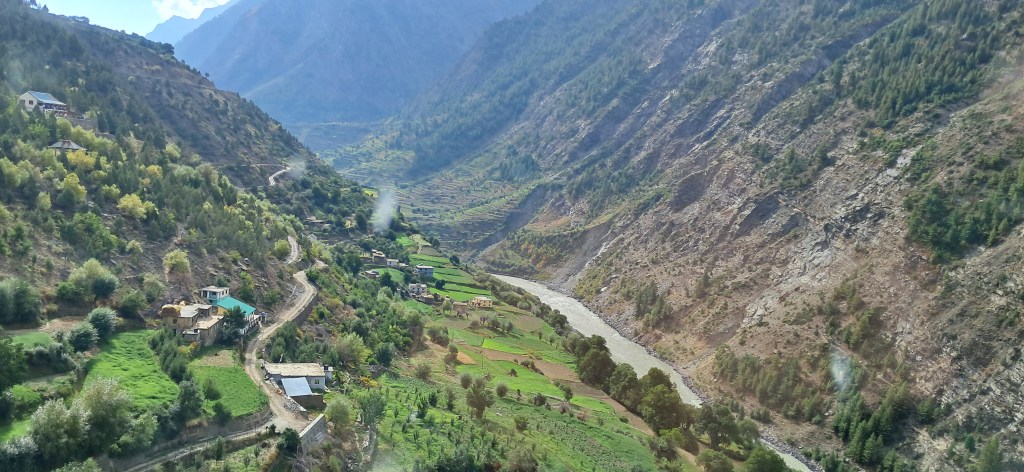
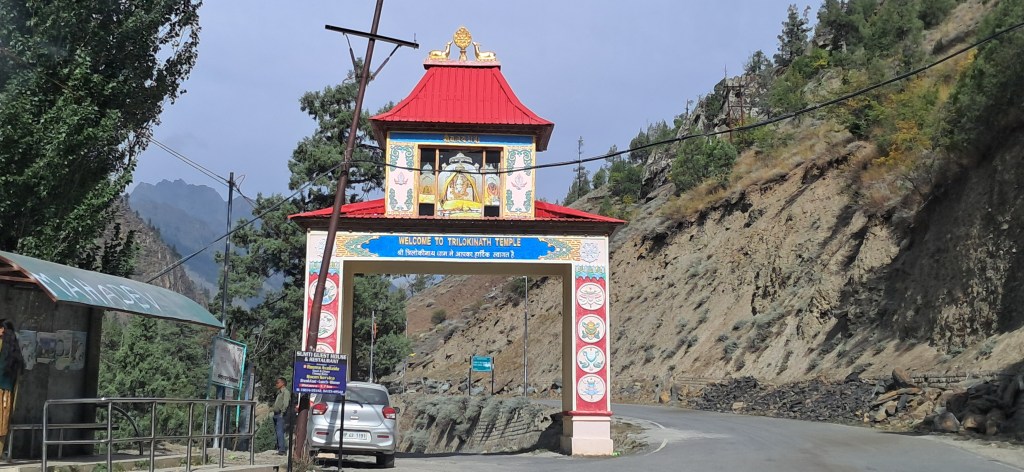
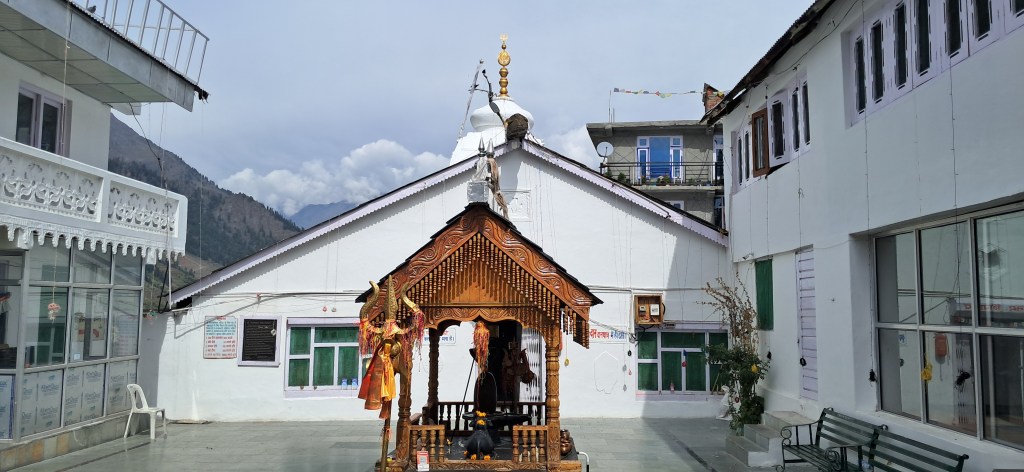
The temple, located 45 km from Keylong at an altitude of 9,055 ft, holds a special place in the hearts of locals. Trilokinath, lord of three universes, is worshipped by Hindus as ‘Lord Shiv’ and Buddhists as ‘Arya Avalokiteshwar’. It is one of the few temples worldwide where Hindus and Buddhists worship the same deity, underscoring the unity and diversity of our cultures. This temple is among the most sacred to the people’s deep-rooted faith. This understanding of the temple’s significance filled us with respect and a deeper appreciation of the local culture.
We were greeted by a small, beautiful courtyard with a small Shivling, Nandi, and a Buddhist prayer wheel as we entered. Two pillars stood on either side of the main deity. It is believed that only a person who has not committed sins can pass from the sides of the pillar, a tribute to the temple’s strict adherence to purity and righteousness. These customs and beliefs instilled a sense of reverence and respect. The image of the temple’s interior was dazzling. I was rapt by the intricate carvings and the serene atmosphere. However, our time inside was brief, as the military officials guarding the temple managed the crowd efficiently. I simply couldn’t take my eyes off the magnificent statue and had to be told to leave. Triloknath is also famous for its scenic beauty. The valley, the village, and the mountains on either side of the temple were truly magnificent. Arpit, our driver, thanked me for the opportunity to drive us to Triloknath. ‘Thank you for showing me a new place. I’ve never seen this beautiful temple.’ Although he is an experienced driver who regularly drives through Kinnaur, Spiti, and the Lahaul Valley, he had never travelled here, and his excitement was apparent.
A hidden gem – Mrikula Devi Temple:
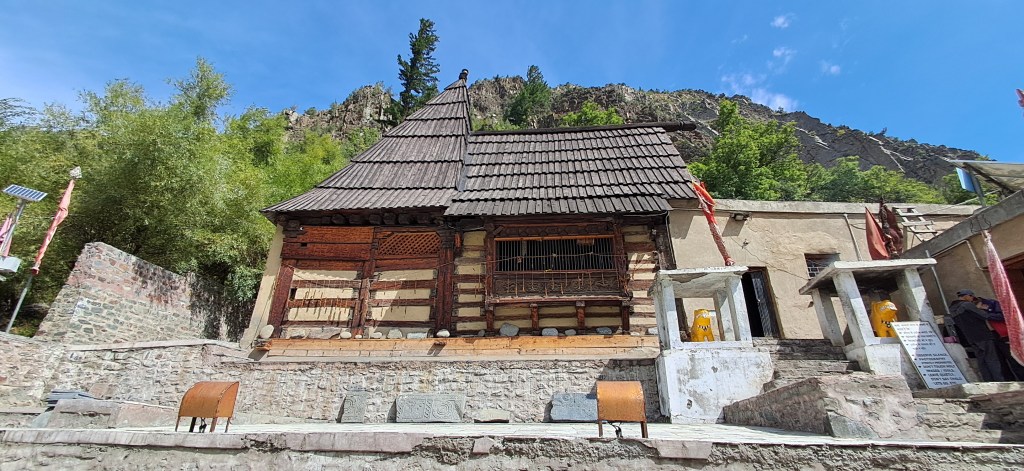
Mrikula Devi Temple in Udaipur, in Himachal Pradesh, is dedicated to Mrikula Devi, an incarnation of Goddess Durga or Kali. It is one of the most holy sites in the Spiti Lahaul valley. The temple dates to the 11th or 12th century and is located in Udaipur’s prominent marketplace.
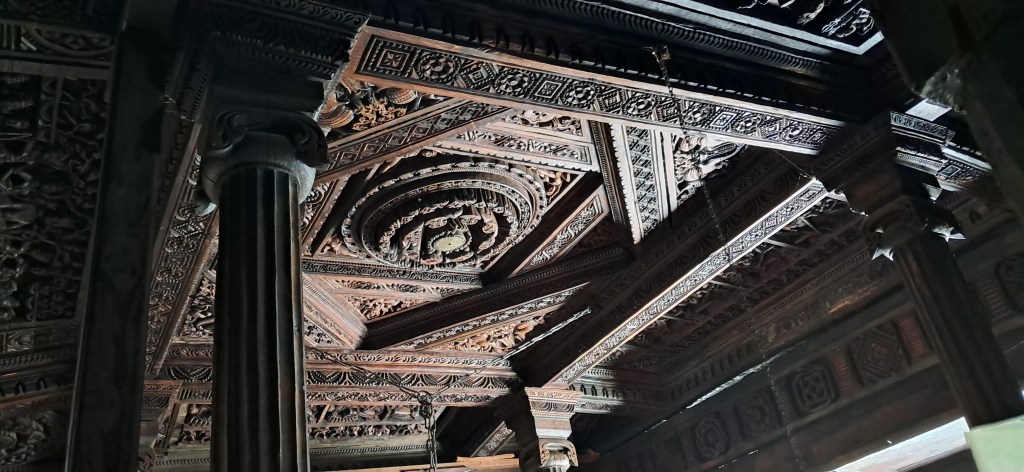
From the outside, the Mrikula Devi temple appeared small and unassuming. But as we stepped inside, we were met with the most exquisite artwork. The interior was adorned with magnificent wood carvings, a transition between Kashmiri and Buddhist arts. The latter’s influence was evident in the temple’s inner facade. At the same time, the three-headed image of Lord Vishnu, a representation of the former, added a surprising twist to the temple’s artistic narrative, sparking our curiosity and intrigue.
The door to the main temple chamber was small, and we had to bend to enter. The silver idol of Kali Maa is a rare and exclusive piece combining Kashmiri, Tibetan, and Rajasthani styles. Once we entered the temple, the priest offered us sweets in worship of Mrikula Devi. The temple is a sight to behold, decorated with intricate and meaningful artwork that piqued my curiosity.
We requested that he educate us about the legend of Mrikula Devi. The priest said, ‘The wood carving is done from a single large wood block. It is said that Bhim, the strongest of the five Pandava brothers, carried a tree here when they spent 14 years in exile. The exquisite wood carving was done by Vishvakarma himself here.’
It’s said that only a true devotee of Bhim, one of the Pandavas, could lift the stone outside the temple. The history of Mrikula Devi, which I found fascinating, supports this belief. These customs and beliefs, deeply rooted in local culture, are not just part of the temple’s allure but the essence that makes it a cultural treasure.
These trans-Himalayan regions created a spell on us, leaving us wanting more.
We came to Manali through the Atal Tunnel, reducing the distance. Although we initially wanted to see this tunnel, our itinerary called for reaching Manali via Rohtang Pass. We had to take this route because of the time restriction.
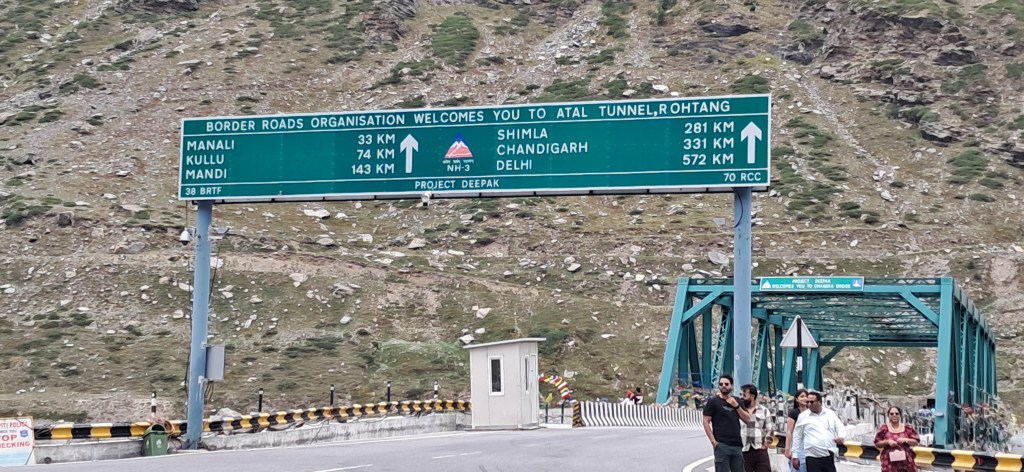
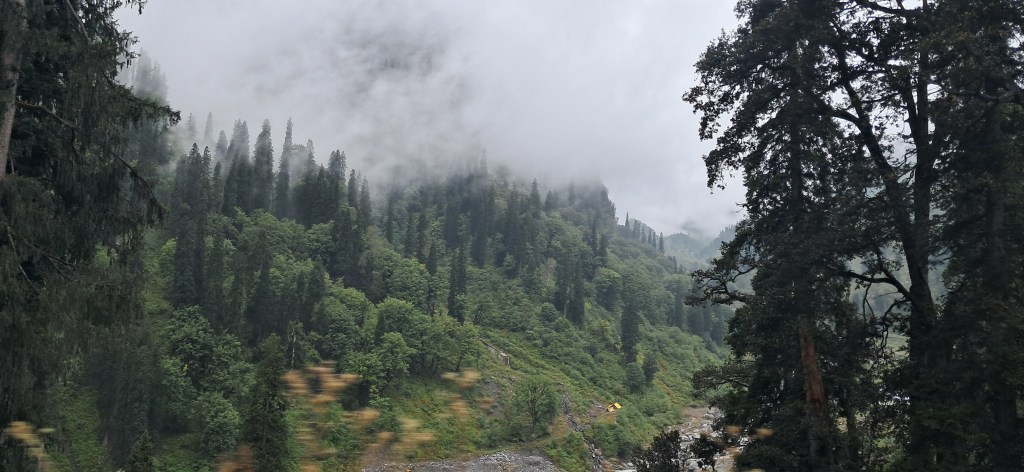
Attractive Manali – a combination of nature and culture:
It was raining when we entered Manali. I wanted to enjoy a quad bike ride which I did last time I visited here. It wouldn’t have been enjoyable because of the rain, though. Moreover, Arpan wasn’t interested. We visited the Hadimba Devi Temple. You can find more details about this temple in my last Himachal Travel Story. We also did retail therapy at the Manali Mall. Our hotel in Manali was spacious and offered a great view of the mountains. We couldn’t believe what we paid to stay compared to what we got.
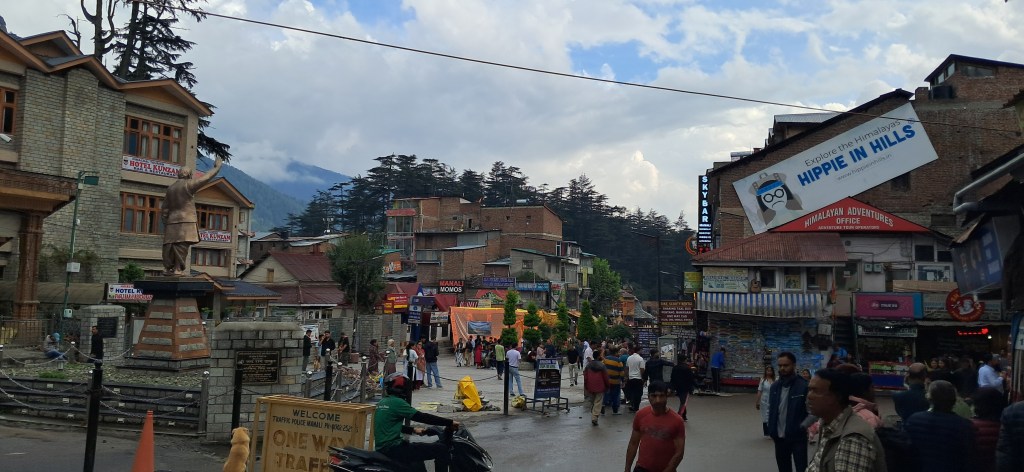
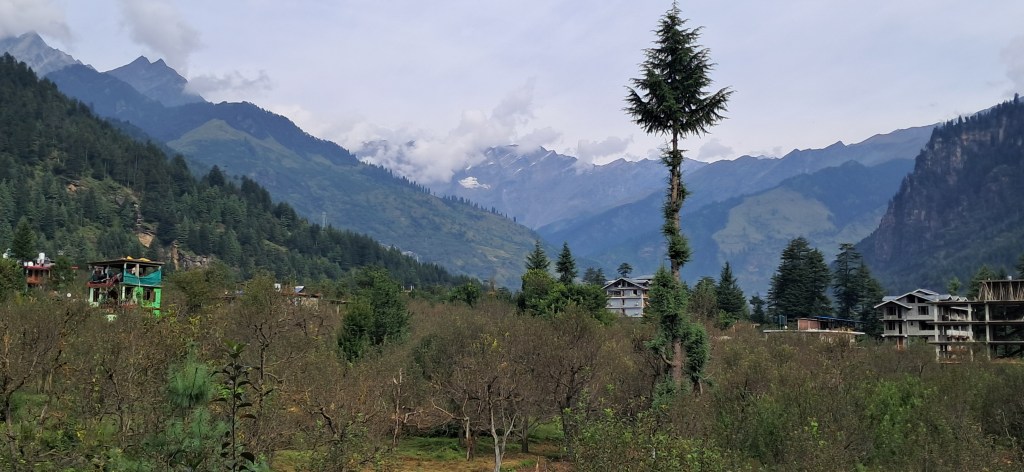
Tripura Sundari Temple in Naggar
The Tripura Sundari Temple, a marvel of ancient architecture, stands tall as evidence of its builders’ craftsmanship. Its unique construction, entirely of Himalayan cedar wood, boasting a triple-layered roof and a conical shikhara, piques curiosity. I was eager to explore. The last time we visited Naggar, we missed the temple because of time constraints. We only saw it from the top of the road, but its unique features left us eager to delve deeper into its beauty.
The pillars and doors are made of wood and have intricately carved designs. A lovely, wood-carved Ganesha greeted us at the temple with an open building complex. The complex has many other small temples carved from stone and ancient statues. This cedar-wood Pagoda temple reminded me of the Hidimba Devi temple of Manali. The two lower storeys are characteristically divided by wooden pillars.
As we parked our car on the roadside and headed to the temple below, we were struck by the serene atmosphere that enveloped us. The absence of crowds and the peaceful surroundings, with the lush greenery and the distant sound of a nearby river, made it a perfect place for introspection. Even though the main shrine was closed, we couldn’t help but feel a sense of calm and relaxation as we roamed the temple complex in peace.
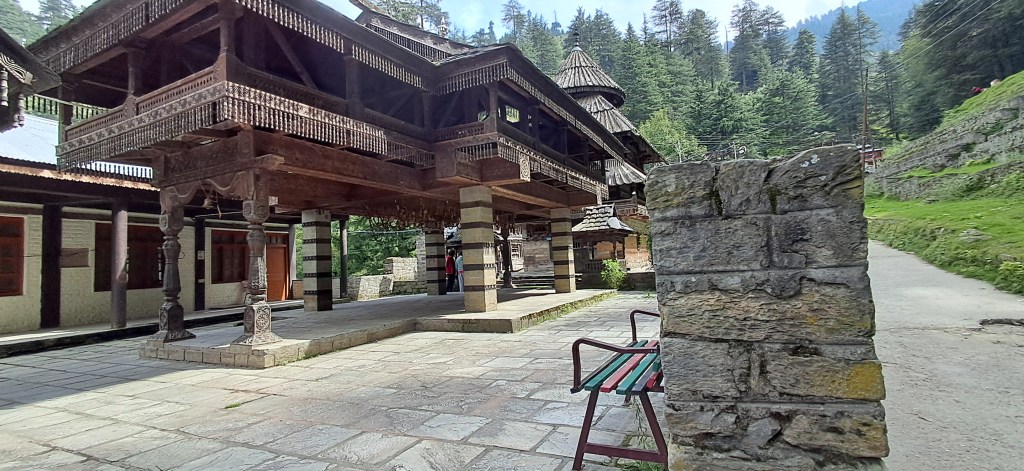
Re-visiting Naggar Castle:
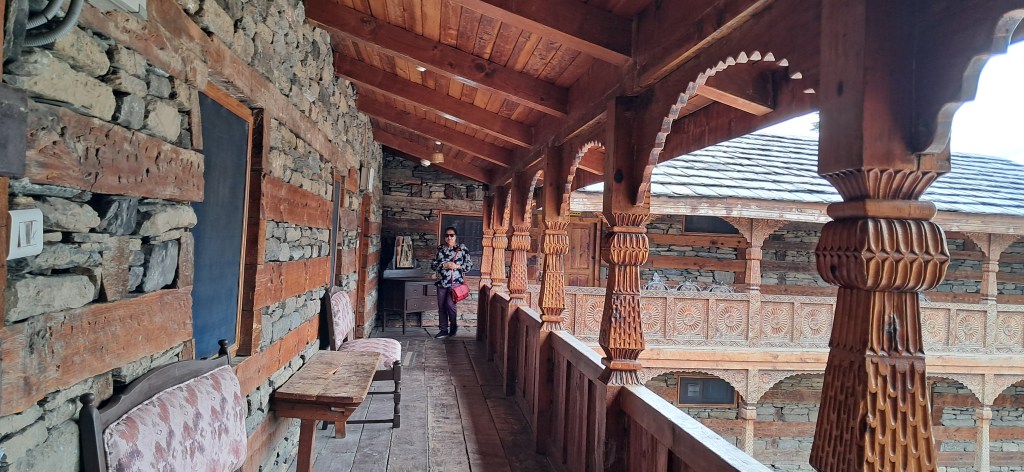
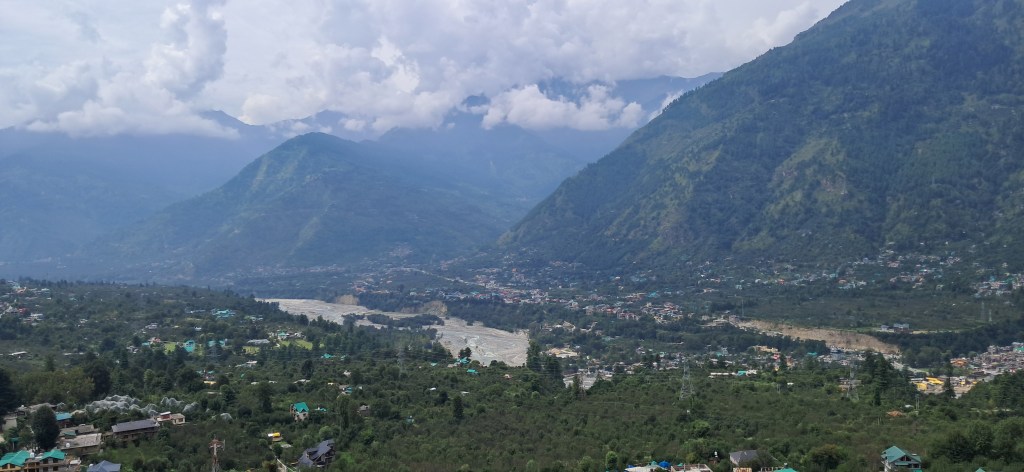
I revisited Naggar Castle. Although the incredible view of Bias Valley from the castle hasn’t changed, the place offers accommodation services that restrict visitors from entering the several rooms we saw before. The weeping willow in the courtyard’s centre, which we liked so much last time, has been removed. Puzzled and curious about what happened to it, I stopped a lady officer to ask.
‘What happened to the beautiful weeping willow tree in the centre?’
‘The tree was uprooting the courtyard concrete. So, unfortunately, it had to be removed.’ The lady officer’s reply made me sad. It was like I lost a friend.
Rewalsar – a sacred intersection for three religions.
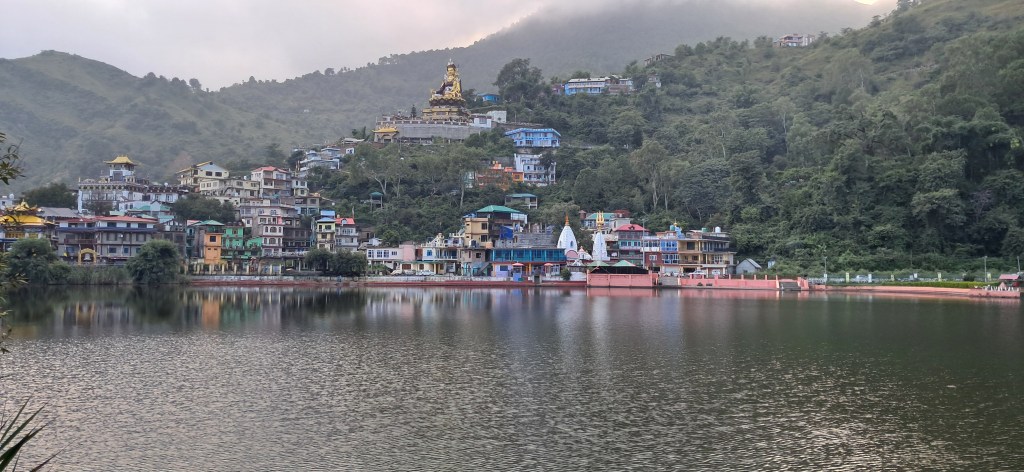
Visiting and staying in Rewalsar was a last-minute suggestion from Manu, our Keylong Guest House owner. The road to Rewalsar after Mandi is very scenic. As we went up the winding way, fresh wind and mild weather greeted us. It was smooth to watch the surrounding pine trees, creating a panoramic view of the valley. Rewalsar, a key religious place for Hindus, Sikhs and Buddhists, is a jewel of tranquillity. The Lake, woodland, and high hills present a variety of natural beauty, characterised by the Lake’s tranquil waters, the cool mountain breeze, and the serene environment that captivated us. Adding to its mystic appeal, the Lake is fed by underground springs and roughly square in shape. Surrounding the Lake are soaring hills, some rising sharply, providing panoramic views of the valley below.
Walking around the Lake was a pleasing experience. The place is adorned with willow trees and blooming flowers. The calm and soothing atmosphere makes it an ideal destination for those seeking to escape everyday chaos.
The spot is sacred for Hindus, Buddhists and Sikhs. The Rewalsar Lake is an enormous and breathtaking, brilliant shade of blue. The natural Lake at Rewalsar is famous for its floating reed islands. Hindu, Buddhist, and Sikh shrines are located in the vicinity of the Lake. Legend states that the great teacher and scholar Padmasambhava used his enormous powers to arrive in Tibet from Rewalsar. It is believed that tiny islands of floating reeds in Rewalser Lake embody the spirit of Padmasambhava. An imposing statue of Padmasambhava is also built in Rewalsar.
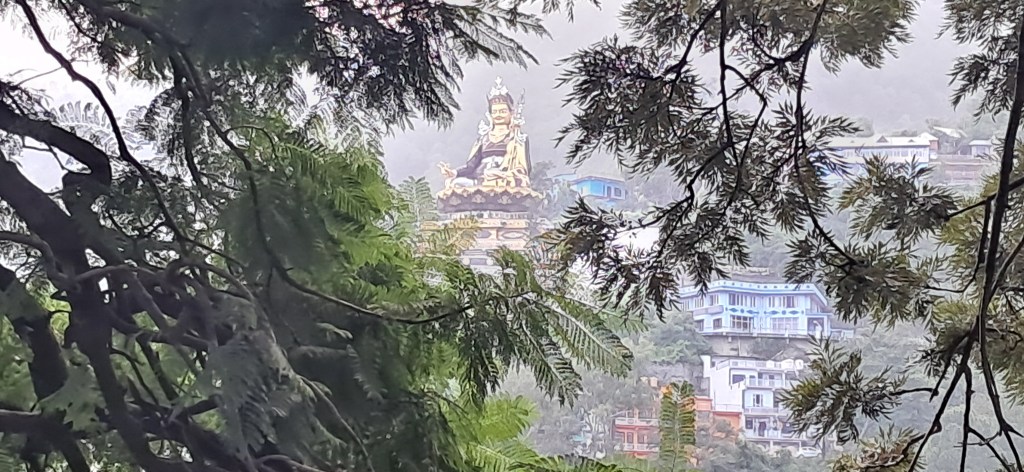
We visited Arpit’s family in Bilaspur. On the way, Arpit bought some apples for them and wanted to drop them off today. Starting tomorrow, he will be Spiti-bound again and have no time to see them. The family lived in a quaint, traditional house surrounded by a beautiful garden, where the air was filled with the sweet scent of flowers, and the lush green trees were a treat for the eyes.
The family was so lovely. ‘Please stay for lunch; it won’t take long, ‘ his mother requested. We had to be back in Shimla and apologised. ‘Thank you very much for inviting us, but we must return to Shimla and release your son.’ We were overwhelmed by their hospitality. They complained that he didn’t come home often, but he wanted to set up his own travel business and didn’t have much time to visit the family home.
We reached Shimla around lunchtime.
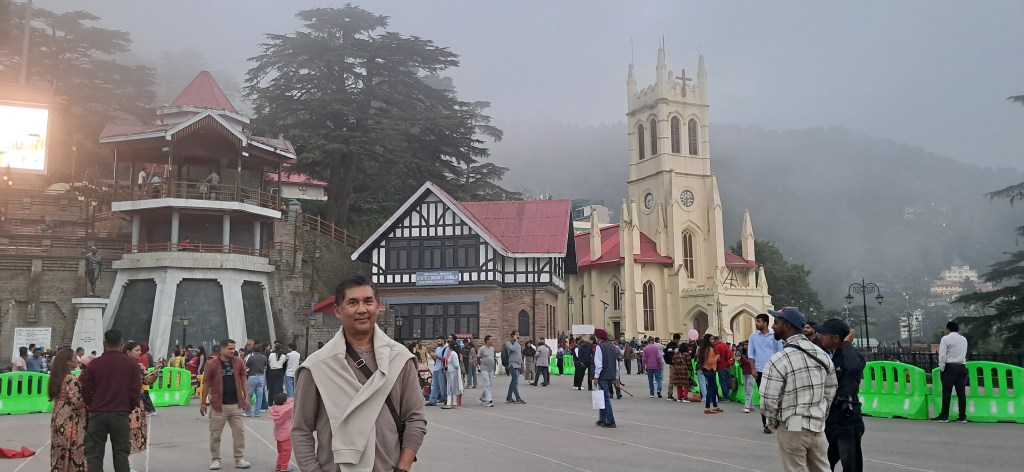
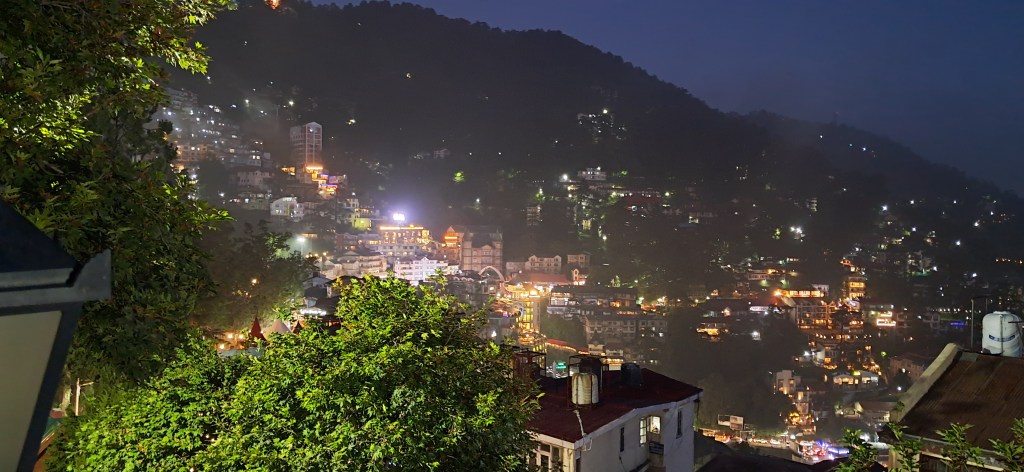
Visiting Shimla and the Mall at the end of our journey was a very fulfilling experience.
 callofthefar.com
Leave a Comment