
Nature’s melting point Khab Bridge – The confluence of the Sutlej and Spiti Rivers:
We were thrilled as we geared up for our high-altitude adventure. Our destination was the captivating Spiti Valley, a region renowned for its awe-inspiring beauty at staggering altitudes. We met a couple in Kalpa, fresh from their Spiti Valley escapade, and shared their tales, igniting our passion for the journey.
‘Our chests were hefty. We couldn’t breathe properly while sleeping in Spiti Valley. Be careful and take altitude sickness pills if you have.’
They set off from Manali, and the altitude shot up suddenly.
I asked them, ‘Why didn’t you start from Shimla? You could have acclimatised better.’
‘Yeah, we could have. However, when we started to travel this circuit, some roads were affected by landslides. These roads were closed. We didn’t have a choice.‘ They recounted.
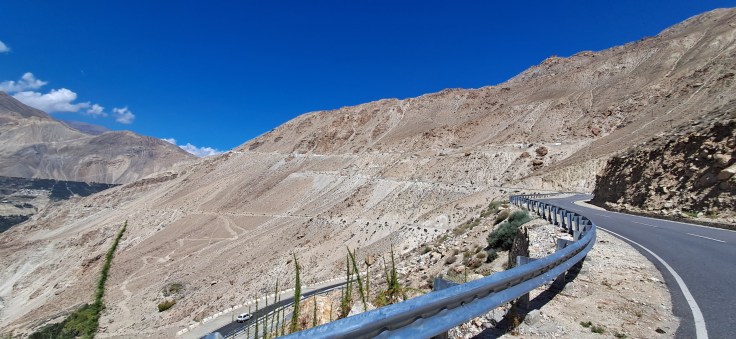
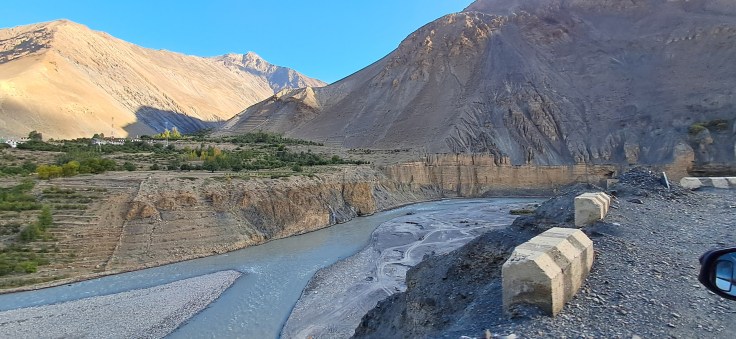
Our first destination was the Khab Bridge, a historic structure marking the confluence of the aqua-hued Spiti River with the earthy Sutlej River. The Sutlej River originated from Raksastaal in Tibet, and the Spiti River originated from the Kunzum range of the Himalayas. At the confluence, they created a mesmerising contrast in their colours. The Spiti River was a sight to behold, with its crystal-blue waters and gentle flow. We were left in awe at its beauty.
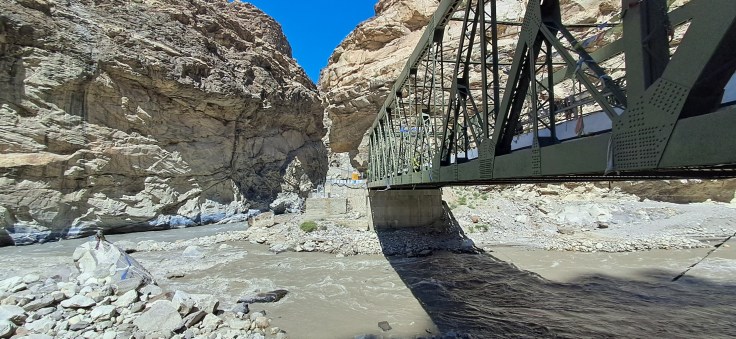
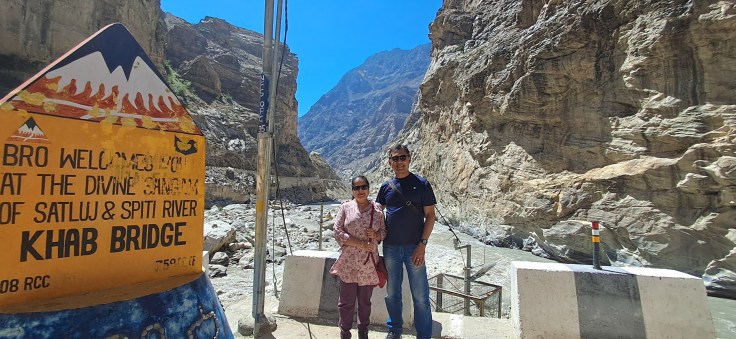
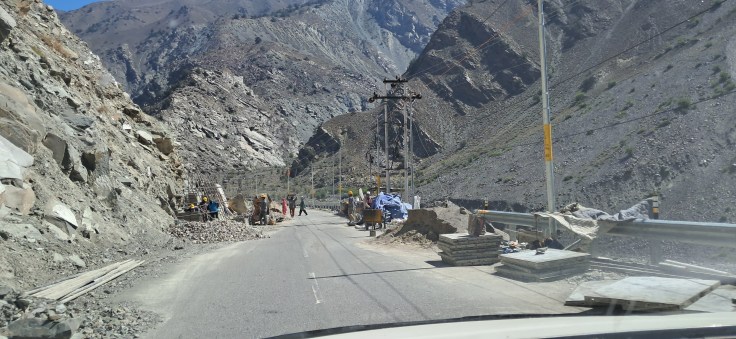
The stark beauty of the landscape, with its barren, dry and enormous expanses, was exceptional. The unique confluence of the two rivers, each with its distinct colour and character, was also remarkable. Additionally, the feeling of being surrounded by the mighty mountains, each with its unique shape and texture, was extraordinary. No trees could be seen, but the road went through the mighty mountains, narrow tunnels with overhanging rocks. Even though we were still in Kinnaur, we felt like we were in a different world. It was a surreal land of unique beauty. We lost sight of the Sutluj as we travelled, but the Spiti River accompanied us.
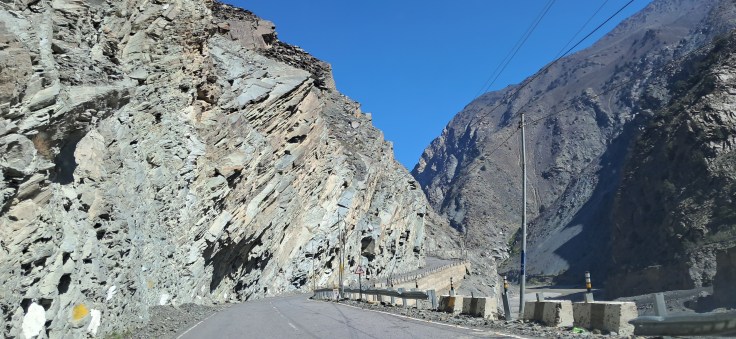
The unwavering efforts of the Border Roads Organisation (BRO) ensured our journey was not just safe but also comfortable. Despite the steep drop-offs, we felt a profound sense of security on the well-maintained, smooth, and wide road. The barriers added a layer of reassurance, allowing us to fully immerse ourselves in the breathtaking views.
Nako Village, Monastery, and the Lake’s Charm
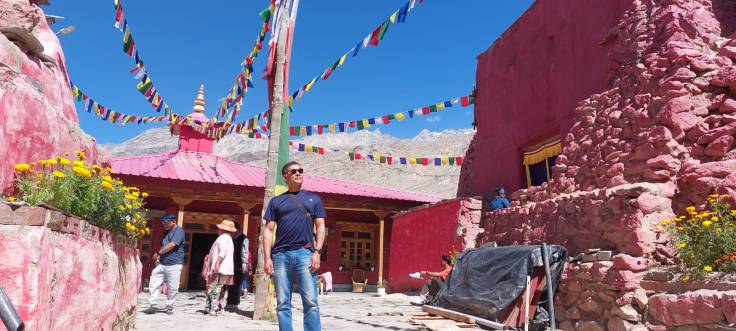
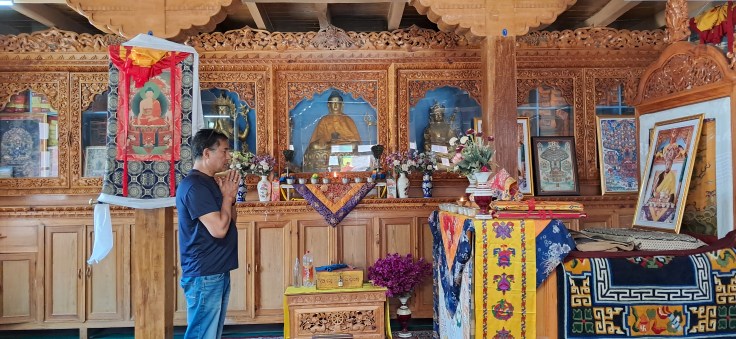
Nako Village, a unique gem nestled in the remote centre of the Himalayas, stands at around 11,900 feet above sea level. It is the last significant village of Kinnaur before the Spiti Valley. The Nako Monastery, with its intricate architecture, serene atmosphere, and breathtaking view of the lofty mountains, exudes a unique charm.
Stepping out of the car, we were greeted by a local gentleman. ‘This place is truly enchanting, isn’t it? So pure and magical,’ he said, his words echoing the unique charm of Nako Village.
‘It’s a hidden gem. We are completely taken aback. It’s truly enchanting,’ Arpan’s voice echoed with surprise and enchantment.
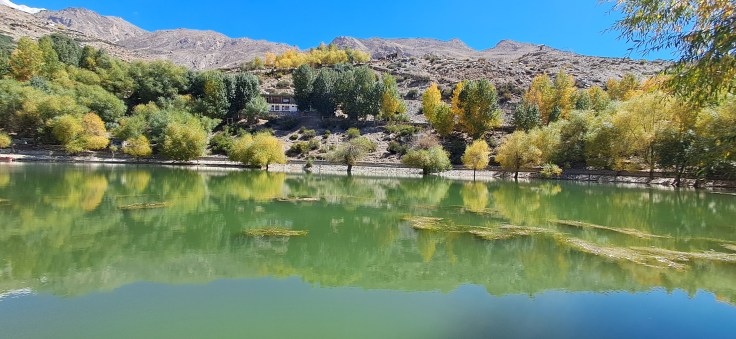
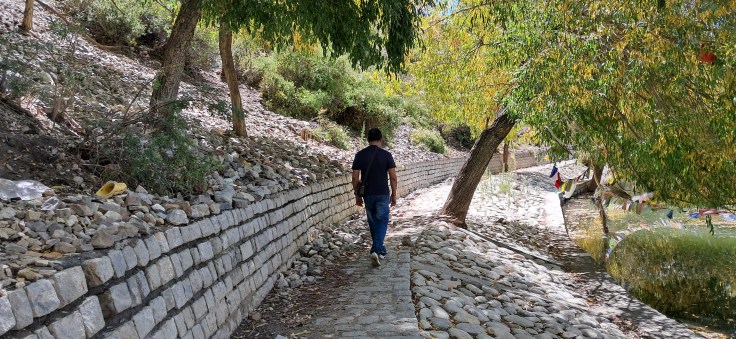
The tranquillity and lush greenery surrounding Nako Lake were a stark contrast to the barren landscape we had just traversed, a dramatic shift that refreshed our senses. The peaceful beauty of the lake, though not large, was akin to a picturesque pond, exuding a serene charm.
‘Let’s walk around the lake.’ Arpan suggested. I was more than obliging.
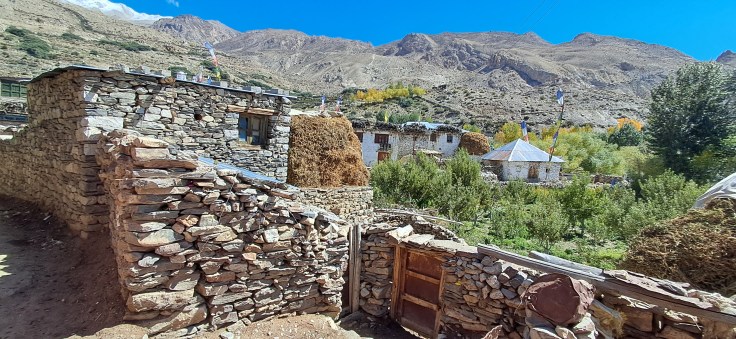
As we strolled around the lake, our footsteps blended with the rustling of leaves in the gentle breeze. The walk invigorated us, the fresh mountain air filling our lungs. The path to the lake led us through the winding alleys of the local settlement, where we were struck by the unique architecture of the stone houses. As we observed the locals going about their daily chores, we glimpsed the simple life of the people in Nako.
We were warmly greeted by a few locals. Their ‘Juley!’ was not just a word but a warm embrace of their genuine and heartfelt hospitality. We responded in kind, feeling the depth of their welcome.
Juley is a Tibetan word for ‘Hello’. We learned about it during our visit to Ladakh a few years ago. As we returned through the village alleyway, we noticed a heartwarming sight. A group of young people guided the elderly along the uneven path, ensuring they could also enjoy the lake view.
‘That’s a very heartwarming gesture,’ I told one of the young men. We were delighted to see the boys holding their hands, and I started a conversation.
‘This is so nice to see you help these people.’ I appreciated their effort.
‘We are a specialised travel agency in Kolkata that cares about helping old people experience these rugged places.’ They were happy to explain, and their dedication to this essential help was evident. It’s a service that allows people who can’t go on their own to experience the beauty of these places.
We had a chance encounter with a group of Gujarati ladies at a roadside restaurant in Nako. This led to a heartwarming conversation about our shared love for Bengali culture. Despite our diverse backgrounds, these personal connections added a unique dimension to our Spiti Valley experience. They made it more meaningful and left us feeling connected and empathetic. These personal reflections on our travel experiences will resonate with our fellow travellers and make them feel part of our journey.
‘I am delighted to converse in Bengali with you. It’s been ages since I’ve spoken the language.’ One of the ladies said to me. She was born in Bengal but has lived in Vadodara for 25 years. The joy was mutual, a shared delight in our cultural exchange.’
Our journey was not just about the landscapes and monasteries but also about the unexpected connections we made.
Amazing legends of Gue Monastery:
At Sumdo, we entered the enchanting Spiti Valley. We were absolutely ecstatic. I had to pinch myself. Is this real? I had been longing to visit the Spiti Valley. It lies nestled in a captivating blanket of earthly splendour. It serves as my celestial gateway, welcoming those seeking inspiration in nature’s beauty.
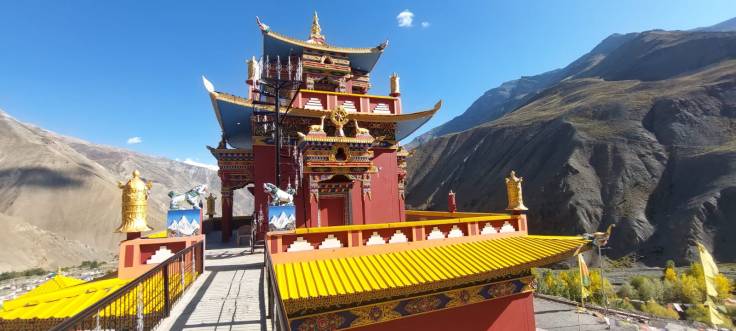
Gue monastery is adorned with Buddhist sculptures, vibrant murals, and thankas. The ancient mummy of Sangha Tenzin, preserved for over 500 years, was evidence of the valley’s rich history. Sangha Tenzin was a selfless Buddhist monk who began his mummification process while still alive. His noble intention was to protect the village from a deadly scorpion infestation. Interacting with the locals, we learnt about the place’s history and significance. We heard more interesting stories from the caretaker at Gue Monastery.
Upon the completion of the monk’s mummification and the departure of his spirit, a breathtaking rainbow appeared, and miraculously, the scorpions vanished.’ It was a moment that filled us with awe.
‘The monk’s mummified body was discovered after an earthquake in 1975 opened an ancient tomb. However, it was not excavated until 2004.’
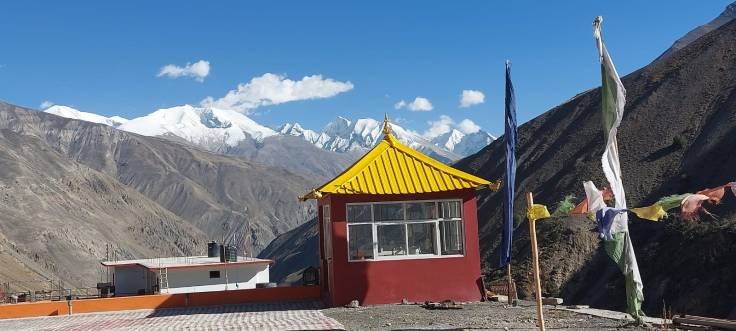
The tranquil setting of Gue Monastery, with its snow-capped mountains and rolling valleys, was a soothing balm for our tired souls. The visit was a serene experience, leaving us calm and peaceful, a perfect respite from our adventurous journey. This unique experience piqued our curiosity to explore further. Visiting Gue Monastery is one of my most cherished experiences in Spiti.
Mesmerising Spiti River and Tabo Monastery:
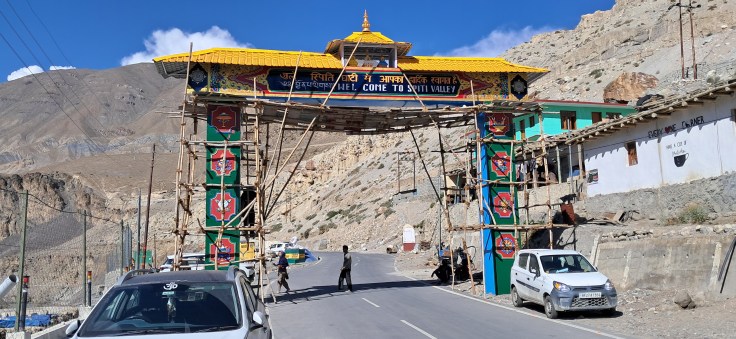
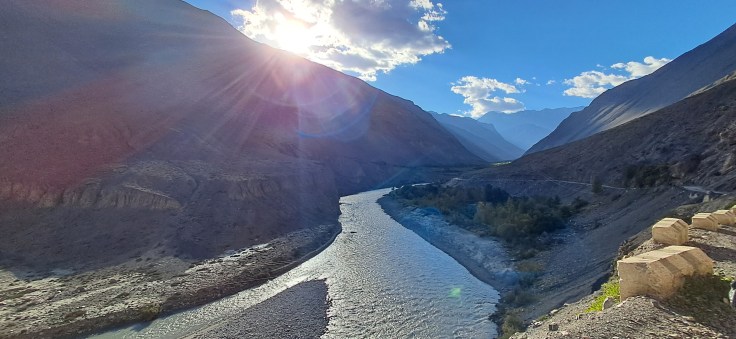
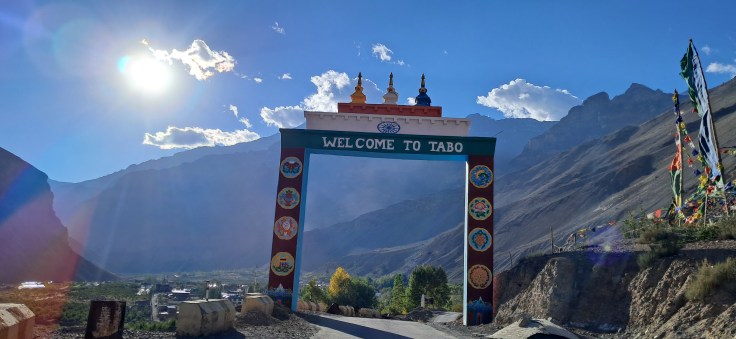
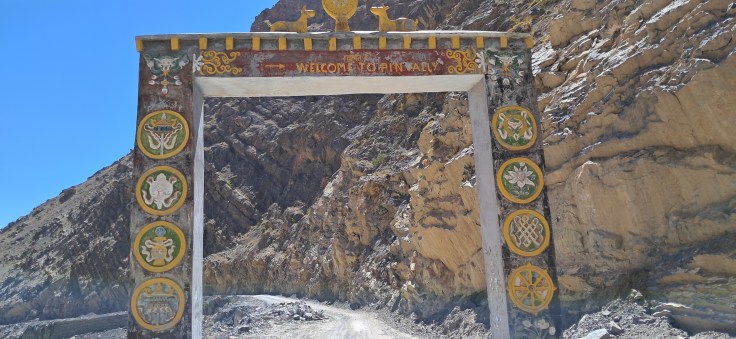
Driving through the Spiti Valley in the afternoon was an out-of-this-world experience. The rugged, barren landscape stretched as far as the eye could see, with the afternoon sun casting a golden hue over the mountains. We couldn’t get enough. We stopped at a few vantage points to see the afternoon sun’s reflection in the Spiti River, the water shimmering like a mirror. ‘Mesmerising, truly magical!’ We couldn’t hide our excitement. We did not know how time had passed, and suddenly saw the Tabo Welcome Gate. ‘Already in Tabo? The time flew.
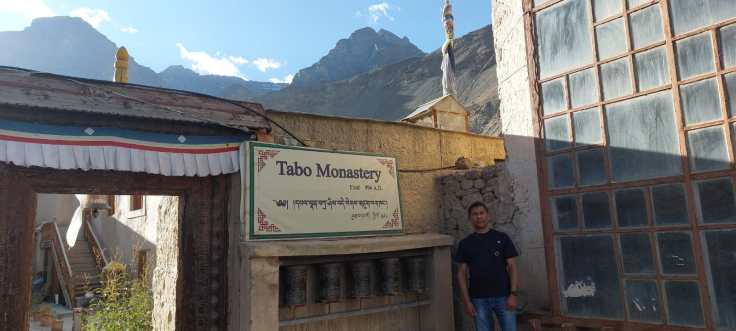
We ended our day with a visit to Tabo Monastery. Arpit recommended visiting the Monastery straightaway. We reached there late afternoon, and it was nearly closing time.
The frescos in the old monastery walls depicting the tales from Buddhist legend are the most impressive. Don’t miss it.’
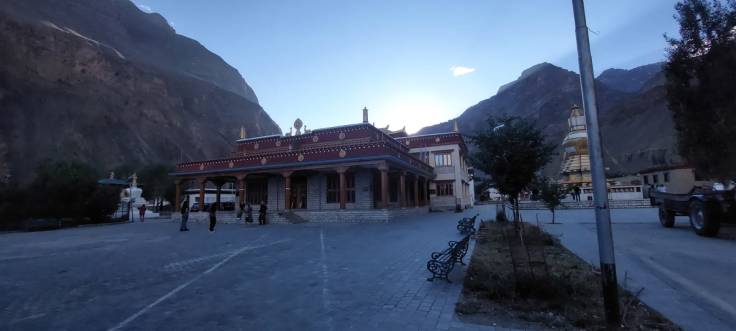
A new monastery is being built, but the images of the Buddhist idols are well preserved there. Tabo is known for its exquisite murals and rendered sculptures, which resemble the paintings and sculptures in the Ajanta caves. This resemblance is significant. It indicates a shared cultural and artistic heritage. This enhances Tabo’s aura as the ‘Himalayan Ajanta ‘.
Many of the frescoes adorning the walls of Tabo depict profound tales from the Buddhist pantheon. These priceless collections of thankas, manuscripts, statues, frescoes, and murals cover almost every wall. Each piece has its own spiritual significance, inviting a deep spiritual connection. We had been lost in the beauty of these collections. We had just finished looking at the first wall. Then, one of the Lamas reminded us that the Monastery was closing.
‘Juley! Please come tomorrow and enjoy seeing the rest of the walls.’
Unfortunately, we won’t be able to come back tomorrow. It was disappointing to miss out on seeing the priceless collections.
‘Simply lousy luck. Oh well, at least we saw a few.’ We consoled ourselves, finding contentment in the experience we did have.
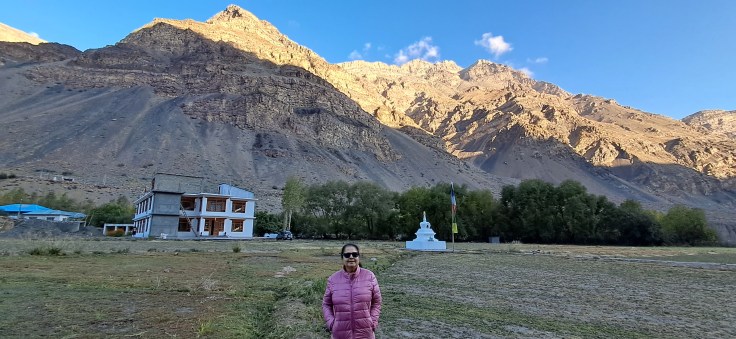
After much research and deliberation, we decided to book a stay at a hotel located further from Tabo town. This hotel, nestled near the Spiti River, promised an authentic Spiti Valley experience. When we finally arrived, the hotel seemed deserted. Arpit, our most adventurous companion, volunteered to check the premises, but returned with no news of any staff. The hotel was eerily quiet.
‘It seems nobody is here. Let’s call the phone number given.’ Arpit reported.
Upon calling, the property manager assured us of his arrival. The room, spotless and seemingly newly built, was the best we had seen in terms of presentation and cleanliness, reassuring us of a comfortable stay. They served dinner in a large dining hall, with seats on the floor and tables in front. There were two more groups, but where were they when we arrived? We relaxed and exchanged information about our trip so far. The spiced chicken curry, mixed vegetables, and roti at dinner satisfied our craving for good homemade food. A day well spent.
Modernisation gracefully bypassed Dhankar Monastery :
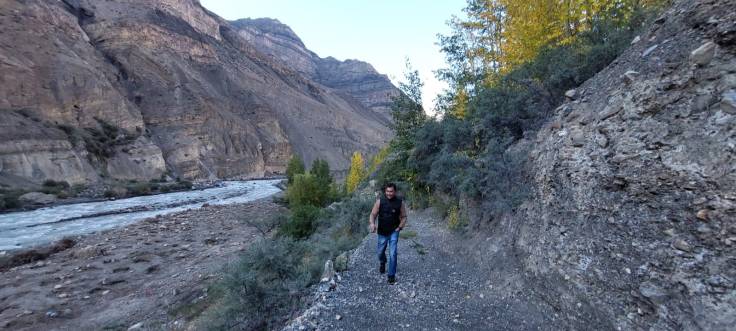
A walk towards the river started our day nicely. After alu paratha (which didn’t suit my tummy)and a breakfast of tea, we headed out to Kaza. Our first destination was the Dhankar Monastery.
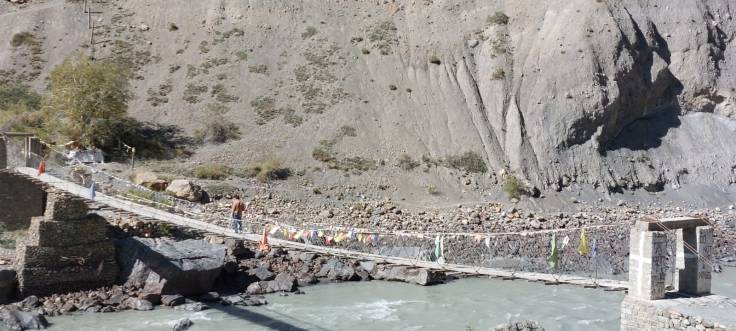
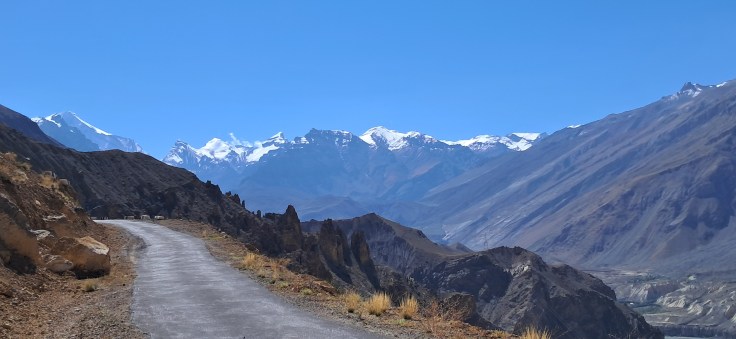
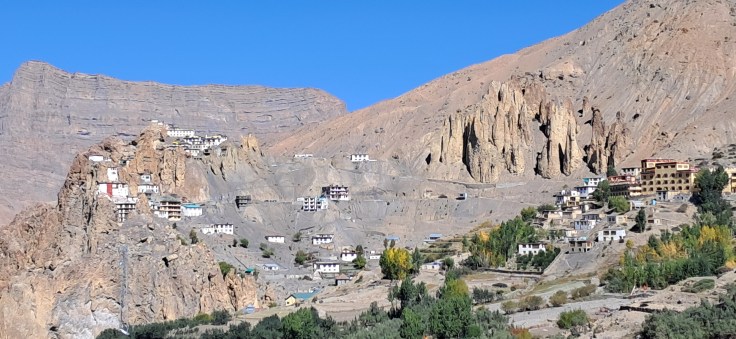
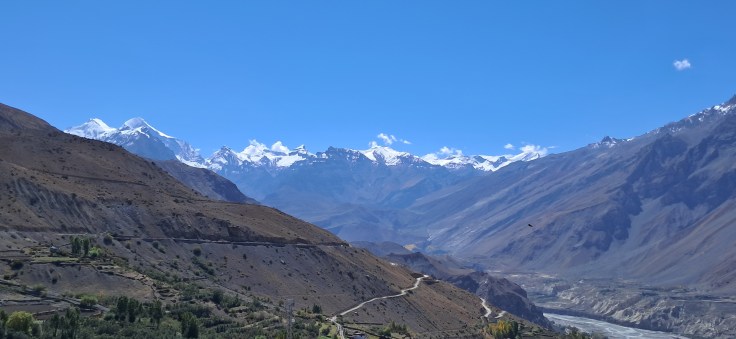
The Dhankar Fort, an ancient Monastery, was chosen as the traditional home for the Nonos, the royals of Spiti. The foresight of the ancient rulers demonstrated their understanding of strategic advantage. The fort’s location provided better control and safety from their enemies, a crucial factor in the region’s turbulent times.
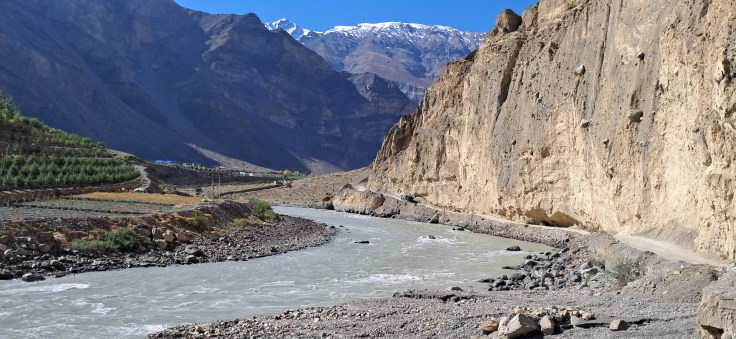
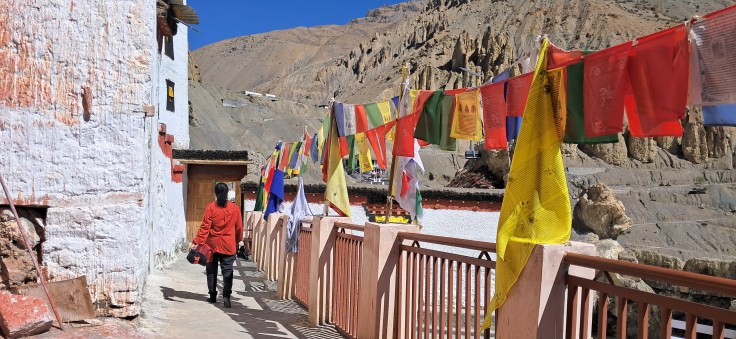
Our journey to Dhankar was a step back in time, as modernisation has gracefully bypassed this ancient land. The road to Dhankar Monastery, where the Spiti and Pin Rivers meet, felt like a passage to a forgotten world. Each turn of the spiral road revealed a breathtaking view of the river and snow-capped mountains, making the journey as memorable as the destination. The Monastery’s hilltop setting is nothing short of stunning, offering panoramic views of the Pin Valley. As we climbed the stairs to the Monastery to see the shrine, the sound of the ongoing prayer filled the air, adding to the sense of awe. I tried to see the rituals, but unfortunately, the room was closed to us. The view from the top, with snow-capped mountains and a winding river, is sure to captivate everyone.
Picturesque Pin Valley:
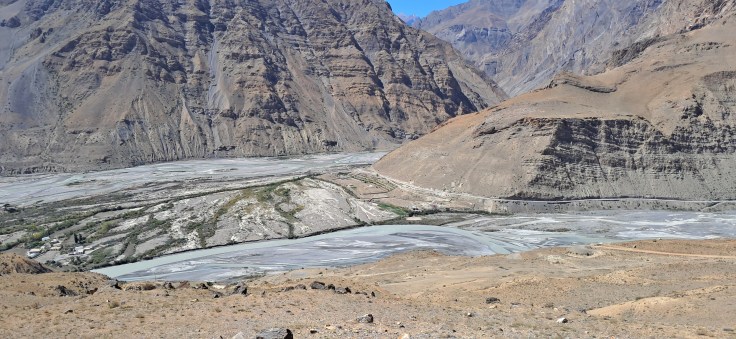
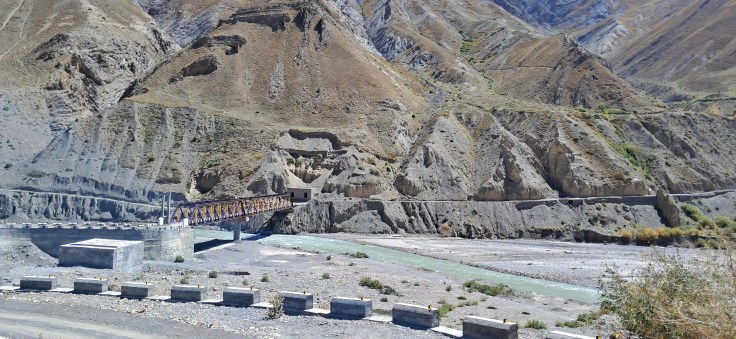
Pin Valley is graced with the aqua-coloured Pin River flowing through the middle. The rolling meadows and gorgeous snow-capped mountains surround the valley. Our drive through Pin Valley was mesmerising. We explored picturesque villages and crossed narrow mountain passages. The captivating silence and colourful flowers charmed us. We witnessed the change from a desert look to meadows of greenery. It was enough to lose ourselves in the magical Pin Valley trance. I exited the car, embracing the wilderness at altitudes of almost 11500 feet, and felt the nippy wind on my skin – a deep sense of connection to this place. The breathtaking beauty of the Pin Valley perfectly satisfied my soul! Its awe-inspiring landscapes are a tribute to the natural wonders of the Spiti Valley. The beauty of the Pin Valley indeed left us awe-struck.
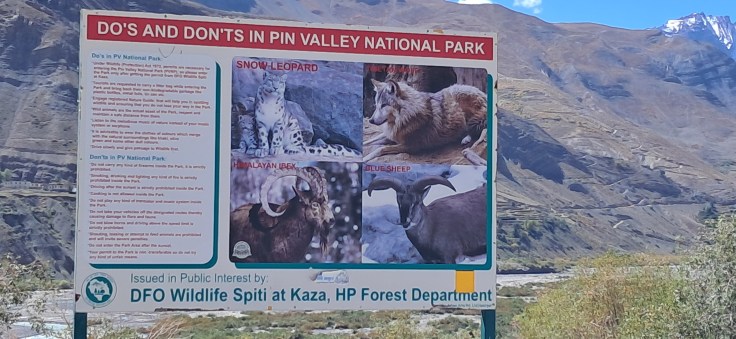
Wildlife wonders of Pin Valley National Park:
Pin Valley National Park, home to over 20 species of animals and birds, is an inspiration for conservation. It is mainly known for its efforts in safeguarding the endangered Snow leopard, Ibex, Bharal, Red Fox, and Marten. The Park also protects the Weasel, Pika, Snow Cock, and Bearded Vulture. Other species include the Chukar, Golden Eagle, Griffon, Himalayan Chough, and Raven. We saw a couple of Ibexes and Red Foxes while driving through the Park.
Arpit gave us some insight into the Park. ‘You can’t see the snow leopards easily. They live higher up.’
‘This exclusive National Park in Himachal Pradesh, is nestled in the cold desert. It is a source of pride and privilege. Its unique status sets it apart. The core zone spans 675 sq km. The buffer zone spans 1150 km.’
‘Several villages, with a total population of approximately 1600 people, are harmoniously situated on the Park’s periphery. These local residents, primarily Buddhist-scheduled tribes, play a crucial role in preserving the Pin Valley.’
‘Great information indeed. It made our visit more meaningful. Thank you!’ We acknowledged
Kaza and Fossil village in Lanza:
We reached Kaza just after lunchtime. Some part of Kaza was a work zone, and dirt was flying through the air. We wanted to have lunch in an air-conditioned restaurant for this reason. Thank God! We found one. Inside, we saw the menu, which listed different types of Momos, and we instantly felt the craving.
‘Let’s order Chicken Momo to fill our stomach. We need to see Lanza, Komic and Hikkim Villages.’
After a quick Momo lunch, we explored Lanza Fossil Village. We drove through a breathtakingly beautiful, curvy, muddy road, turning us higher and upwards. The sharp turns were dangerous, but they were pleasing to our eyes. Nature displayed its mystic beauty on all sides. At 14500 feet above sea level, a gorgeous mountain appeared. Milk-white snow adorned its mighty peaks. Most roads seemed deserted, rugged, and desolate, and I couldn’t see anyone.
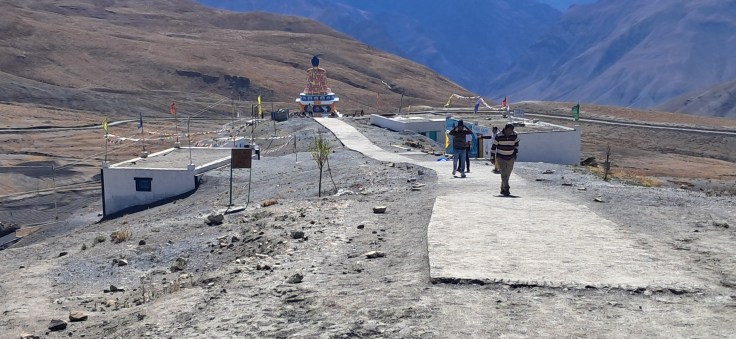
Seeing a magnificent Buddha statue on the superb hilltop drew our attention from below. The villagers believe that the statue guards them against all evil. We met a few ladies at the village selling souvenirs near the Buddha statue. It was interesting to see all the ladies with wool and needles, knitting something. There were some finished woollen products along with other souvenirs. Curious, I spoke to them, and they told me they live a hard life.
‘Do you knit and sell these mufflers and cardigans to the tourists all the time?’ asked.
‘We cultivate barley, potatoes, and peas during summer. The village is detached for five months in winter due to excessive snowfall. We live on whatever we earn, cultivating crops and selling woollen items to tourists. We use them as well.’ The ladies talked about their living experience. They described coexisting harmoniously with nature. This harmony is in sync with the terrain’s rough topography and unforgiving weather.
We saw a few beautiful kids coming from the school. Their smiles, bright and innocent, warmed our hearts. We kept their smiling faces in our memory in exchange for chocolates. The journey to Lanza was filled with unique experiences, making it a memorable part of our Spiti Valley adventure.
A million years ago, the mighty Himalayas were under the Tethys Ocean. Then the Himalayan range rose, and the ocean disappeared, leaving the fossils of sea creatures. A fossil museum would have been good and could have justified the village’s name. I looked for a fossil sample everywhere, but all the shops in the town were closed. I bought a fossil image from the ladies, which was made of stone.
Komic Village – the highest village in the world:
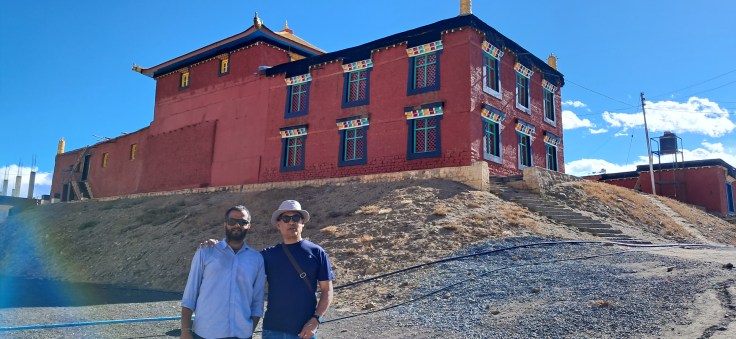
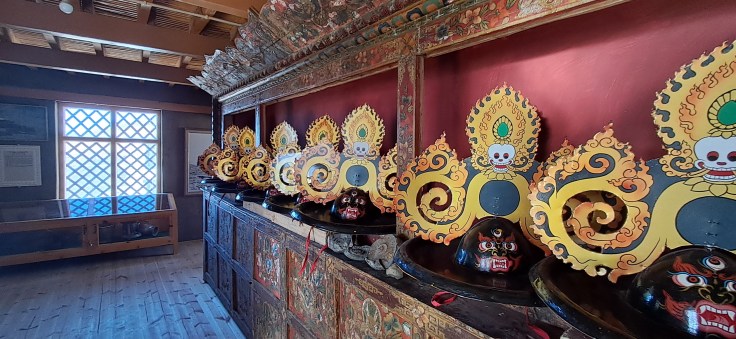
Komic village is set on a hilltop of 15000 ft and is described as the highest village in the world. It is connected by a motorable road. We visited the Buddhist museum here. It displayed impressive collections of thankas, various types of masks, and the clothes worn by Lamas. The view was incredible, as usual, from every vantage point in the village. This place was busier than Lanza, with a few people enjoying a break at the world’s highest restaurant. We took this opportunity to take a perfect break and enjoy the views.
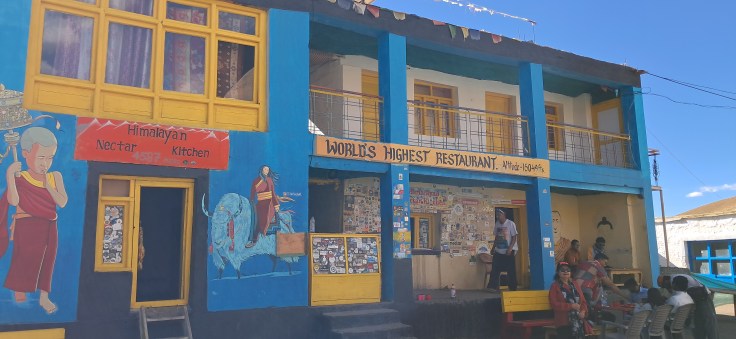
Hikkim village – Location of the world’s highest post office
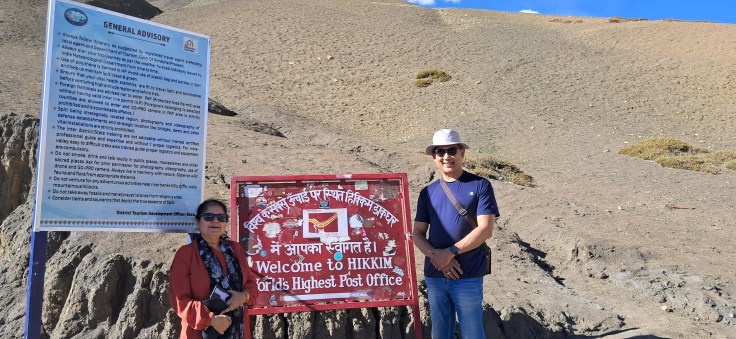
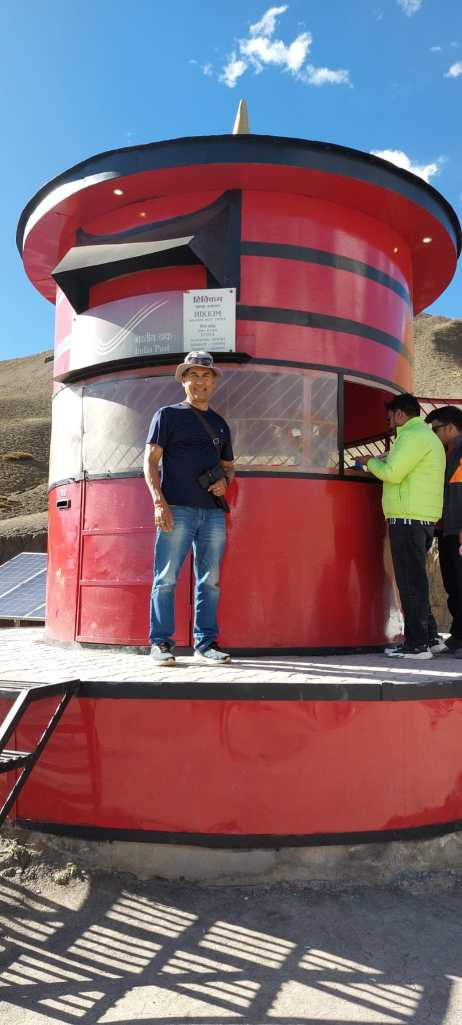
Hikkim village, the final destination in the Lanza-Komic-Hikkim circuit, left a lasting impression. The highest post office in Hikkim, with its striking red post box, was a sight. Visiting the world’s highest post office was truly memorable. The stunning landscapes, with their snow-capped peaks, provided a rewarding backdrop. We purchased a few picture postcards. We intended to send them by post. However, the card pictures were so captivating that we couldn’t bring ourselves to part with them.
Kaza Monastery:
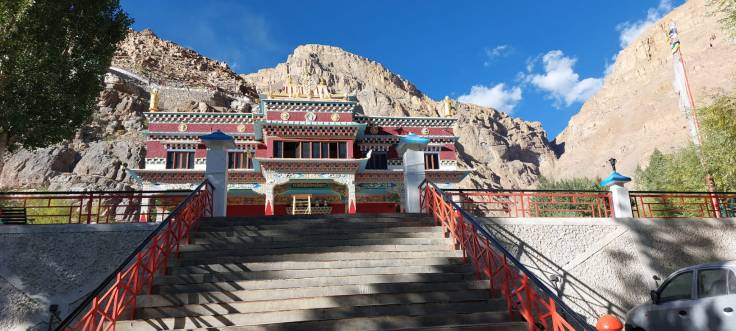
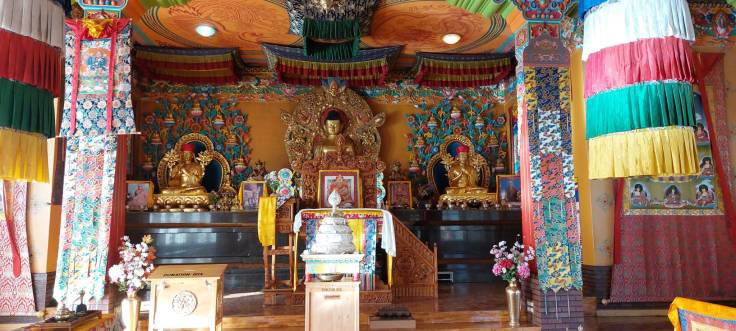
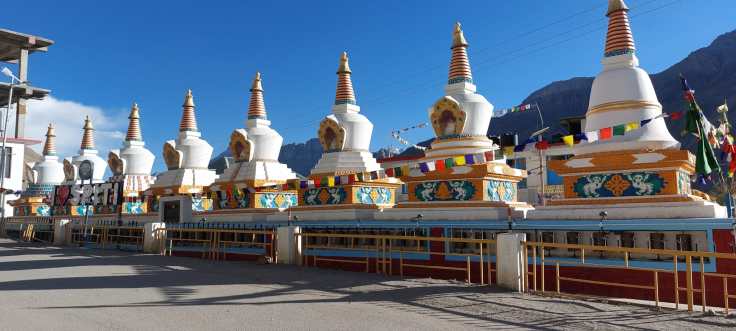
Sakya Tenggyu monastery, situated in Kaza town, is a treasure trove of history and culture. This Monastery, constructed in 2009, is a living testament to Buddhist architecture and a beautiful depiction of Sakyamuni. The colourful paintings that adorn the Monastery, showcasing its intricate, detailed artwork, are truly enchanting. The old Monastery building, perched above the new, maintains its connection with Sayka Kaza Monastery, adding to its historical significance. The inauguration of the new Monastery by His Holiness the Dalai Lama on July 9, 2009, was a momentous event. The roadside Stupas, a stone’s throw from the Monastery, are captivating and serve as beautiful works of art.
Arpit needed to refuel our vehicle. Kaza’s petrol station was buzzing with people trying to fill up because no other stations were nearby. There was a long queue. It was chaos. People were breaking the queue, and nobody was bothered, not even Arpit. Nobody cared about first cum best dressed basis. The cars were sneaking into the front of the line. After some hustle and bustle and Arpan’s intervention, we got our chance. It was late, and our accommodation company kept calling about our tentative arrival time. I booked our accommodation in Chicham. I thought the place would be more scenic than busy Kaza. It could offer a better view.
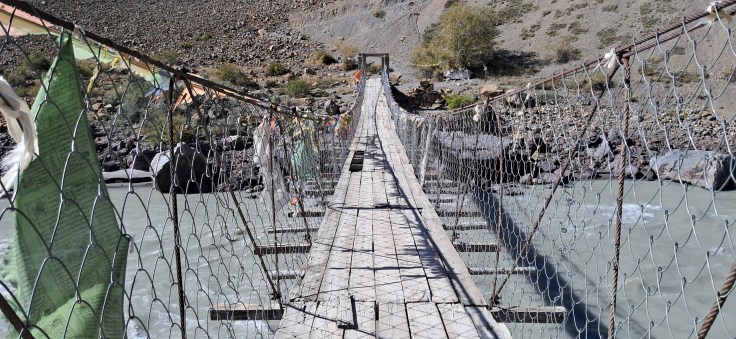
Our journey took us across Chicham Bridge, Asia’s highest and longest suspension bridge, to our accommodation in Chicham. Alas, our anticipation turned to disappointment when we found our hotel room less than satisfactory. It starkly contrasted the beauty of the surroundings. We felt a sense of letdown.
 callofthefar.com
Leave a Comment