
Discovering Sublime Shrikhand Mahadev Mountain Ranges in Sarahan:
Jetlag woke me up at 4 am. As I stepped out onto the balcony, I was greeted by the spectacle of dawn breaking. The horizon is coming into focus. The Sublime Shrikhand Mahadev Mountain view filled me with wonder. Our guesthouse, a cozy and modest establishment, though not luxurious, offered a priceless view. The mountain ranges and the Shrikhand Mahadev peak gradually emerged. As the clock struck 6, the sun rose behind the hills, casting a radiant orange glow over the peaks. I took a deep breath. The crisp mountain air filled my lungs with the scent of pine and earth. The distant sound of a rooster echoed through the valley. The first rays of sunlight warmed my skin, sending tingles across it. The singing sound of a nearby cascade completed the aura. At that moment, I felt a deep connection with nature, a sense of peace and tranquillity I had never experienced before. Wow!!! Simply out of the World!” I went into a trance, completely lost in the beauty of the sunrise.

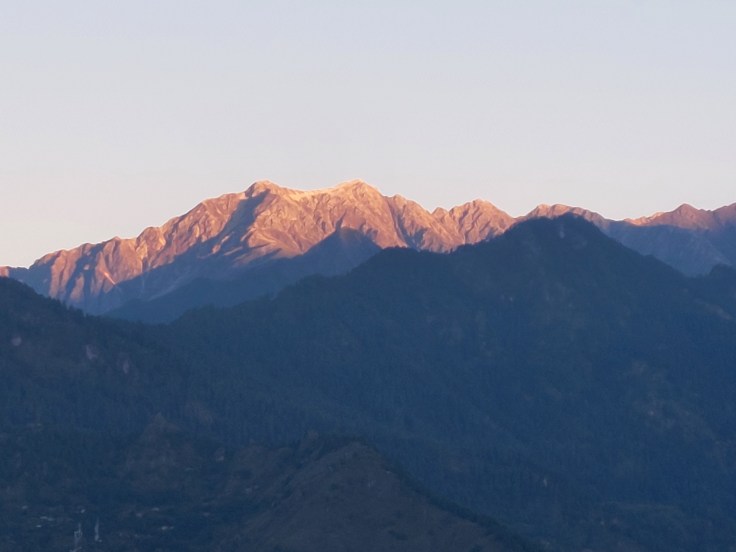
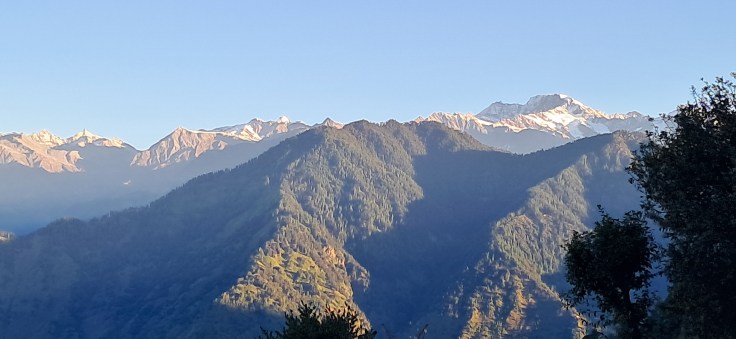
After a while, I realised Arpan was still sleeping and missing nature’s magic. I couldn’t wait to share this incredible sight, so I woke him up.
‘You don’t know what you are missing.’
Thank God I woke up early to witness nature’s incredible display and change of colours, and Arpan could join in. We watched the phenomenon for as long as possible, but the colour changed back to glorious white. We forgot that we had to leave soon. It couldn’t have been a better start to the morning and the tour.
‘I wish I could stay here longer,’ I sighed, reluctant to leave the scene. Every great thing ends sometimes.
The Bhimakali Temple: A Cultural Gem in Sarahan
The weather was crisp. ‘I will drop you off at the Temple. Call me when you finish, and I will pick you up,‘ Arpit suggested.
‘Ma’am, you can walk back and forth.’ Suggested one of the guesthouse staff.
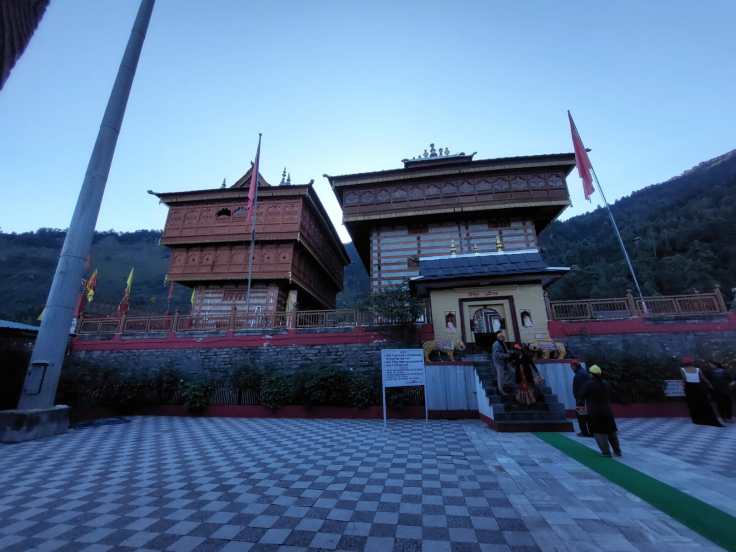
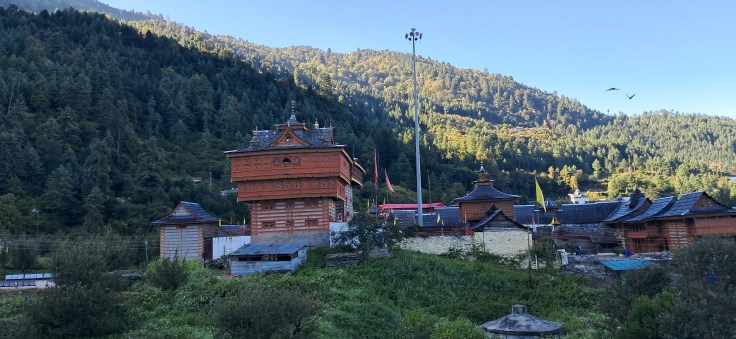
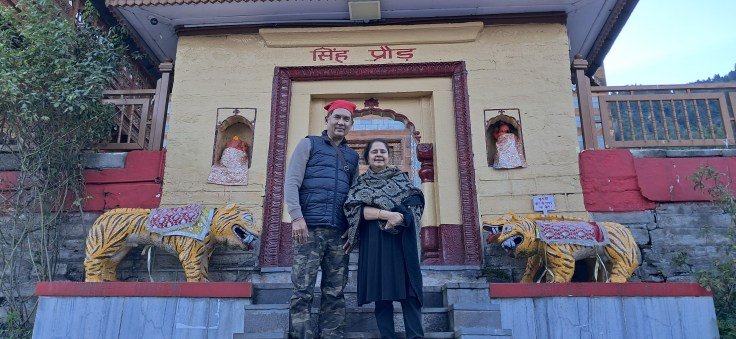
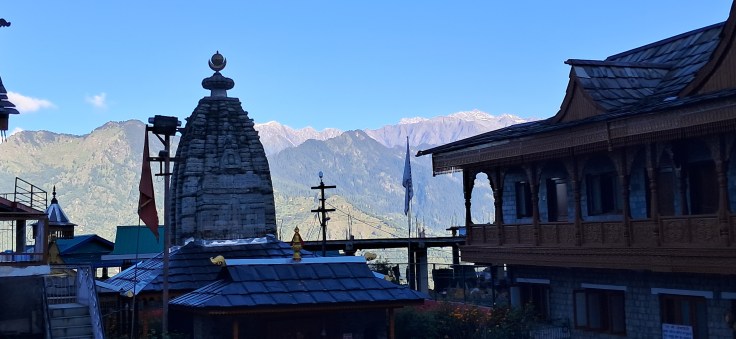
The Bhimakali Temple, a mere 10-minute walk from our guesthouse, was an incredible artistic masterpiece. While time constraints led us to accept a ride from Arpit, we were determined to walk back. The Temple, indicating Sarahan’s rich cultural and architectural heritage, is dedicated to the goddess Bhimakali. Its stunning Indo-Tibetan architecture captivated us. Intricate wooden carvings, vibrant colours, and the unique Kath-Kuni architectural style were impressive. It is an ancient construction technique from Himachal Pradesh that uses alternating layers of wood and stone, laid without mortar, to create earthquake-resistant buildings that are climate-friendly and a delight for the eyes. The Temple is believed to be over 800 years old and is a significant pilgrimage site for the locals. The new look Bhimakali Temple was built in 1927, following the 1905 earthquake. The old Temple was damaged slightly. The gleaming snowy peaks of the Srkhand Mahadev range formed the backdrop. Amidst the deodar forests, this scene added to the Temple’s charm and spirituality. Simply magnificent!
The legend behind The Bhimakali Temple:
Our morning in Sarahan was a delight. We started with a delicious veg momo breakfast that we savoured. The enlightening conversations with the locals and their captivating storytelling skills added a unique dimension to our experience.
According to one legend, Sati Devi couldn’t bear the insult to her husband, Shiva, during her father’s Daksha Yagna and took her own life. Heartbroken and angry over the death of his wife, an inconsolable Lord Shiva wandered the universe carrying her body, which caused destruction. To pacify Shiva’s anger, Lord Vishnu used his discus to cut Sati’s body into 51 pieces. It is believed that one of Sati’s ears fell at this location, making it a sacred Shakti Peeth. Shakti Peeth is believed to be formed from the scattered body parts of Goddess Sati. Devi Bhimakali is another form of Sati Devi. She is also known as Devi Durga. So Sati Devi is worshipped as Bhimakali and is the presiding deity of this area.‘ One gentleman at the Momo shop was happy to share the legend.
The shopkeeper joined in. ‘Another legend states that a demon called Banasura ruled here. Banasura’s daughter, Usha, fell in love with Anirudh, Lord Krishna’s grandson. Banasura disapproved of this affair. Lord Krishna fought here with him to unite Usha and Anirudh. After the battle, Pradyuman, Lord Krishna’s son became the ruler, and the goddess Bhimakali became the presiding deity of the royal family The legend states that the defeated king Banasura was buried before the entry gate. This marks the elevated platform in the first courtyard of the Bhimakali Temple. ‘
These legends, steeped in cultural significance, added a layer of interest to our visit to the Temple and connected us to the rich local history.

Adventures on scenic Kinnaur Tunnel Road: Thrills await on one of the World’s most dangerous roads:
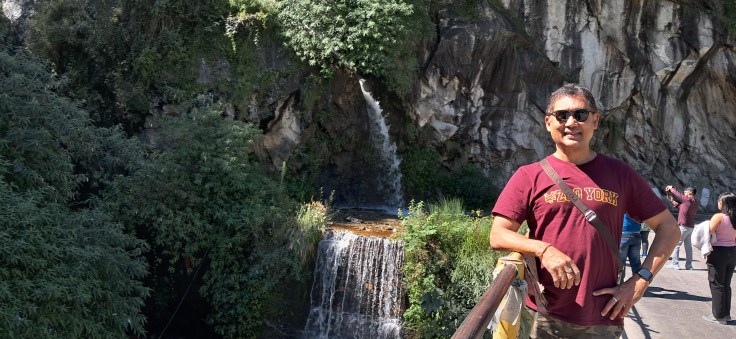
Sarahan is in the Shimla district on the Shimla-Kinnaur border. We absorbed every second, looking at the rolling valleys and snowclad peaks surrounding Sarahan and walking back to our hotel. The sound of waterfalls made me feel mystic. They are exquisitely beautiful, and their beauty is mixed with peacefulness and tranquillity. We stopped every few seconds to enjoy Sarahan’s serenity.
As we bid farewell to Sarahan, our next destination lay along the perilous road between Jeori and Sarahan. The memory of the previous night’s journey was still vivid, but we were brimming with excitement for the adventure ahead. Returning to Jeori, we turned right onto NH5, following the Satluj River towards Sangla. The anticipation of the dangerous tunnel road towards Sangla in Kinnaur infused our journey with an exhilarating sense of adventure.
Kinnaur Road, a part of the Hindustan-Tibetan Highway, was built to cut through hard rock and sheer mountains. In some places, the road is carved out of the mountainside, with the valley below thousands of feet down. This stretch of Hindustan-Tibet Road (NH5) between Shimla and Kinnaur is scary and exquisitely beautiful. Right after the start of the Kinnaur district, the road suddenly becomes narrow and hazardous, regularly rocked by landslides. Much of the road is carved into vertical cliffs. There are steep drops of thousands of feet down the Sutlej River below. There are unfathomable gorges on one side and gigantic cliffs on the other. It’s not an easy ride by any means. Many road sections lack protective barriers, increasing the risk of vehicles slipping off the edge. Numerous blind curves, dramatic turns and tunnels further complicate navigation. The road was bumpy and narrow, keeping us on edge the whole time. We felt butterflies in our stomachs at certain turns that had no barriers at all. Despite these dangers, the road offers breathtaking views of the Himalayan landscape. Every turn and twist was a thrilling experience, igniting our spirits for the road ahead. Travellers must exercise utmost caution, as the journey demands respect for its challenges and potential risks.
At Nigul Sari, a big chunk of the mountain came down during the heavy rain, smashing the road and the barriers down to the valley. The long section was closed for a few days. When we travelled, one-way traffic at a time was allowed with great caution under strict military supervision. The presence of the military, with their expertise and discipline, was a reassuring sight on this treacherous road. ‘Thank God, it is not raining.’ A sense of relief passed through our minds.
Stopping at the Taranda Mata Temple to take her blessings for a safe journey is a must for this rigorous section. A notorious section known as the “Taranda Dhank” after Sutlej View Point features sharp, blind curves. It lacks barriers and has a steep vertical drop down the Sutlej River.


‘This is the moment of truth. I can’t believe we are travelling through one of the World’s most dangerous roads.’
Our seasoned driver, Arpit, was a beacon of safety and comfort on the treacherous road. His cautious driving instilled in us a deep sense of security. His expert navigation also reassured us, even as we felt butterflies in our stomachs with each turn. His reassuring presence made the journey thrilling, safe, and secure.
Unexpectedly, we had a simple thali at a roadside dhaba in Tapri. Despite all odds, the food was yummy, and the hospitality of a Punjabi-run business was even better.
Awe-inspiring Karcham Dam:
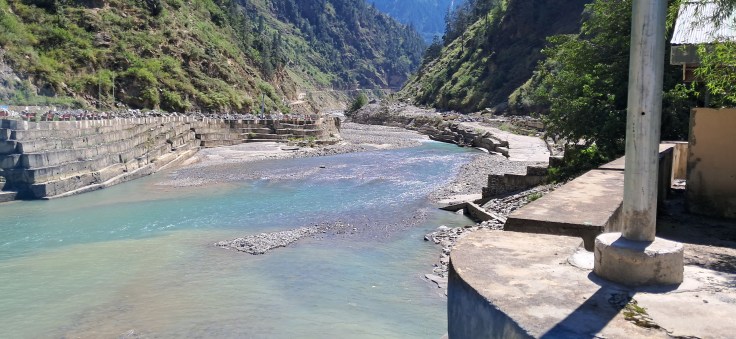
We crossed the Karcham Dam on the Sutlej River, a masterpiece of dam construction. The massive structure of its hydroelectric run-of-the-river project was impressive. Water gushed through its gates – evidence of human engineering and the power of nature. The sound of the water and the sight of the dam were awe-inspiring. This facility channels flowing water from the Sutlej through the natural downward flow of rivers. It uses microturbine generators to capture the kinetic energy of water, with little or no storage. Here, the Baspa River meets the Satlej River. We crossed the bridge over the dam, then turned right and met the Baspa River. We continued our journey with the Baspa River. Its stunning blue stream ran along our path to Sangla. To feel the sound of the beautiful blue Baspa River flowing is a serene experience. Its tranquil beauty, with the sun’s rays dancing on its surface, added a sense of calm to our journey. It made us feel at peace with the World.

‘Doesn’t Baspa River look like a beautiful girl dancing in a blue dress? It contrasts with Satlej’s mystic, muddy, hermit-like calm appearance.‘ Arpan nodded.
Breathtaking Baspa: The Beauty of Sangla Valley
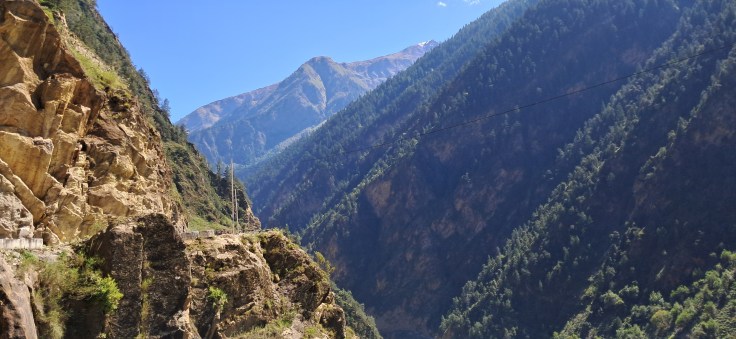
The road to Sangla from the Hindustan Tibet highway was a thrilling adventure, not for the faint-hearted. It was narrow, with no real barrier on the very deep Baspa Gorge. Most of the route was off-road and uneven, but the Baspa/Sangla Valley scenery was breathtaking. Rocks fell in some parts, adding to the adrenaline rush. Arpit stopped at a few places to watch the velocity of the rocks falling on the road. Then he continued driving, the excitement of the journey evident in the air.

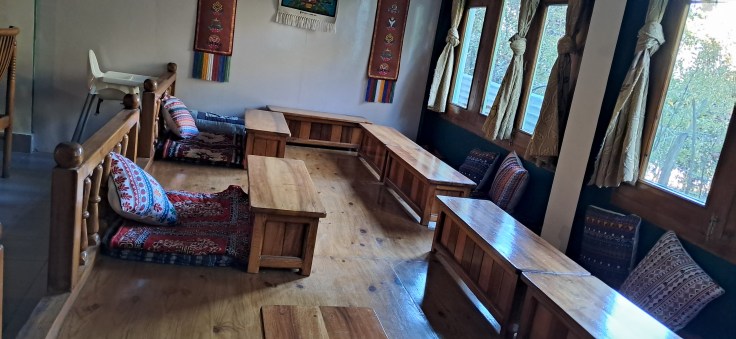
Our accommodation in Sangla was a delightful retreat. It was nestled in the serene beauty of the snow-clad mountains, with lush gardens around, a picture-perfect surrounding, providing a perfect relaxing place. The sight of apples hanging from the trees added excitement. The rooms were comfortable, tastefully decorated, and equipped with all the necessary facilities. This welcoming respite after a long day of travel made us feel at ease.
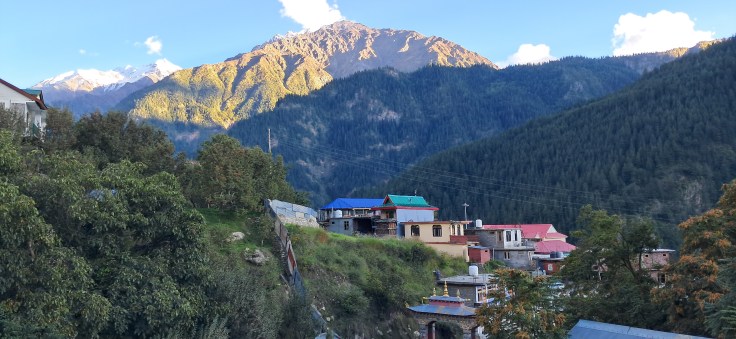
‘Perfect place to relax! Can we walk around later?’ Arpan asked one of the staff.
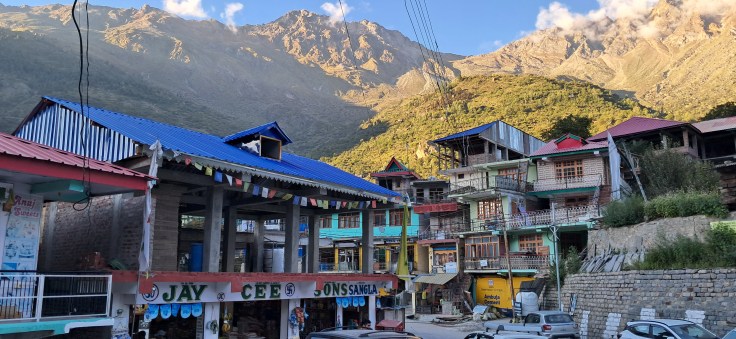
‘You will love to walk around this place, and a monastery is nearby. The market is 10 minutes walk.’ The staff’s eagerness to assist was evident, and we felt well cared for.
The warm and friendly staff’s hospitality made us feel at home, adding to the charm of our stay and making it a truly memorable experience.
India’s Last Village – Chitkul: Nature and Culture Unveiled
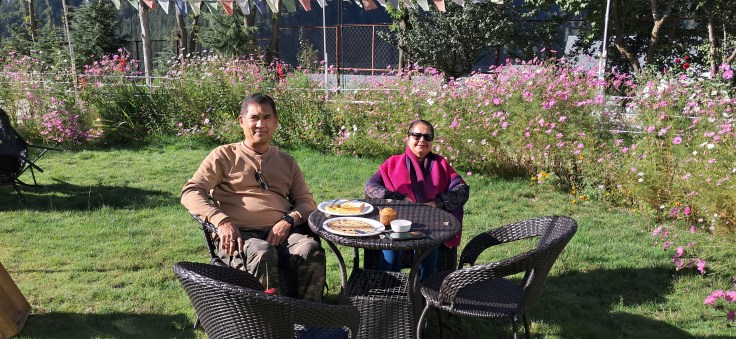
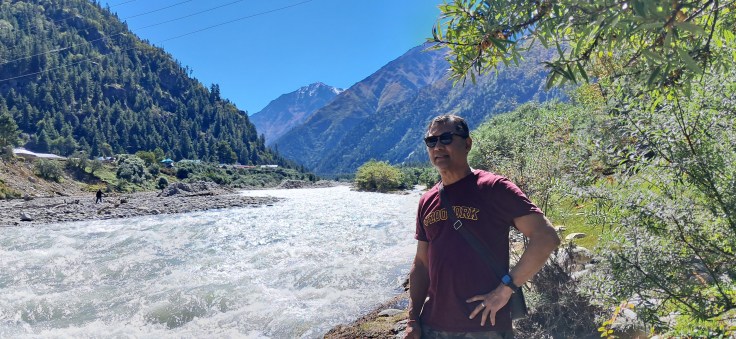
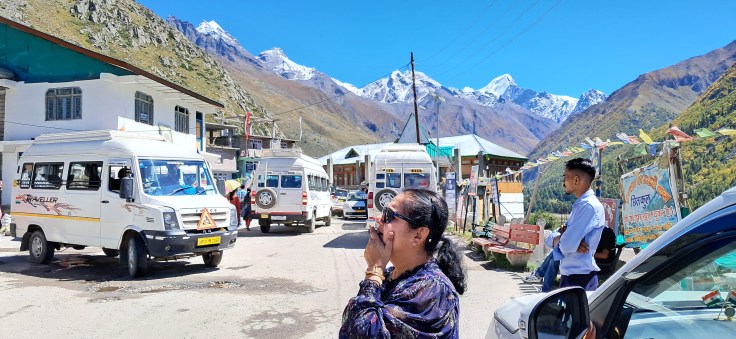
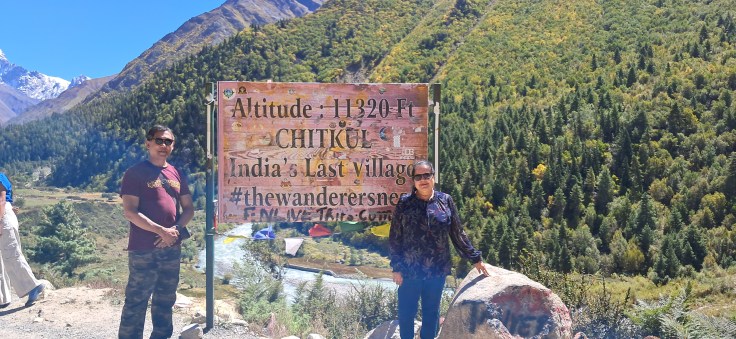
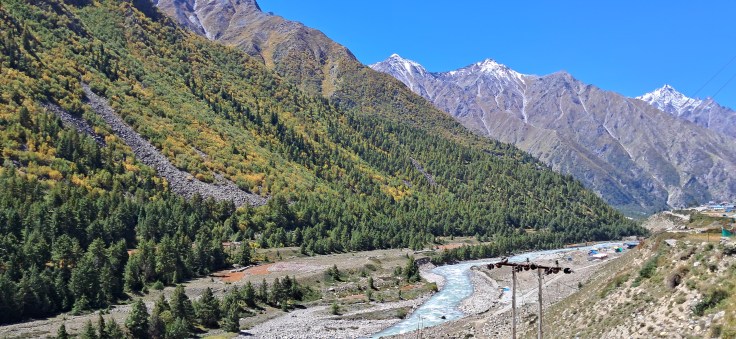
We didn’t go to Chhitkul yesterday. So after a sumptuous breakfast in the garden, we left at 9.30 am. Breathtaking Sangla/Baspa Valley appeared again. The show was at its best at Rackcham. There was a marvellous view of the mountains around. The Baspa River flowed with its full force. Though some parts of the road were scary, driving through the beautiful valley more than made it up. The feeling of enchantment overtook the feeling of fear. The landscape changed as we travelled towards Chhitkul. The area felt vast and open. The mountains appeared far away. The rocks seemed deliberately made smaller to prevent them from falling. Felt weird to see and feel the last settlement in India before the Tibetan border. It’s a peaceful, sparsely populated, and relatively untouched village that feels like a hidden gem, making it a great escape from city life. The breathtaking views of the Baspa River, alpine meadows, towering, snow-capped mountains and the clean air of Chitkul allured us to stay longer, and it was hard to leave. Himalayan peaks and green meadows attract trekkers, while its culture blends Hindu-Buddhist traditions, unique wooden houses, and local deities, offering a serene yet adventurous experience with vibrant local life amidst breathtaking scenery. The return drive to Sangla was equally eye-pleasing, offering views of the cute and vibrant Batseri Village.


We had lunch at a Bengali restaurant in Sangla. Being always curious, I chatted with the owners.
‘What makes you settle here?’
The lady replied, ‘I fell in love with the place. Knowing many visitors from Bengal travel to Sangla, I opened a hotel here 10 years ago.’
Stunning Journey to Kalpa: Nature’s Splendour
The road to Kalpa was scary but less daunting than the one from Rackcham to Sangla.
Rekong Peo was a vital marketplace before Kalpa. We stopped here for a break and enjoyed the place. The drive from Rekong Peo to Kalpa was very scenic. Kalpa Valley is very picturesque. The sight of the majestic Kinner Kailash mountain range was out of the World.
One of the locals pointed at us. ‘Locals believe this range is the winter home of Lord Shiva and Goddess Parvati.’ This belief, steeped in centuries of tradition, imbues the village with a profound spiritual charm.
Driving to the Suicide Point, the road turned every minute, making our heads swing. The roadside dipped straight down to the Sutlej. On one side, there was about 1000 ft of a Gorge. On the other side was a narrow path with high mountains.
‘What an experience!’
Standing on the Suicide Point viewing platform, we were treated to a 180-degree, breathtaking panoramic view of the Gorge. The surrounding mountains and apple orchards were stunning, and the frightening cliffs and the chill mountain air made it a perfect spot for incredible, adventurous, enthusiastic photography.
‘Arpit, my head is swinging. Let’s go back to our homestay.’
‘Don’t you wish to go to Roghi Village?’ Arpit tried to convince us that we were missing something nice. I was also sad, but couldn’t take the winding road and turns anymore in one day.
In search of the view of Kinnaur Kailash:
The homestay at Kalpa was cute, with two brothers and their kids looking after the property.
My first inquiry to the young owner was, “Can I see Kinnaur Kailash from my room?’
‘You can see the majestic Kinnaur Kailash mountain from your balcony, but it is covered with clouds. I will come and show you.’ He assured me. He also showed me the Shivling, where people trek from the village down the valley. The view was mind-blowing, to say the least, although the clouds covered some parts. I was waiting with the expectation of seeing them clearly tomorrow.


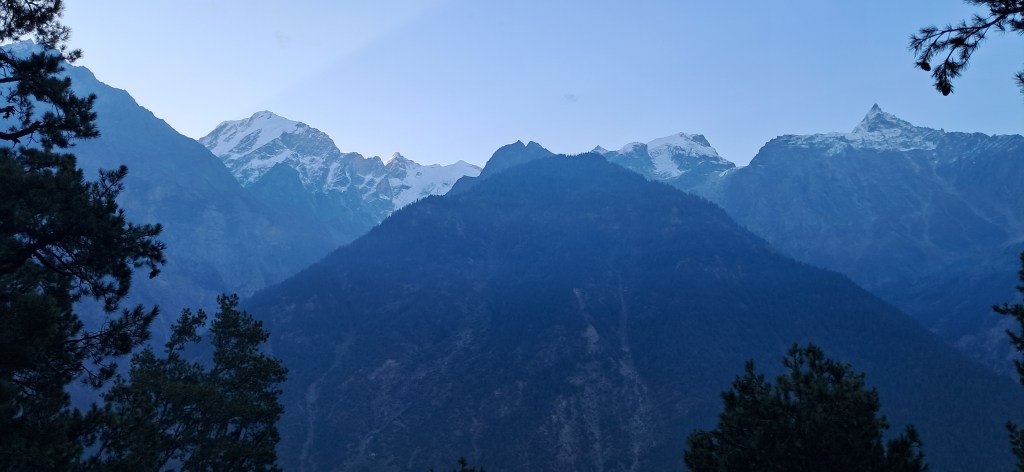
He served a yummy vegetarian dinner with rajma and vegetarian curry. In this part of the World, the sun doesn’t set until late. We watched a few people unsafely climb trees and cut the branches without harnesses. When the owner served our dinner in our room, I asked the young man, ‘What are they doing?’
Pine and other nuts are produced in Kalpa apart from apples. They are cutting the branches with Pine nuts, which will go to the markets in India,’ the young man explained, shedding light on the unique cultural practices of the locals.
I was captivated by the sight of people taking shortcuts in a spiral walkway just below our hotel. The village of Kalpa looked like a dreamland when the lights twinkled at nightfall. I was wrapped in warm clothes and sat there, utterly enchanted by the magic. More clouds set in, and soon nothing was visible.
 callofthefar.com
Leave a Comment