
28/11 – Tues – Ella to Yala NP – Tissamaharama
It was a pleasant surprise for us! Manjula stopped the car by a spectacular roadside Ravana Waterfalls, one of the most popular and scenic waterfalls in Sri Lanka. It is only a few minutes’ drive from Ella to the south. Compared to the other waterfalls we had been to, the waterfall is extremely accessible to all ages.

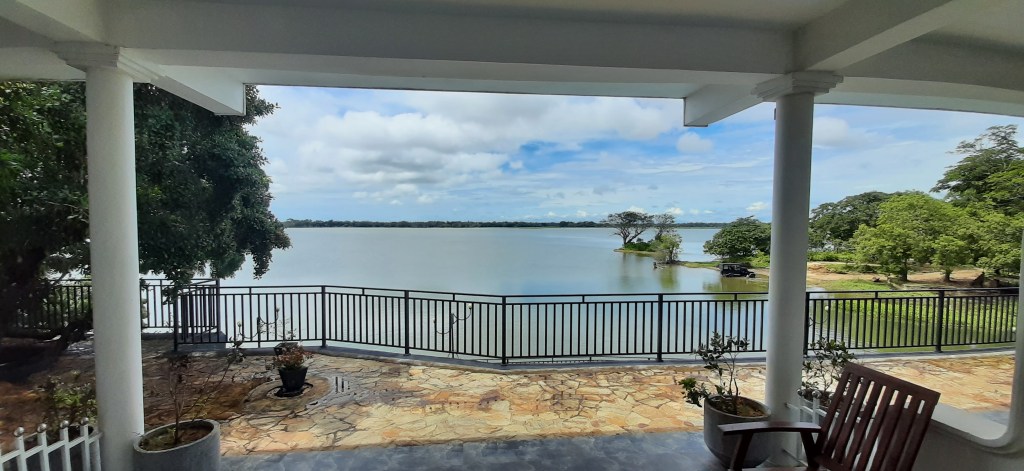
We didn’t travel too far to reach Tissamaharama, our Getaway to the Yala National Park. The temperature started warming as we descended the plane, and it felt sticky and hot again. Our resort was situated on the lake, and the scenery from the balcony and the room was terrific. Here, too, I could sit on the balcony and look at the lake the whole time, but we had an exciting safari waiting. We were very excited and getting geared up for our evening safari.
Sri Lanka is proud of its natural resources. One of its main attractions is the unique wildlife that can only be spotted in this part of the world. Along with its vast background, the Yala National Park is one of the island’s most frequently visited wildlife sanctuaries.

Yala National Park is the second-largest Park in Sri Lanka, bordering the Indian Ocean. After lunch, a big Jeep picked us up, and we entered the Park through the Palatupana gate*. The Jeep driver showed us the water buffalos before entering the Park. The officials checked our papers and approved our entry. Manjula accompanied us.
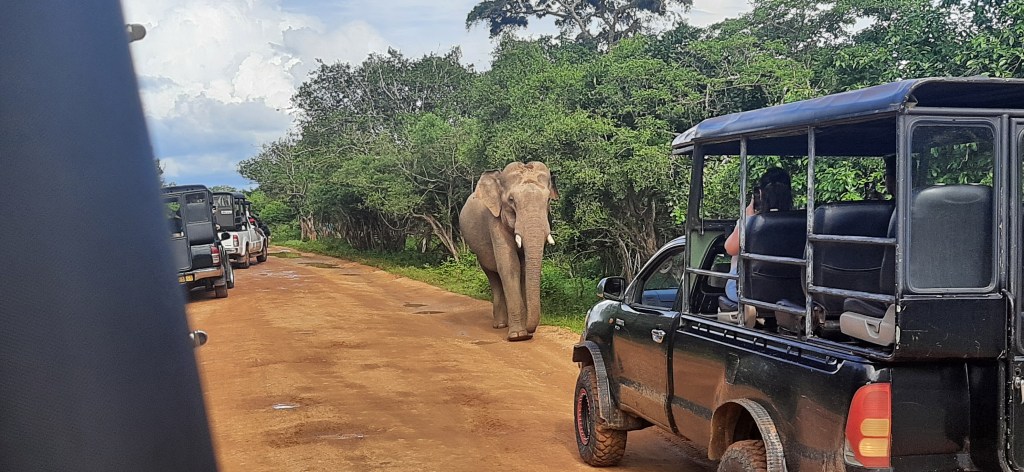
Our first animal sightings were not precisely what we were hoping for, but they were fantastic nonetheless. We saw wild boars, water buffalo, chital deers, and birds of various sorts. Ibises, spoonbills, and storks on the water holes and brightly coloured bee-eaters and kingfishers constantly fly through the bushes and trees. They are used to the sound of an engine. Our eyes were looking for the elephant herd but couldn’t spot any. Suddenly, we saw a few jeeps queued up. Oh yes, a giant male elephant appeared on our right-hand side, feeding himself from the hanging leaves of a tree. He also seemed to be not bothered by the attention until a jeep started to go very close for his comfort. He turned around and started walking up to it. Everyone was scared. The driver slowly backed it far enough from him until it he diverted his attention back to eating.
Our driver spotted a crocodile resting on the banks. We drove deep into the Park, eagerly following the red and muddy road. The driver was adamant that he could show us the leopard, but we have yet to be lucky. Then, a few meters away, we saw a few elephants on the other side of the bush. Despite seeing a few elephants in our travels, seeing these giants again was an exciting experience.
With the engine off, we could hear their communication—the grunts and trumpets—which was absolutely memorable.
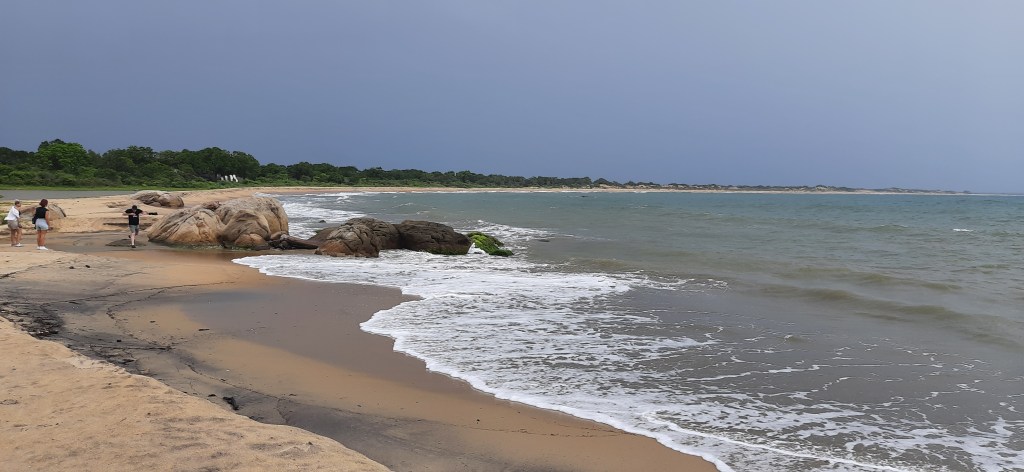
We drove to the Patanangala Beach picnic area for a break. This was the only safari that allowed us to leave the Jeep and walk on the beach. It was here that the Park’s raw and rugged nature really came to life. The Indian Ocean and the vast rocky protrusions intersected with the enormous national park. It was a uniquely wonderful place. While getting on the Jeep, I saw a wild boar family hurriedly running into the bush. Well, because there were a few people, they didn’t come near, but they easily could have.
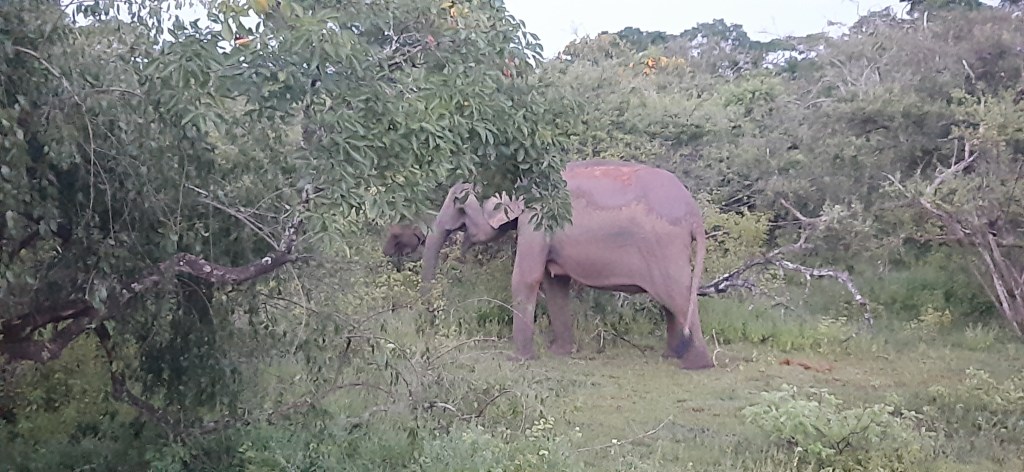
Before making our way out of the Park, it started raining. When the Park gate was only half a kilometre away, we saw a couple of elephant mothers with their cubs sheltered under the tree and feeding on leaves. They were so cute. This was the cherry on top, and our disappointment in not seeing a leopard up close was somewhat limited by the incredible elephant encounter. Overall, the safari was an amazing experience,
29/11 – Wed – Yala to Galle to Colombo
Sri Lanka is bounded by the sea and has beautiful beaches and picturesque shorelines. Our drive from Tissamaharama to Galle was an experience to remember. The white surf breaking on the beaches in the area is laid like a long pearl necklace. The water is pristine and reflects the clear blue sky. Rows of cute Sri Lankan villages appeared alongside. What a wonderful place to be! This area is trendy among foreigners and offers many water-bound activities. Most parts of the road to Galle were on the right-hand side of the beach, making us lucky to see the beautiful coastline with mixes of colonial and Sri Lankan cultures combining tropical sunshine with nature experiences.

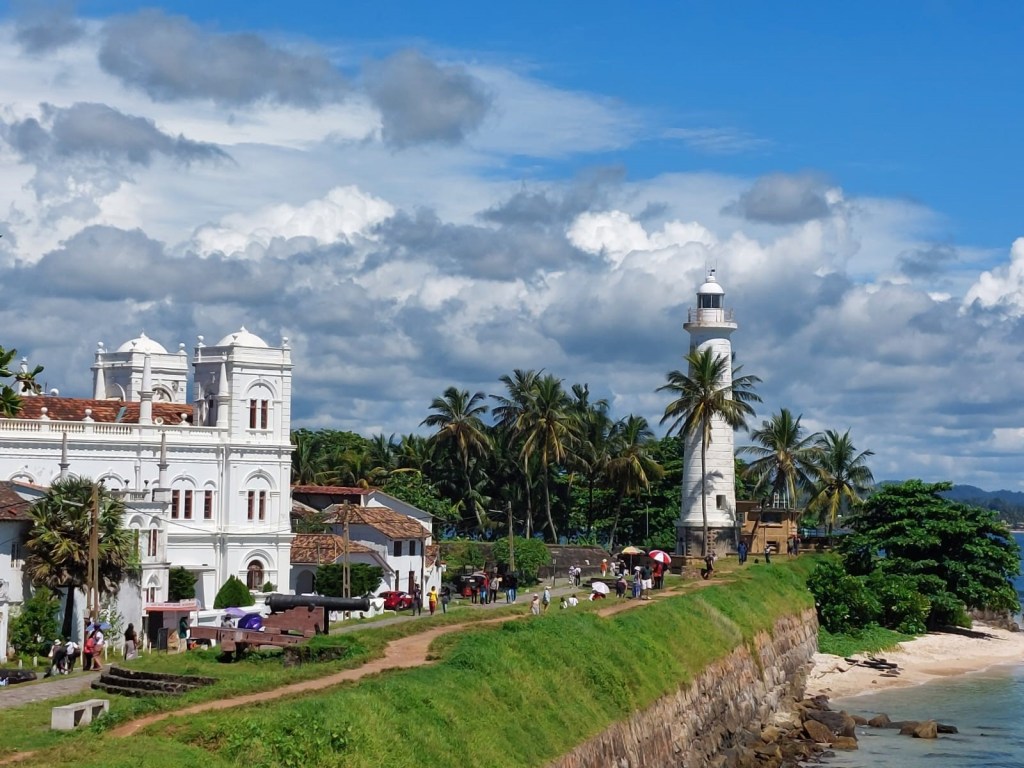
Galle, on the southwest coast of Sri Lanka, appeared in the news for the vast destruction it encountered in Sunami 2004. I saw beautiful Galle while watching cricket and wished to visit there one day. It’s famous for Galle Fort, the fortified old city founded by Portuguese colonists in the 16th Century. The Dutch expanded the stone sea walls. The architecture reflecting Portuguese, Dutch, and British rule is encircled by car-free streets with colonial buildings, including the 18th-century Dutch Reformed Church. Galle Lighthouse stood on the fort’s southeast tip and was the most beautiful part of Galle. The location made the lighthouse stunning on the backdrop of the sea.

It was a very humid day with scorching sunshine and 1.30 p.m. I was reluctant to leave the air-conditioned comfort of the car in the heat, but the impeccable scenery made me come out. Around the lighthouse, there was a mild sea breeze, but when we reached the Clock Tower in Galle Fort after seeing the Dutch settlement, we couldn’t bear the humidity anymore. We should have visited Galle after sunset. There was so much to see.
This was our last day with Manjula, so we invited him to lunch with us. Delicious prawn curry with fried rice in an air-conditioned restaurant satisfied our hunger and comfort. After lunch, we left for Colombo and arrived in over two hours. It was time to say goodbye to Manjula, a thorough gentleman with vast knowledge of the area. We will miss his company.
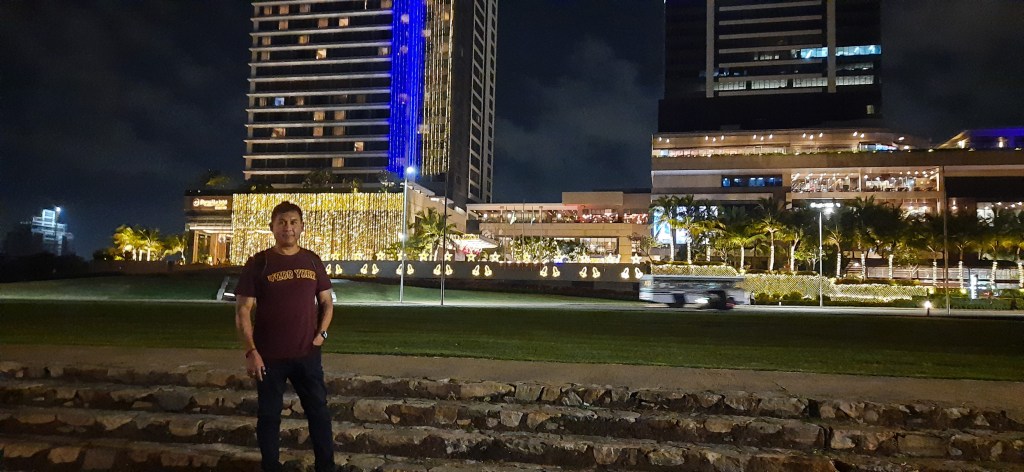
The hotel was in the heart of the city, only 5 minutes from Galle Face Green, which stretches along the coast. After resting with a cup of Sri Lankan tea, we set off for Galle Face Green. It was a lovely time of day. A gentle breeze from the seaside helped beat the humidity and walk through this modern city. We waited to see the sunset as the weather was clear, but we didn’t see it. Towards the end, the cloud covered the sunset behind, and the splash of red in the background of the cloud created a mesmerising scene. Slowly, the darkness set in, and the glittering lights of the area and the hotels across the road felt out of this world. It was hard to leave the area.
I was interested in going to Pettah Market, and while checking the price with the auto driver, a con man interrupted, half-convinced us, and instructed the driver to drive to a better shopping place. It was far away but a boutique shop with inflated prices. We left the shop in five minutes and were annoyed with the driver for taking us there. He was a nice guy and said sorry that he couldn’t say anything to that con man. He was an agent of that boutique shop, and they waited at a junction to lure possible customers into buying from that shop.
30/11 – Thurs – Colombo
It was a very humid day. I decided to visit Pettah Market to do some shopping. I was told we could get good clothes at a reasonable price there. The Auto driver dropped us on the opposite side of the Jami Ul-Alfar Mosque, known as the red mosque for its imposing red and white building. It is a unique architectural structure erected right in the heart of downtown, very artistic and beautiful.
Pettah Market is massive, stretching from the main street to a few lanes and by-lanes on both sides. With so many people around buying and selling stuff, we felt more sticky and kept on drinking water. There is a saying: shop until you drop. I continued, but Arpan started getting annoyed and wanted to return to the hotel’s air-conditioned comfort.
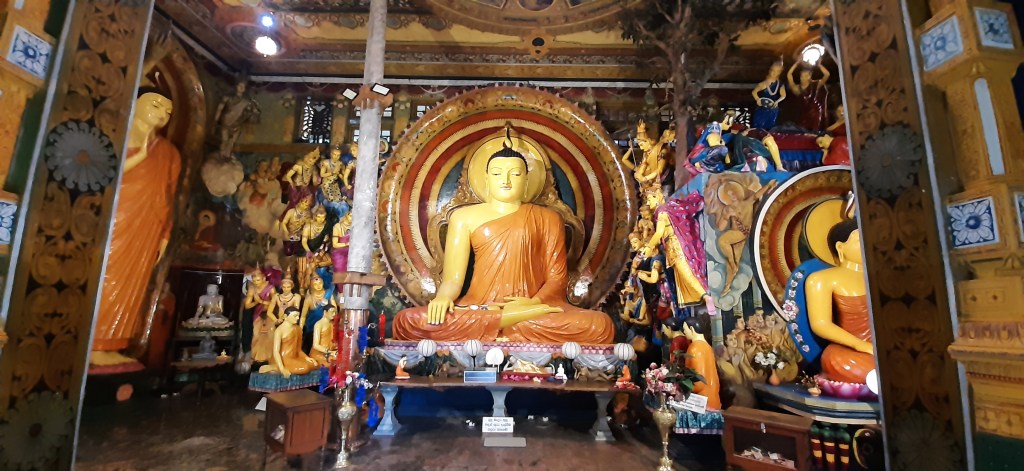
The weather started improving by 4 p.m. I wanted to see a few other places before we left tonight for a very early morning flight from Colombo. Gangaramaya temple is one of the old Buddhist temples. It is beautiful, with gorgeous images of the Lord Buddha and his disciples. The premises are clean and perfect for the worshippers to pray and meditate. We were lucky to end the visit with blessings from the head priest.
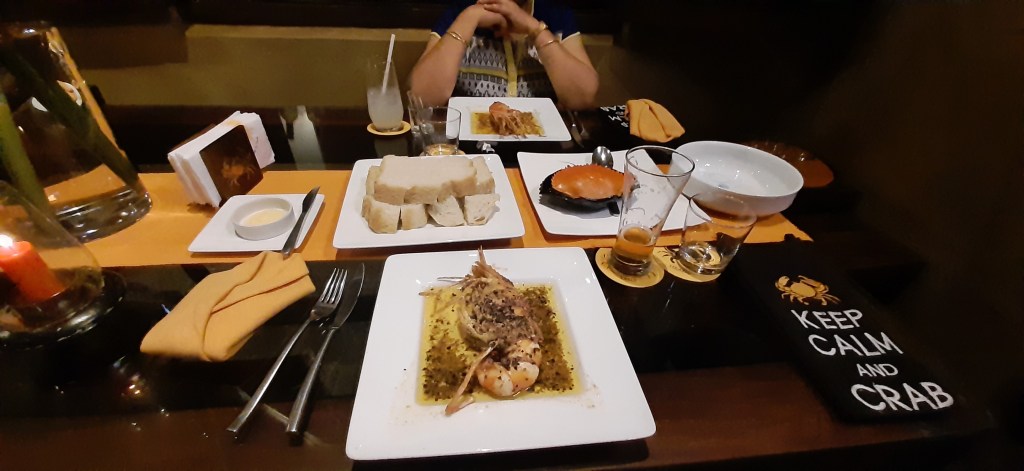
We were sad because there was not much time left. For the last time, we walked through the Galle Face Green. We wanted to see the Dutch hospital but thought we couldn’t. Travel God bestowed his blessing on the way to our last stop to taste delicious crabs in the Ministry of Crab. We passed through the Dutch hospital. Built by the Dutch in 1681 as a hospital, the site has been used for various purposes, such as housing, shops and restaurants. The Restaurant Ministry of Crab is located here.
Ministry of Crab is a famous restaurant founded by two famous Sri Lankan cricketers, Mahela Jayawardene and Kumar Sangakkara, and famous Sri Lankan Chef Dharshan Munidasa. It showcases delicious Sri Lankan crabs and prawns. Although the prices are high for the Sri Lankan standard, the delightful cooking more than makes it up.
We wished we could stay longer in this beautiful country with so many lovely people we met. Sri Lanka has everything a traveller could want: mountains, rivers, luxuriant green forests, abundant wildlife, historical places, beautiful buildings, temples, and beautiful beaches. The best part, though, is the lovely people.
Notes:
*Palatupana is the main entrance to the Yala National Park and the most crowded entrance due to Block 1’s popularity. The Park consists of five blocks, three of which are now open to the public. The blocks have individual names, such as Palatupana (Block 1). It is situated in the country’s southeastern region. The Park covers 979 square kilometres (378 sq mi). Yala was declared a wildlife sanctuary in 1900 as the first designated national Park in Sri Lanka. The Park is best known for its variety of wildlife and is an essential conservation of Sri Lankan elephants, leopards and aquatic birds.
 callofthefar.com
Leave a Comment