
Continued from Call of the Mountains – Enchanting Himachal Pradesh Part 5
On the way to Dalhousie, a spectacular landscape in the lap of Nature:
Bhagshu Falls:
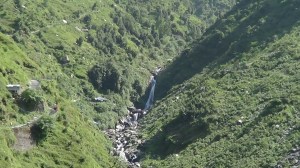
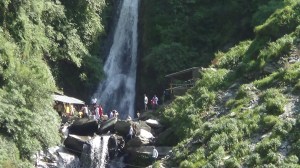
Bhagshunag Temple of god Shiva situated around 2 km from McLeod Ganj Bazaar. Very next to Bhagshunag temple there was a waterfall, called Bhagshu falls and we didn’t want to miss! Nestled between the mountains, the pristine clear water flowing from the top was a breathtaking sight. The water gushed downhill like a silver lining. Climbing stairs and the narrow path took us from temple to the falls. It was about 1.5 km uphill walk from the car park. We walked up to 1.2 km and loved the view from this point. The day was a bit hot too for our comfort but with a gentle breeze blowing and the place was so lovely that we didn’t mind trekking up. We had an excellent time.
Dalhousie is a beautiful hill station with the memory of Maharshi Debedranath and great poet Rabindranath Thakur, to me. Rabindranath Tagore spent a part of his childhood living in a house called ‘Snowdon’ in Bakrota Hills. I grew up reading his book called The Reminiscences.* that included his stay in Dalhousie. Sitting on the western verge of the Dhauladhar mountain range of the Himalayas, in 1854 the British Empire in India established Dalhousie hill station as a summer retreat for its troops and bureaucrats.
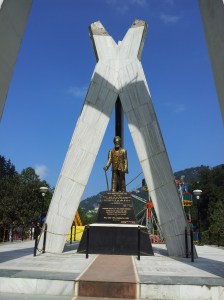
We reached in the afternoon. After we checked in and freshened up, we went out to explore the area. We took a break and had tea at the local meeting place at Gandhi Chowk (with a statue of Mahatma Gandhi built at the intersection of roads). The place was crowded. So we continued to Subhash Chowk where a big statue of Netaji Subhash Chandra Bose built in the middle of the junction. This Chowk was quieter and had an enhanced view of the mountains.
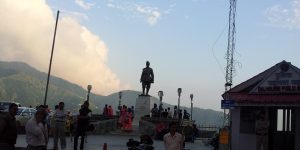
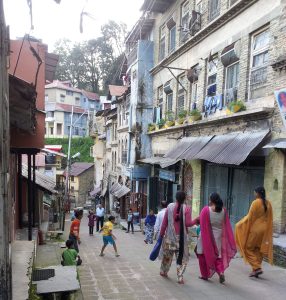
Suvra sat and enjoyed the view from the Chowk. As Anil advised, I went down to a local lane where local people lived giving me a chance to see local houses and meeting the people. I sat in one of the shops and chatted with the ladies around while my trouser was getting shortened. They were very curious about my whereabouts.
St Francis Church was a cute and quiet place to visit. We had a lovely time visiting its well looked-after garden and the view from the churchyard was fantastic.
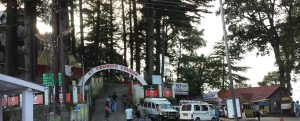

Our hotel had two different terraces offering magnificent views from the balconies.”A beautiful place to spend a couple of days,” I thought enjoying the ethereal view. The dinner was a bit of a highlight. Not only the dining room was charming with well-lit and nicely set tables, but there was also a singer singing live before us. He had an excellent voice. We thoroughly relished the evening after a long day.

We met an elderly couple from the USA on the terrace after dinner. They just visited Mount Kailash (Mountain in Tibet) and Manas Sarovar (Lake) and continuing their trip in Himachal as an extension. Being me, I started asking them lots of questions about their Kailash and Manas Sarovar trip. Suvra and I both had our wished we could visit Kailash and Manas Sarovar ONE DAY.
Gorgeous Khajjiar
We started early today to visit Khajjiar-called mini Switzerland and Gulmarg of Himachal Pradesh and historical Chamba.
Panch Pula (5 bridges) was an ideal spot to have a quick break. It was a nice spot with a few streams meeting together with a monument built in the name of a great freedom fighter Sardar Ajit Singh. Nice place to have a cup of tea.
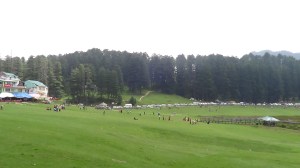
Situated at an elevation of 6500 feet, Khajjiar is blessed with pleasant weather and natural splendour. The road to Khajjiar was very narrow and winding. Passing through the lush mountains, azure skies, the Pines, Cedarwood and Rhododendrons captivated us so much that we ignored the sharp corners. Anil, a great driver skilfully landed us in Khajjiar. We were enchanted! Khajjiar was exquisite. It was like a vast green carpet lay surrounded by the cedarwood, pine and oak trees with a charming forest bungalow underneath and a lake inside—just picture-perfect! Except for the Lake, this could be better maintained. Feeling relaxed, it was a great opportunity to appreciate amazingly gorgeous Khajjiar.

One of the locals approached us for riding their horses. They make their living out of horse rides. They confirmed that they look after the horses well. I was in two minds whether to ride on these beautiful creatures but to help the locals I went on to a short ride with lovely ‘Sultan’. The horse looked in good health.

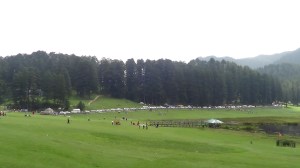
We didn’t see many people yet. It was sad to see the place was getting commercial with the shops and hotels inside the meadow. The area definitely will lose the charm eventually if the they didn’t control the number of shops inside the meadow. I visited Khajjinag Temple next to the field. Like all other temples in Himachal, it was a work of art and very intricately wood crafted.

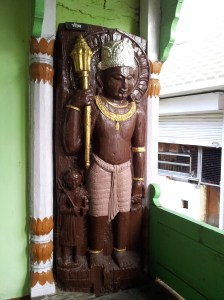
Captivating Chamba:
I was very enthusiastic about visiting Chamba for its captivating history** and challenging trek to Mani Mahes*** (Land of Shiva). Chamba is the doorstep to Mani Mahesh Shrine. Chamba Valley is famous for it abundant natural beauty with the River Ravi (Vedic name Iravati) flowing through lush green valleys. Situated on the right side of the River Ravi, Chamba is one of the oldest places in Himachal Pradesh.
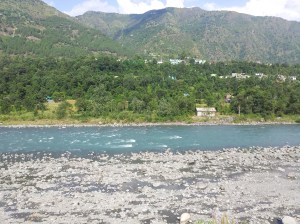
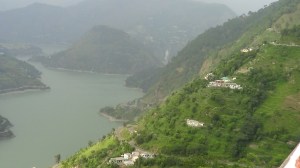
The River Ravi appeared in blue colour when we first met. As we were going towards Chamba, the cloud appeared suddenly making the view hazy. The colour of the river changed to greenish blue when the clouds appeared creating a mystic view. The sound of The River Ravi flowing through Chamba Valley was like music to our ears giving us a sense of inner peace. The winding road going through the spectacular mountain valleys mesmerised our senses. We were thankful that we had a chance to stop and witness the stunning display of Mother Nature.


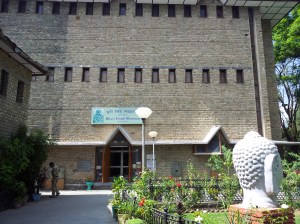
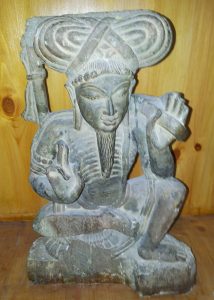
Chamba was warm on the day, and the weather was sticky. We did not have time to explore everything we wanted to do in Chamba. We always have a long list. Hahaha! We visited Bhuri Singh Museum-an archaeological as well as a historical museum. I was impressed with the collections dated back from 800 AD. The museum was nicely maintained housing artefacts, information, pictures, metal inscriptions from the pages of the history of Himachal Pradesh and its royal dynasties with detailed labelling in English. The museum was worth visiting for its extensive collections of local peoples’ lives in miniatures as well.
The Chaugan in Himachal is a social and cultural meeting place for the residents of the area. The Chaugan is the hub of all activities in Chamba, maintaining its calm, beautiful and serene look and feel. The ground acquired its name ‘Chaugan’, a Sanskrit word meaning ‘four sides’. Without any festival or activities, Chaugan looked like a common ground to me. It was open, and the weather was hot. So we could not spend a long time there.
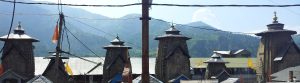
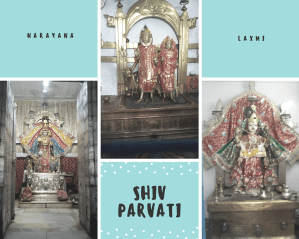
Laxmi Narayan temple complex has 6 individual temples. Only the main one was open. The statue of the deity was terrific, and the artwork was impressive on the temple wall. We peeped through the other temples to get glimmer of the other deities. They all looked remarkable. The temple is surrounded by the beautiful view of the luxuriant green mountains. The original works on the stones of the temple are in fact the proof of ancient Indian art forms. Temple was built with the wooden roof and has a Shikhara (peak) so that at the time of heavy snowfall in winter the snow falls off the temple peak. Though mainly locals visit this temple to seek blessings of the Lord Shiva, there is an increase of pilgrims visiting the temple during trekking (Yatra) to the Mani Mahesh peak.

I was looking around to get to see whether the local tribe- the Gaddis (Nomadic Shepherds of this area) with their herd can be seen in Chamba. Unfortunately we didn’t come across to them.
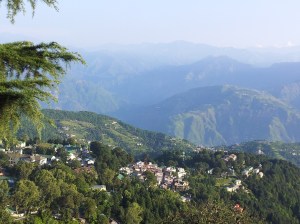
It was our last day in Himachal. We sat at the terrace of the hotel, absorbing into the out of the world view as much as possible. Massive western ranges of Dhauladhar Mountains created an enchanting landscape. I could sit there the whole day looking at the scenery or reading a book.
Suvra was very caring and brought me a hot water bag to rest my feet on after a long day. “Thanks a lot for the sweet gesture Suvra.” We wished we could stay for more days, but we had to leave for Amritsar after breakfast tomorrow. I won’t forget my beautiful experience in Himachal. Thanks to Suvra for being the right companion. I found peace and tranquility and added calmness to my otherwise very hectic life by vising the incredibly beautiful Himachal Pradesh. I just wish that I could spend more time and indulge myself to the absolute bliss of the mountains.

For the Curious:
**History: In 920, Raja Sahil Varman (or Raja Sahil Verma), King of Bharmour (in higher elevation), relocated his capital from Bharmour to a more centrally located tableland in the lower Ravi valley, and named the city as Champavati, after his daughter. Another version stated that it was originated from the following incident. King Sahil Verma’s daughter Champavati, a devout Hindu, used to see a hermit frequently. Being suspicious, the King one day followed her to the hermitage to investigate. Surprisingly he didn’t find either his daughter or the hermit there. Suddenly, he heard a voice informing him that his suspicions were ill-founded and his daughter was taken away from him as a punishment of his lack of trust in her moralities. The King, thoroughly repentant, sought salvation for his sin by building a temple for the hermitage. He also made a city around the temple and named in his daughter Champa’s honour. The temple is called the Champavati Temple, and she is worshipped as a Goddess here.
 callofthefar.com
Leave a Comment