
Continued from Call of the Mountains – Enchanting Himachal Pradesh Part 4
On the way to Dharamshala -a spiritual sanctuary:
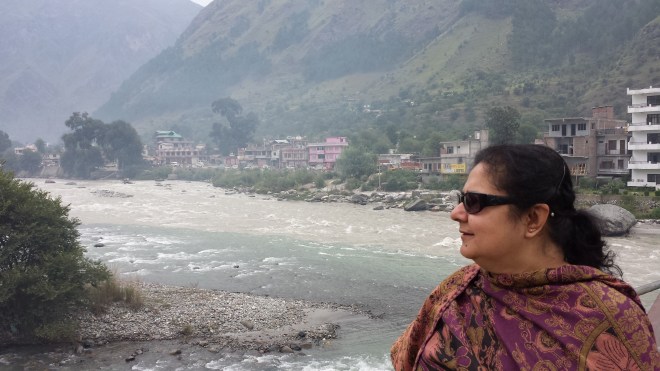
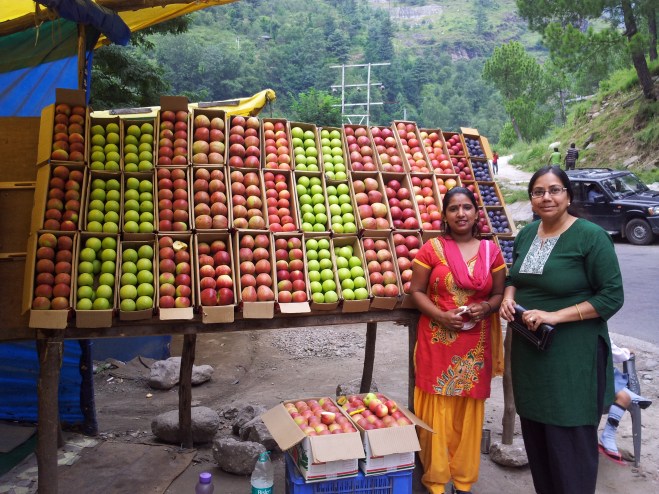
Suvra found a place on the internet called Manali Garh and requested Anil to take us there first. We went through the narrow local roads, wasting an hour up and down only to find a shabby looking museum, nearly falling apart. We compensated it with stopping at some beautiful places on the bank of Beas a few times on the way. The ladies on the roadside were selling fresh apples from the orchards. Suvra bought a crate to share.

“Stop, stop the car Anil“, we yelled, and we got out in the middle of the road in the heavy traffic. Arriving at Bhunter, we were excited to see the confluence of the Beas and the Parvati rivers up close. He was not impressed and said, “I can’t park here”. “Please park anywhere, and we will walk“, and we got out. The locals were amused to watch two ladies running madly to get a view of the confluence. Seeing the aqua-coloured Beas and the mud-coloured Parvati come together was a sight to behold. No less than a dream spot!
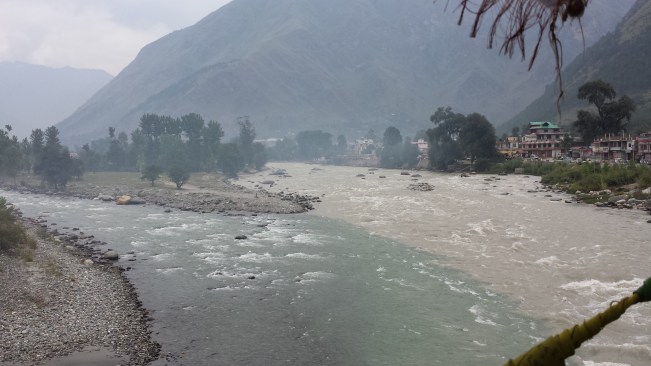
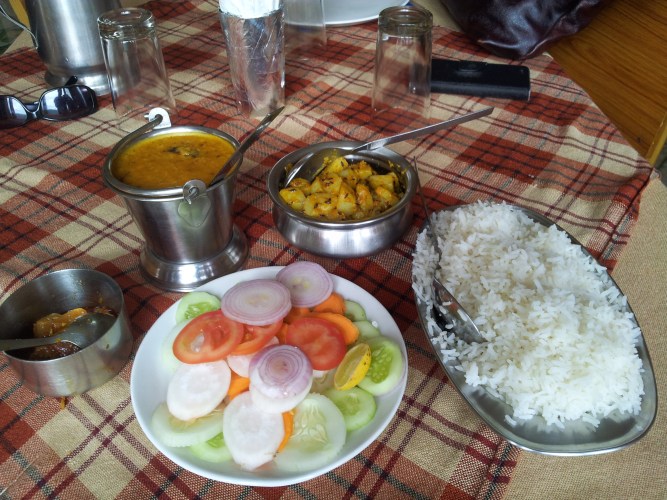
We had our tea break in a hotel Kapil near the confluence, and the view from this place was terrific. We continued on and had our lunch at Joginder Nagar with potatoes fried with cumin seeds, dahl, pickle, salad and rice.
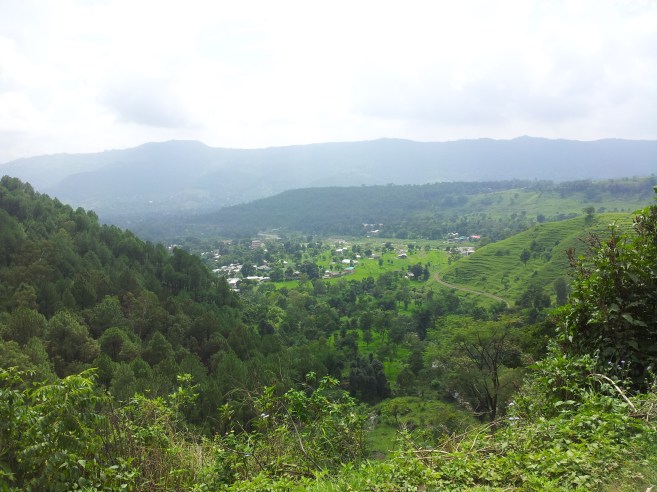
I read about the dam and the trolley tour in Joginder Nagar and was keen to experience but found out that they discontinued the trolley tour for a while. We were upset but sat back for a while admiring the mind-blowing view of the valley with little villages in the middle surrounded by the bushland and mountains.
We finally entered Kangra district in Himachal Pradesh and Anil stopped the car at an ancient temple of Shiva at Baijnath. It is believed to be one of twelve jyotirlingas* according to famous Hindu legends. In Baijnath, Dussehra festivals are not celebrated as a mark of respect to the devotion of Ravana towards Lord Shiva.**
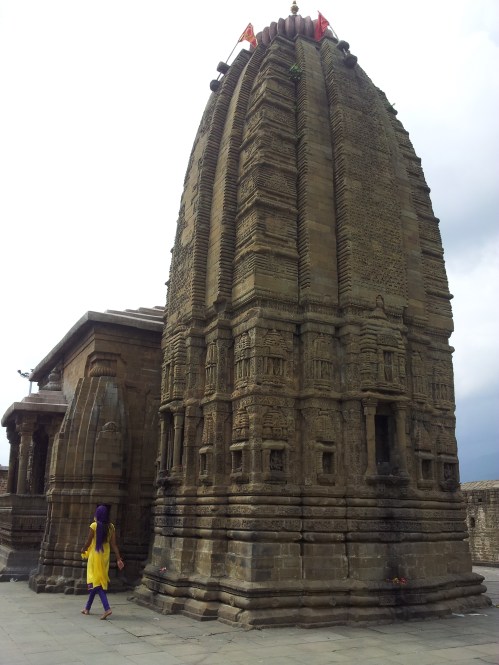
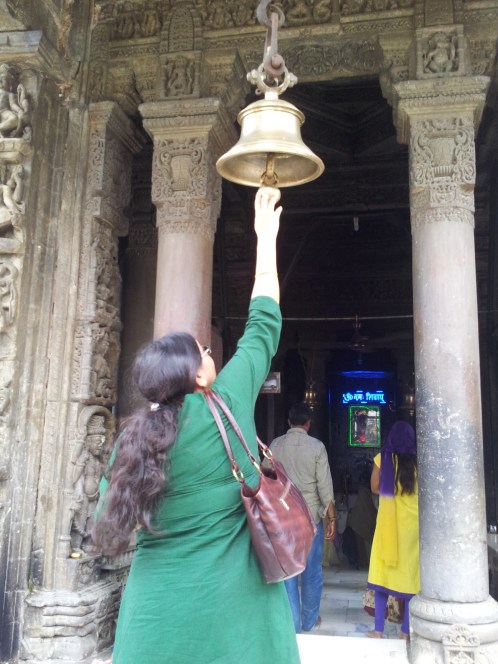
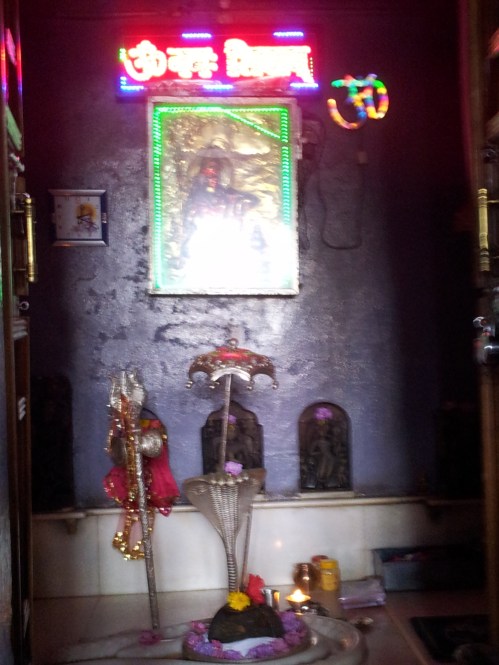
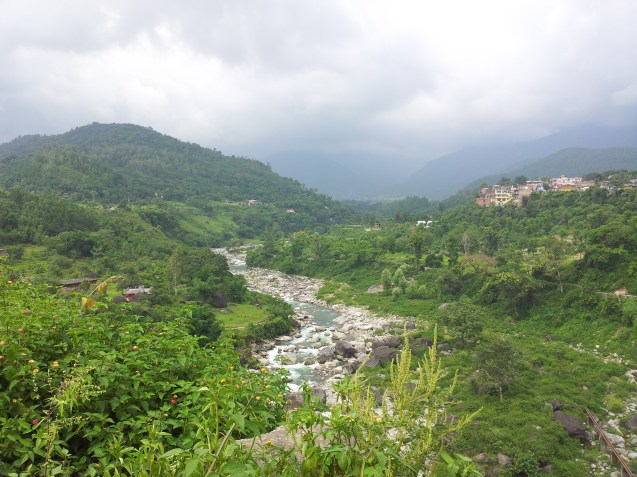
The artwork of the temple was impressive and very detailed. The temple also had a beautiful park around it and we spent some time after visiting the temple. Seeing a beautiful stream called Khir Ganga from the temple park was one of the highlights of visiting this temple. Monkeys are found nearly in all the temples in Himachal and all over India. We were very careful with our sun glasses and cameras.
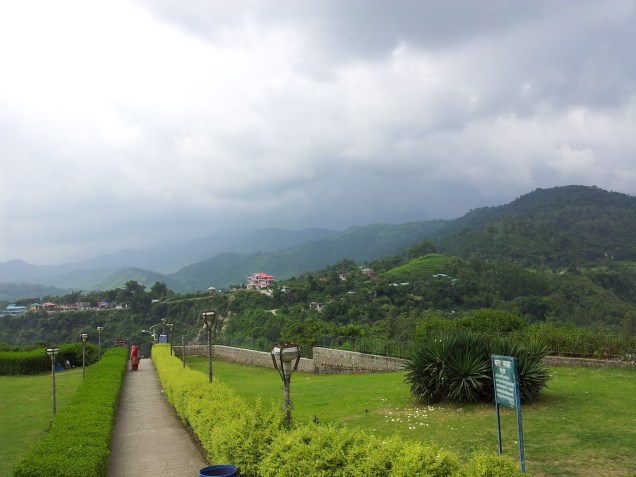
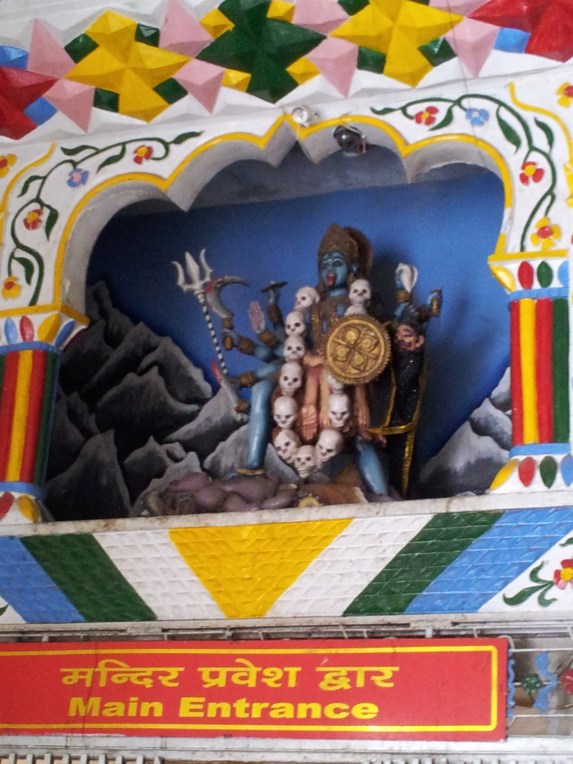
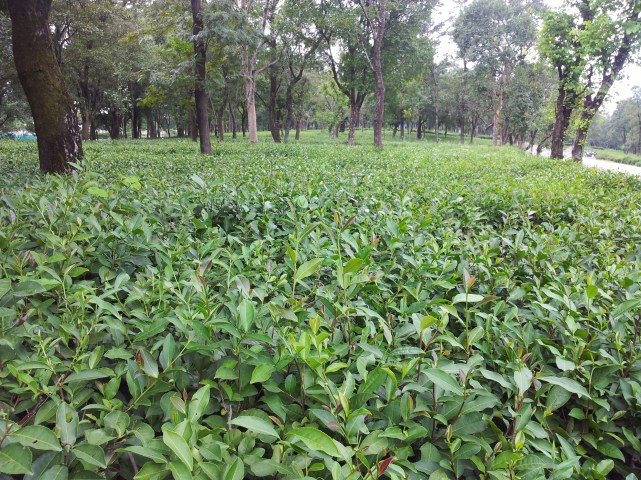
Chamunda temple is a holy shrine in the backdrop of Dauladhar and quite lovely in its structure. We briefly stopped in Palampur to visit a tea garden from outside. The very fresh tea leaves luring us to go closer and smell its freshness. The sight of the lush green tea beds with well-pruned bushes was very calming.

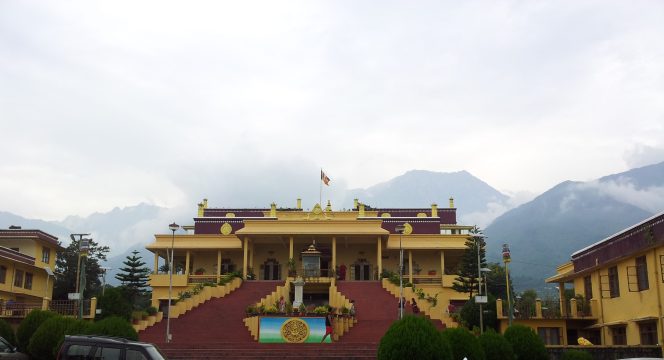
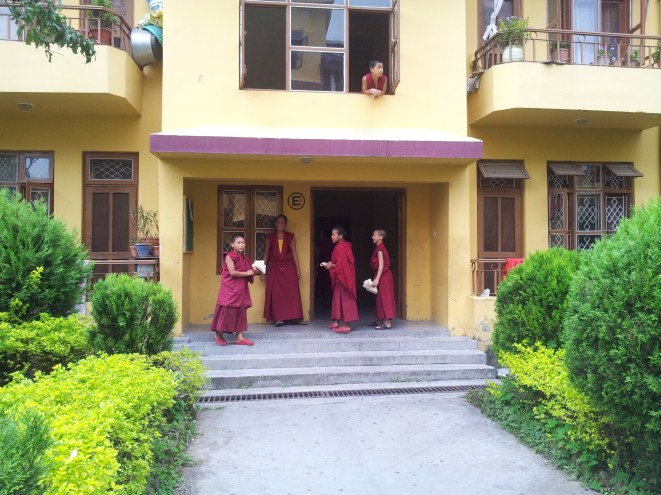
We saw lots of temples on our way. However, we had the most magical experience yet in Gyuto monastery. Witnessing a midday prayer with approximately 150 monks singing, meditating and praying made for a spiritual atmosphere I did not believe existed — an unforgettable moment. Gyuto monastery was an exceedingly peaceful and scenic monastery, with its stark yellow-brown coloured building against majestic Mountains in the distance. It was fun watching cute, young monks playing games in the garden.
Time to Rest
It was time to go to our hotel and unwind and relax in a beautiful place called McLeod Ganj. We were absolutely thrilled to find the location of our cottage. It offered enchanting views of Dhauladhar Mountains amid a valley surrounded by the mountains. The cabin was very, very private – away from all the hassles and taking us to a calm oasis.
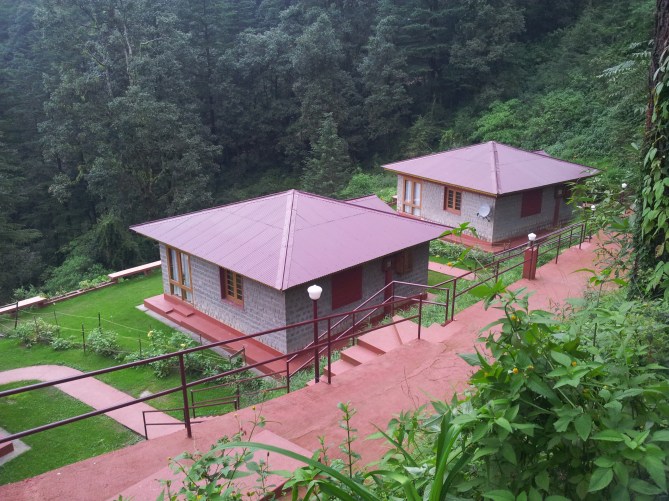
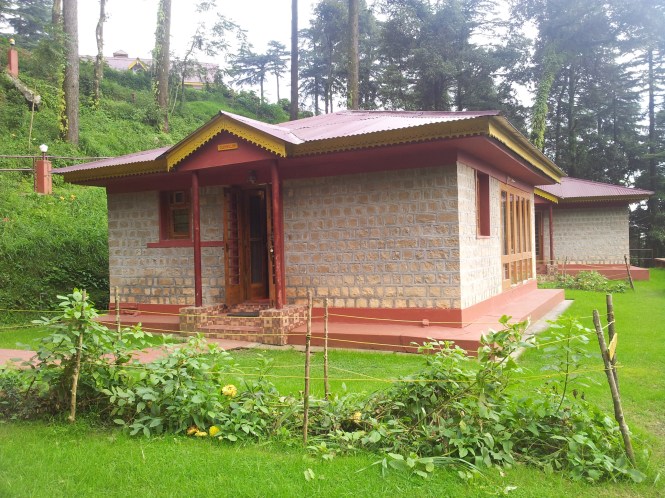


The suites were nicely decorated with an enclosed veranda with nature strips surrounding the perimeter. As we were looking for a tranquil area to unwind, this place was perfect for us. Our cottage was secluded and hidden amongst the hills. Fortunately, there were no guests on either side of our cabin.
The only problem was that we didn’t have any alternative if we didn’t wish to order our dinner here because of the secluded location of the place.
Around McLeod Ganj – A quaint town lying at the lap of mighty Dhauladhar Ranges:
We started our day with a little uphill trek. The uneven, narrow path went up amongst the cedar trees into the military area. Although the track was rough, it was very picturesque. The sun was peering through the luscious trees on the road, making the route magical. We could see the narrow path went down to other downhill places. While we took our time, we still huffed and puffed from the climb. We saw little kids running downhill to attend their school.

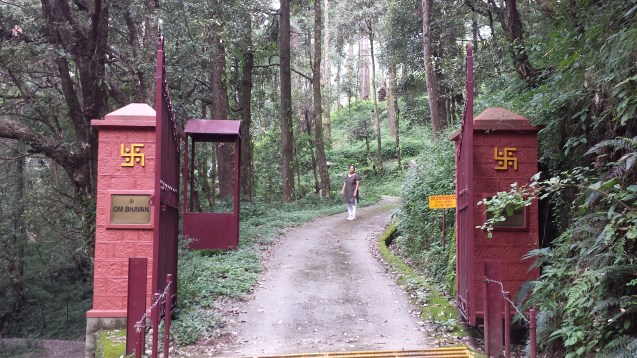
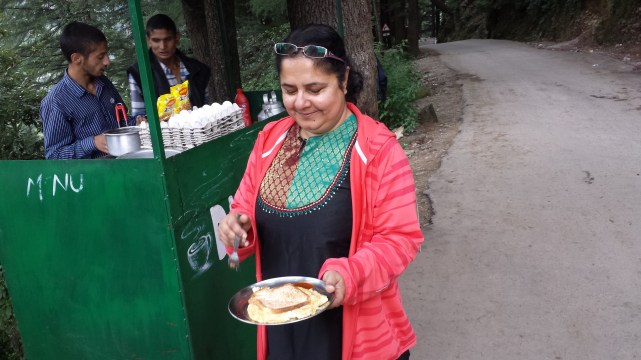
We felt hungry and approached a military restaurant for breakfast, but there was no place for us. The military personnel decided to have early breakfast there as well. Then we noticed a roadside stall just opened. Seeing they were selling toast bread, omelettes and tea, we felt nostalgic and could not resist having our breakfast from this cute little vendor. The incredible view of the surroundings came free with our meal. The shopkeepers were very vigilant so that the monkeys didn’t snatch our food. Bonus, I guess???
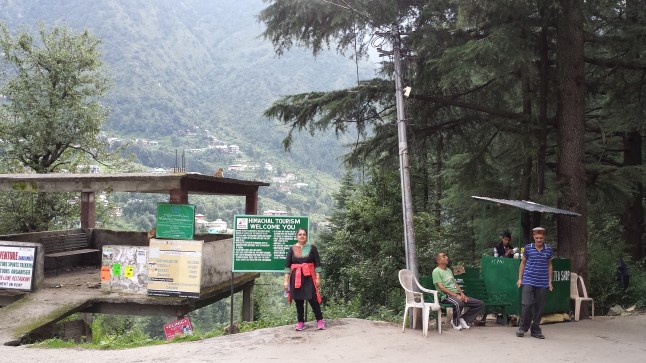
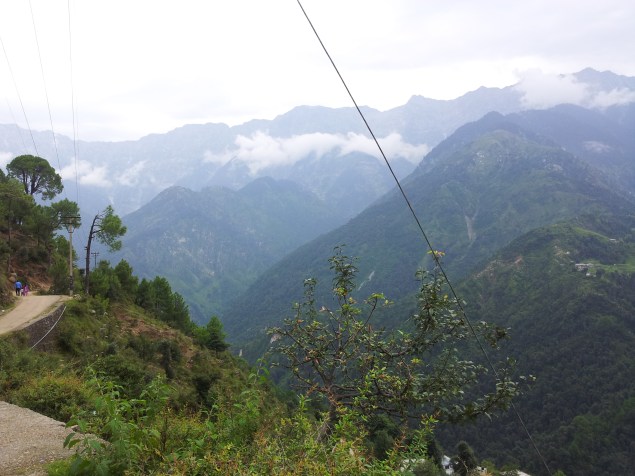
McLeod Ganj is the home of Dalai Lama and called ‘Little Tibet’ for its Tibetan population and Buddhist cultures. Anil drove us to a beautiful spot called Nadi, offering an unobstructed view of the Dhauladhar ranges. We felt the vastness and calmness of the mountains looking around. The kids were singing prayer from the schools below, and the humming sound really matched the atmosphere. We sat there, closing our eyes to absorb the atmosphere. A roadside seller showed us how a metal bowl generated the sound of a bell with a churn of a wooden stick to its rim. This is called a Tibetan singing bowl. I liked the soothing music of the singing bowl and couldn’t resist buying one!


Next stop was the home of the Dalai Lama in Mcleod Ganj. The security was tight at Dalai Lama’s residence for an apparent reason, and we were not allowed to take our cameras inside. The images of Buddha including Shakyamuni, Padmasambhava and Avalokitesvara were magnificent. The house was modest, and we happily watched the young lamas playing upstairs. The view from the roof was stunning. It was the first place in Himachal where we saw a couple of beggars at the gate. Although most of the people in this state were poor, we didn’t see them begging so it was a bit of a shock to see. We felt for them.

On the way, we were going past an old church tucked inside a dense forest. The serene ambience of St John Wilderness Church allured me to go inside the premises. It was a touching experience to feel the calm and relaxing atmosphere inside and outside the church. I wished I could have stayed longer and felt the serenity.

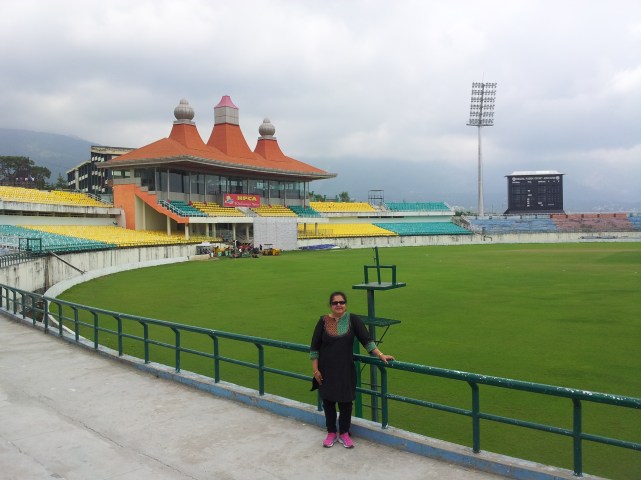
I was keen to visit the HPCA cricket stadium. Being an ardent cricket fan and having watched many matches in Dharamshala stadium on TV, I fancied paying a visit. Although the main entrance to the stadium was through a narrow road, the gate was open, and we went in straight away. The stadium had a lot of character with bright colours everywhere and the Dhauladhar ranges as a unique background. Thoroughly enjoyed the experience!
Jwalamukhi Temple is one amongst the 51 Shaktipeethas*** and is considered extremely sacred for Hindus. It is located around 30 km to the south of the Kangra Valley, in the lap of Shivalik range and dedicated to Goddess Jwalamukhi, the deity of Flaming Mouth.
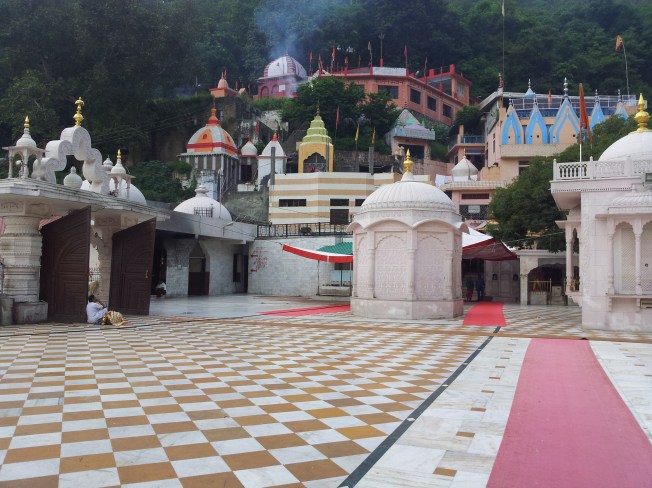
Jwalamukhi temple built over some natural jets of combustible gas, believed to be the appearance of the Goddess Sati. In this temple, there is a copper pipe through which natural gas comes out and the priest of the temple lights this. The position of the temple is very scenic.
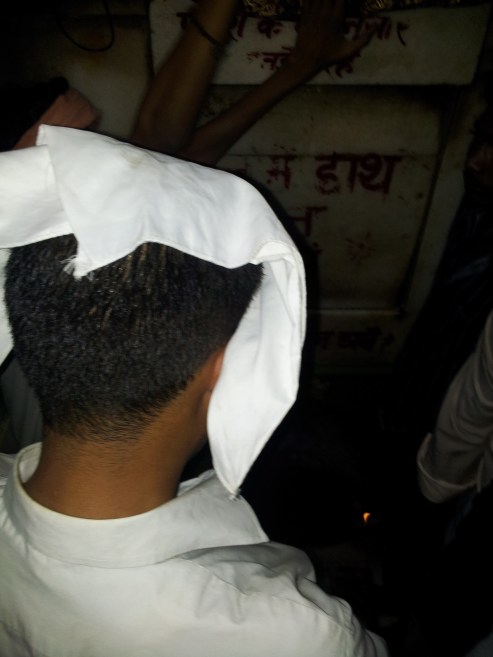
We didn’t see any idol in the main temple. The flame coming out from the fissures of the rock is worshipped. The temple premises were magnificent and had a few different parts. There were lots of jewellery, toys and metal pot shops on both sides of the way to the temple. Even though Suvra didn’t want to go, she ended up doing some shopping. Oh yes! We had the famous sweet made with milk, sugar and nuts called ‘Peda’ as well.
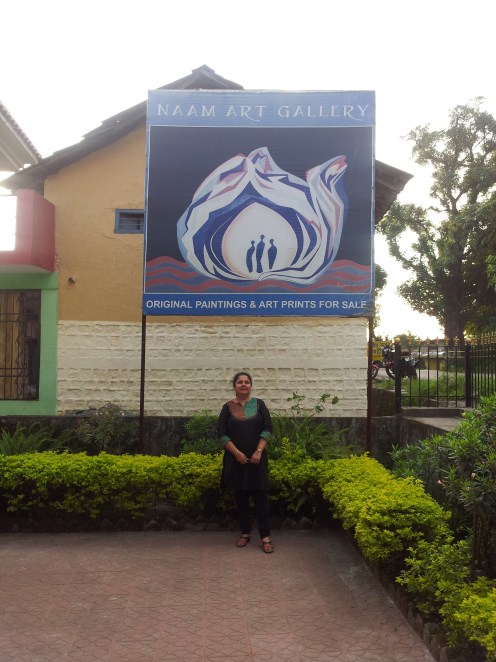
On the way back to Dharamshala, we visited Naam Art Gallery where lovely paintings were displayed inside. The main sketch was done by a German lady who called Dharamshala home and married an Indian man.
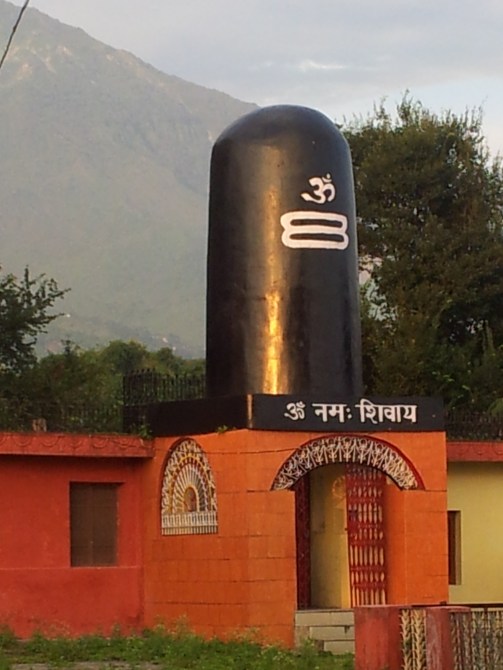
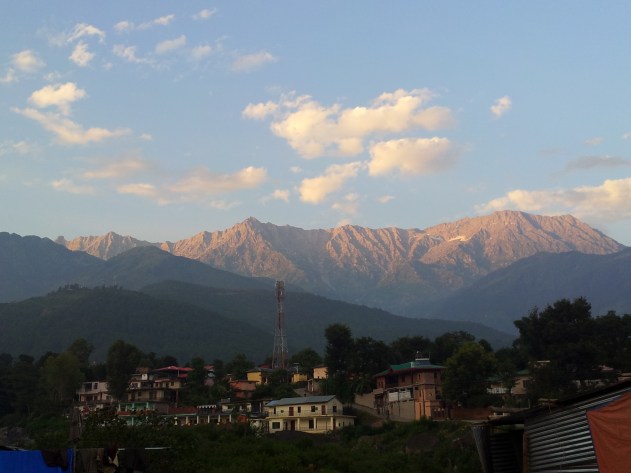
The sun was going down on Dhauladhar, offering a picture-perfect twilight. The colours of the Dhauladhar Ranges changed from light pink- saffron to medium orange. It was dreamlike scenery. We wished the electrical wires in the middle didn’t exist.
We enjoyed our stay in McLeod Ganj and visiting around Dharamshala. We were sad to leave this beautiful place. We will love to come here again if we get a chance in the future. Our next destination – 2 nights in Dalhousie.
Photo Credits: Self & Suvra Mitra
To be continued…
For the curious:
* A Jyotirlinga or Jyotirlingam, is a devotional representation of the Supreme God Shiva. Jyoti means ‘radiance’ and lingam the ‘Image or Sign’ of Shiva; Jyotir Lingam thus means the Radiant Sign of The Almighty Shiva. There are twelve traditional Jyotirlinga shrines in India. (Source: Wikipedia)
**According to Hindu legend, Ravana worshipped Lord Shiva so as to obtain invincible powers. To show his devotion, he offered his ten heads to please the God. Touched by this extraordinary act, Lord Shiva not only restored his heads but also granted him the powers of invincibility and immortality. Ravana then requested Lord Shiva to come with him to Lanka. Lord Shiva transformed himself into Shivling and asked Ravana to carry the Shivling. Lord Shiva warned Ravana that he should not place the Shivling down on the ground or else, he would leave him. Ravana started moving south towards Lanka and reached Baijnath where he felt the need to answer nature’s call. On seeing a shepherd, Ravana requested help in holding the Shivling while he relieved himseld. Finding the Shivling very heavy, the shepherd placed the Shivling on the ground, and thus the Shivling got established there. In Baijnath, Dussehra festivals are now celebrated as a mark of respect to the devotion of Ravana towards Lord Shiva.
***The Hindu mythological story of Jwalamukhi Temple relates to Sati, a girl born to protect the Gods from the violence of the demons. The girl was named Adishakti (Sati or Parvati), and Prajapati Daksha brought her up. Sati married Lord Shiva later by performing penance. The story goes that Prajapati Daksha once organised a yagna (Worshipping God in front of sacred fire) and invited all the Gods except Lord Shiva. Sati felt immensely insulted and humiliated at the act of her father. She sacrificed herself in the fire and died. Knowing her death, Lord Shiva became furious and carried Sati’s body and moved around the Universe. Sati’s tongue was believed to have fallen at Jwalamukhi.
 callofthefar.com
Very beautiful and serene places , would love to go one day.
LikeLike
Lovely place indeed! Thank you!
LikeLike