
Continued from Call of the Mountains – Enchanting Himachal Pradesh Part 3
Journey to the Rohtang Pass –
The word “Rohtang” means a pile of corpses – scary! Sadly, many adventurers in the past have died trying to cross the Pass during snowstorms and blizzards. That’s how this Pass earned the chilling name, ‘Rohtang Pass’. Located on the eastern side of the Pir Panjal Range of the Himalayas, it soars at 13064 ft above sea level. Still today adventurous people cross the Pass by foot, braving the dangerous terrain and weather conditions. The Pass opens from May to November every year and is the only motorable road (Pass) connecting Kullu Valley to Lahaul and Spiti Valley.

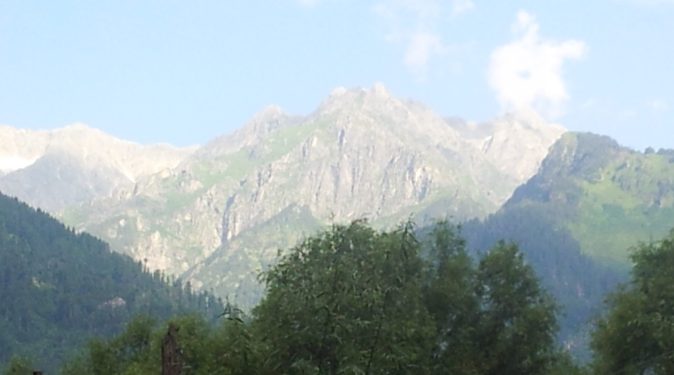
We started early. Rohtang Pass was around 51 km drive from Manali. The scenery changed after leaving Manali, and the partly snow-covered mountains appeared like glittery silver lines in the background of the awe-inspiring, flowing River Beas. Lucky us! The view was heavenly! The valleys, the mountains, the mystic clouds, the dense forest, the flowing streams, the wildflowers and lastly the winding road, all contributed to our stunning, soulful journey. All our senses were on special alert. We didn’t want to miss out on anything.
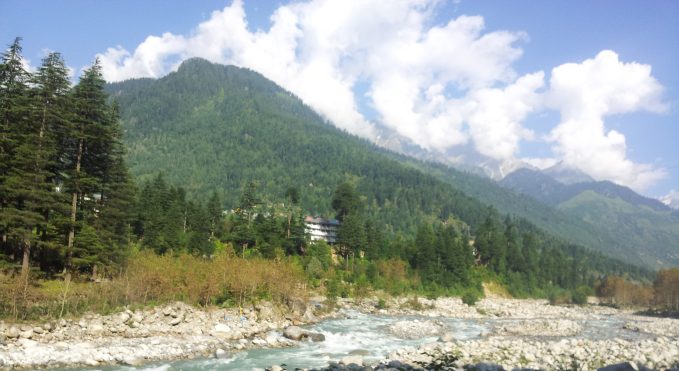
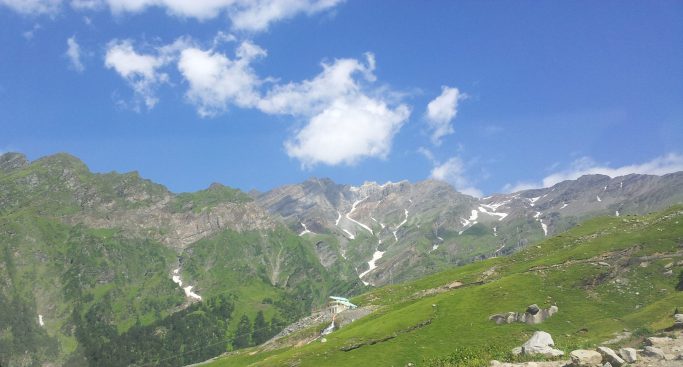
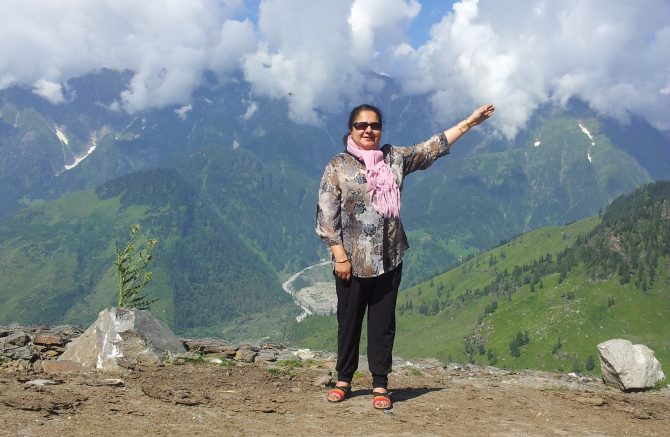
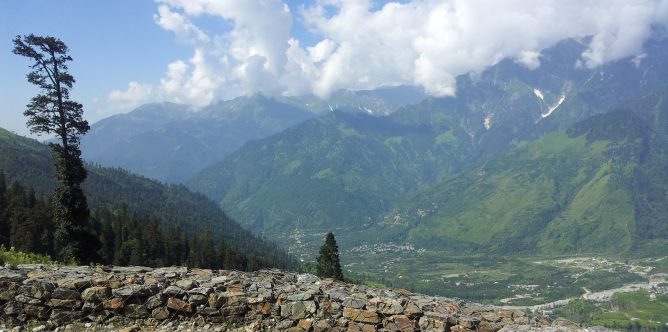
Discovering a lone tea shop at the brink of a hairpin bend with stunning surroundings, we stopped to capture the incredible view. Even a perfect camera could not do justice to the majesty of this place. “Can we please stop here?”, I asked Anil as I was thinking of having tea there so we could enjoy the peaceful atmosphere. Anil advised, “On the way back. If we are not able to come back by 12/1 PM, we will face the blizzards and strong winds. This won’t be a very good experience. Sometimes herds of goat and sheep block our way and it will take even longer to reach.”
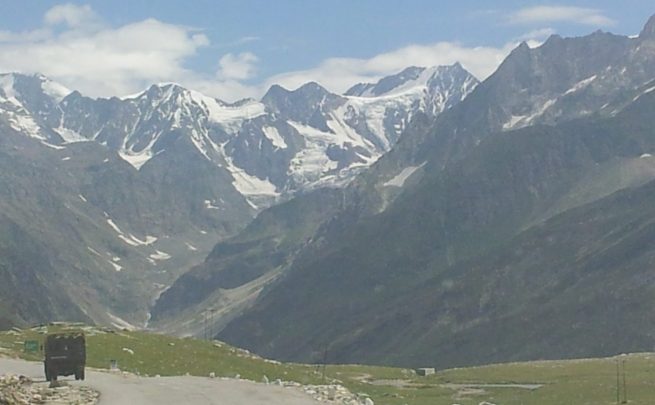

As we made our way up, the landscape changed from dense forest to barren, snow-covered mountains but were equally incredible. Although by now, we started feeling a bit cold. The road was not in perfect condition, but the adrenaline added to the adventure of the journey. While most of the roads were sealed, there were unsealed sections as well. BRO (Border Road Organisation) was working hard to fix the road surface with the help of local people.
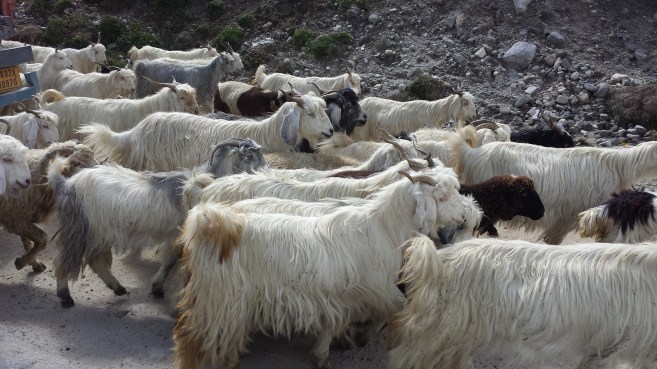
On reaching the Pass, we were delighted to see snow all around. The actual Pass was a flat area, and I did not feel any effect of the high altitude. We saw people travelling by bike towards Ladakh crossing the Pass through to Lahaul and Spiti Valley with a couple of cans of fuel hanging on both sides of the bike. It looked very unsafe, but these people were daring adventurers.
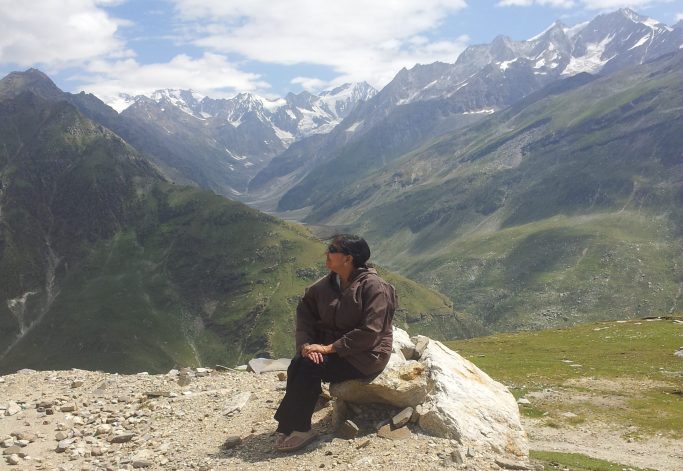
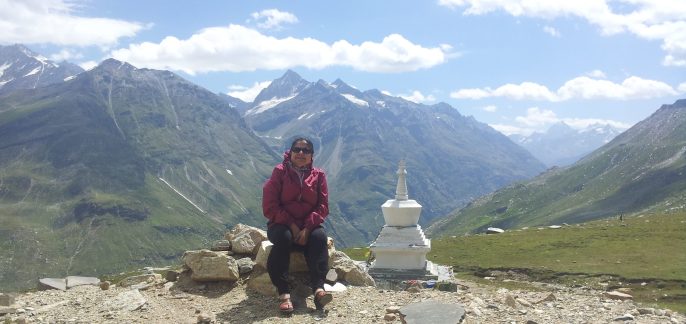
The Pass made me feel absolute peace. We just sat there and meditated. After staying half an hour on the Pass, we decided to leave. It was freezing, and Suvra was feeling a bit sick with a headache. The wind was strong as well. The journey to the Pass was breathtaking and was more beautiful, adventurous and eventful than reaching it.
We stopped at a place called Marhi for a break. Initially, we just wanted to have a cup of tea but saw they were making fresh Rotis (Indian flat, round bread) and immediately felt the craving. Suvra agreed. We enjoyed the hot-off-the-pan, freshly made Rotis with potato curry while watching people from Tibet selling shawls and other woolen products. Collecting souvenirs is my favourite habit so I could not resist buying a nice shawl from them.
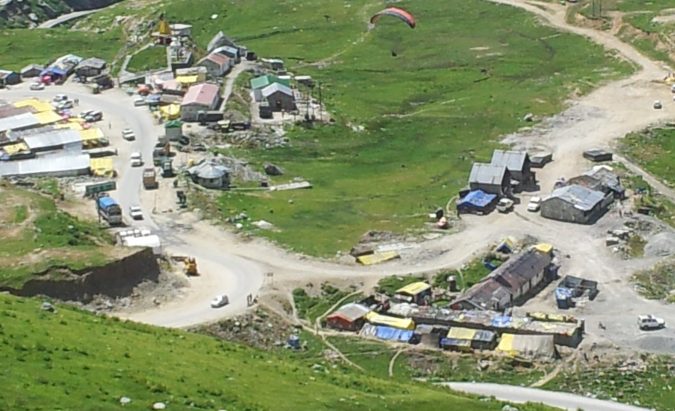

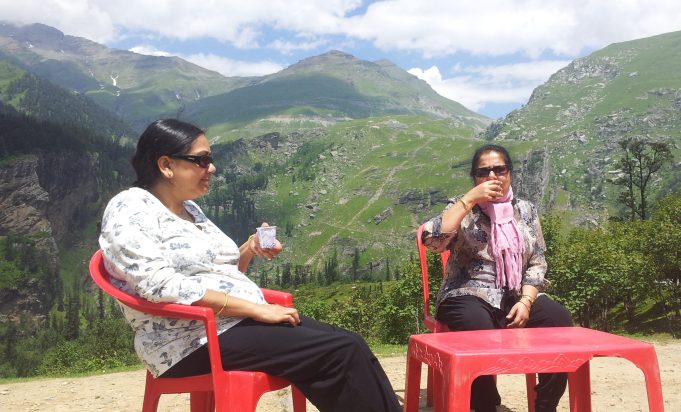
After we had a break in Marhi, we did not really need another break, but I did not forget the lone teashop and had to go back there. While enjoying the coffee and soaking up this magical place, we started talking to the owner. He was so humble. “I sell noodles to the road workers and the locals.” Being a curious person, I asked him “Do you carry everything back and forth every day?”. He replied, “No, I leave everything wrapped in plastic. My village is very far from here. I start very early in the morning and travel every day from my village”. His hardship was proof of the hard-yakka life of the locals.

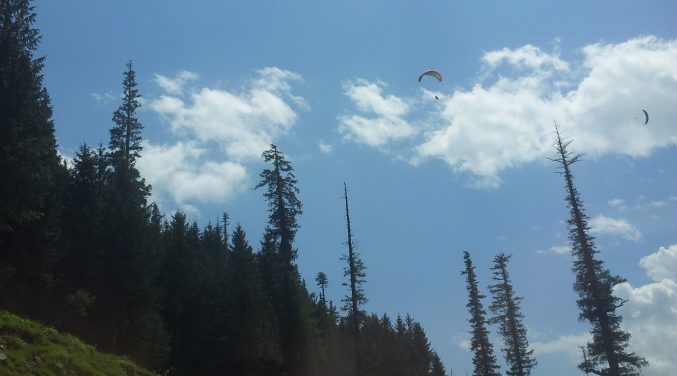
We saw people paragliding and parasailing as we were coming down. Anil asked us whether we want to experience any of these sports in Solang Valley, a resort town 14 km from Manali. I thought we could have a go at Quad Biking.
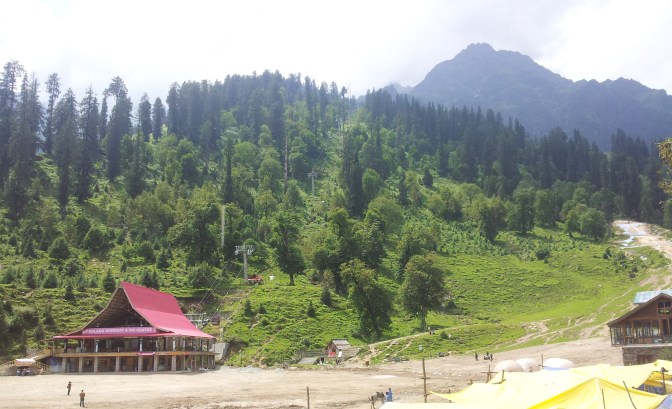
In the beginning, we did not like when the people mobbed us to ride on the Off-road Quad Bike. Suvra was very scared as the conditions of the roads were uneven, but I was determined to have a go. She joined me. They were asking a high price, but Suvra managed a reasonable price. The owner of the quad bike encouraged us to drive, and I was ready. Suvra said, “drop me off then” if I drove. Hahaha! The driver said that he would be in control, but she was not convinced. Anyway, I started driving and drove to some distance. Suvra was panicking so much, that I had to come off the wheel and the driver took over. After a rough but enjoyable ride, Suvra asked the driver to take us to the bank of the Beas River.

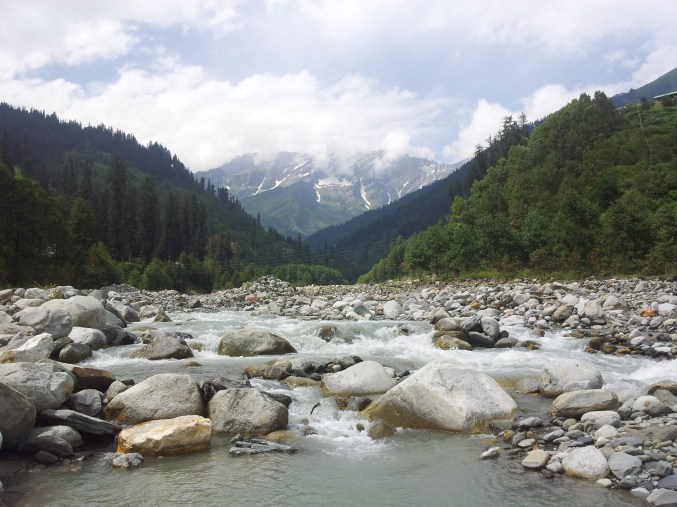
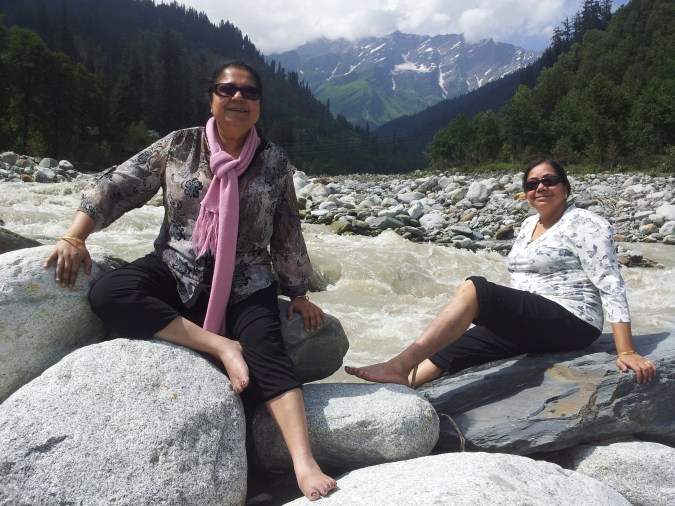
I was glad that she asked. The driver took us through the very rough and narrow road through the residential and Government area and parked the Quad Bike at a gorgeous place. He stopped right on the bank, and we could not believe our eyes. The site looked like The River Beas was flowing right towards us, originating from the mountains. It was a view of a lifetime! The sound of the flowing river was like music to our ears. He helped us go inside the water through the boulders and small pebbles, barefoot. We sat on the stones and forgot ourselves, feeling total bliss. The place was serene and untouched, and best of all, there were no other people. We dipped our feet and sat there for sometime, soaking into the incomparable peace the Himalayas kindly gifted to us. We did not want to go back. The water was rising, and the driver told us we needed to go back to the shore. Surprisingly, within half an hour, the water rose from the feet to halfway up to the knees. An experience I won’t and don’t want to ever forget.
Vashist Village

On the way back, we visited another hot water spring with a temple, Vashist. In mythology, the sage Vashist was saddened by the death of his children by another sage Vishwamitra. Grieving, he tried to kill himself by drowning into the River Beas. River Beas refused to kill him and returned him to the bank in this place. Then the sage started meditating and promised himself to start a new life. The Vashist temple, thought to have been built by the sage himself, exists even today and is believed to be more than 4000 years old.
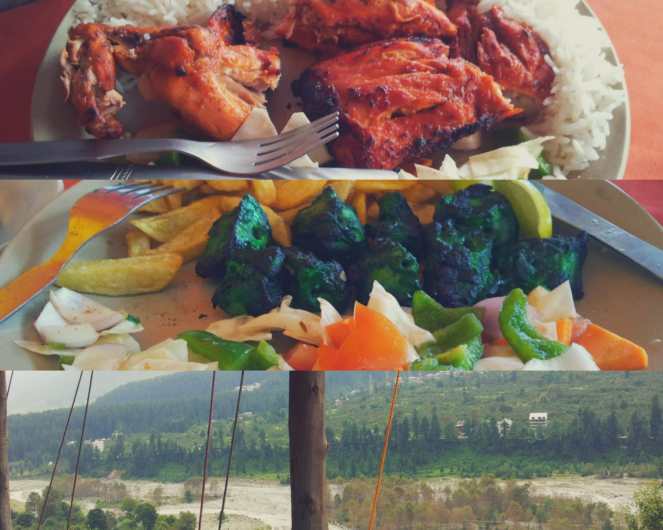
Vashist village is 6 km from Manali on the banks of the Beas River opposite Old Manali. The area is a green patch on a steep hill, hanging at the base on a cliff. It is protected by its challenging landscapes. It was an uphill walk for around 500 meters to the temple. Already tired from a long trip to Rohtang, we slowly walked up. The temple was cute and built in a traditional style with lots of intricate wood carvings. The water was too hot to take a bath, and there was no facility like we found in Manikaran to mix the water. To our surprise, we noticed a woman from Europe was the only one bathing in hot water. We saw lots of foreigners in this area. This hot spring is believed to have medicinal value like the spring in Manikaran. So we just sprinkled water on us and washed our faces. We had a late lunch with tandoori chicken, haravara chicken, rice and salad at a nice restaurant, offering a mind-blowing view of the Beas River and the Old Manali.
We noticed that most foreign tourists preferred staying here or in Old Manali rather than in Manali town. Cute cafes and dining places along the main street made the area very popular to foreigners and backpackers.
Hadimba Temple
We already had a long day filled with activities. This was our last day in Manali, and we did not wish to leave without paying our homage to the famous Hadimba Devi temple in Manali. Hadimba Devi Temple is a four-storey wooden temple with a similar facade to the Tripura Sundari Temple in Naggar. The temple was located in the middle of a dense forest called Van Vihar and dedicated to Goddess Hadimba. The beautiful paved path winding uphill took us through a cedar forest to the temple. The Hadimba Devi Temple has intricately carved wooden doors and a 24 meters tall wooden tower. There is a Gtokyoch temple before you enter Hadimba Devi temple. The whole complex was surrounded by the cedar trees and was a very peaceful place. We sat down to relax and wind-down after a long day trip.
Hadimba Devi is worshipped in this area. Her story is derived from Mahabharata – a Hindu epic. As in Mahabharata, Hadimb Rakshasa (demon) ruled some mountains in this part of the Himalayas. Hadimba was his sister. The Pandavas and their mother Kunti came to the land of Hadimb Rakshash after escaping from the wax house saga during their exile.

Bhima, one of the brothers, fell in love with Hadimba and wanted to marry her. Bhima had to kill Hadimb to marry Hadimba. Even though Bhima married Hadimba, he was not allowed to stay with her during night time to protect his brothers and mother. Both lived in the area for about one year. Hadimba gave birth to a son, ‘Ghototkach’. Bhima left this place after the birth, but Hadimba ruled the country till the time Ghototkach was able to take over. She then withdrew to the hills to meditate at Dhungri. Local legends behind the construction of the temples always fascinate me.
 callofthefar.com