
Continued from Call of the Mountains – Enchanting Himachal Pradesh Part 2
Magical Parvati Valley:
Once upon a time, Lord Shiva and his wife Parvati came to visit this beautiful mountain region! While wandering around, Parvati lost her earring (A gem or ‘Mani’ in Indian) in the river. A mythological serpent deity called Seshnag found the gem (Mani) and took it to the depths. Parvati was worried about losing her earring and asked Lord Shiva to retrieve it for her. Lord Shiva ordered his followers to find it, but they failed. Lord Shiva became angry and started his cosmic dance (Tandava Nritya). The universe started trembling. Realising Lord Shiva’s anger from deep within, Seshnag hissed, and the flow of boiling water, like a hot spring, rose to the surface. Seshnag threw the earring into the water. Parvati became happy and content. Thus, the name Manikaran was derived, and people believe that the boiling water emanating from the hissing Seshnag is very auspicious and good for health.
Visiting Manikaran was always on my bucket list. This place is tucked in the stunning Parvati Valley. Apart from its spectacular landscape, this area is also famous for its hot springs and is a pilgrimage site for both Hindus and Sikhs.
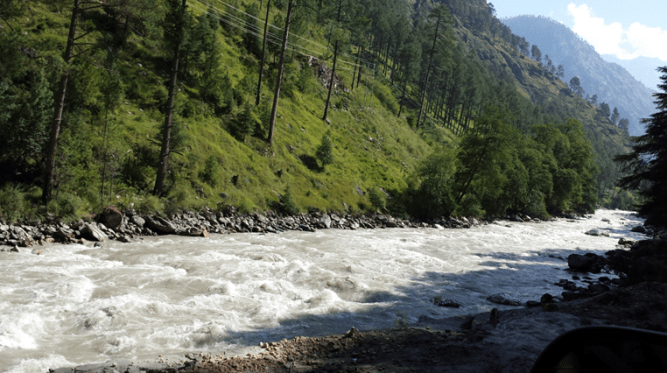
The road to Manikaran was spectacular, with breathtaking scenery. The River Parvati was flowing side by side with us on the way. We were fortunate to enjoy the picture-perfect landscape, with mountains and a lush green valley in the background, as the Parvati River hurled down the cliffs at an incredible pace. The striking feature was the sound of flowing water, as the valley was very narrow, with mountains rising steeply on both sides, keeping the music contained.
We stopped our car at a few spots to take photos of the beautiful valley, and our cameras kept clicking away. Two local ladies happily posed with us. They were waiting for the bus there to go to a doctor in Kullu. They told us that the whole day is spent going back and forth to do this journey. We gave them company for some time, asking about their lifestyle. The local people are sincere and always smile. We offered the ladies some money for their time, but they refused straight away. We observed that people in Himachal have lots of self-respect. Even a schoolboy refused the chocolate we offered him.

We noticed lots of foreigners in the area. Anil informed, “People from Israel live in the few villages in the area. Parvati Valley is a popular destination of foreign backpackers and hippies as well”.
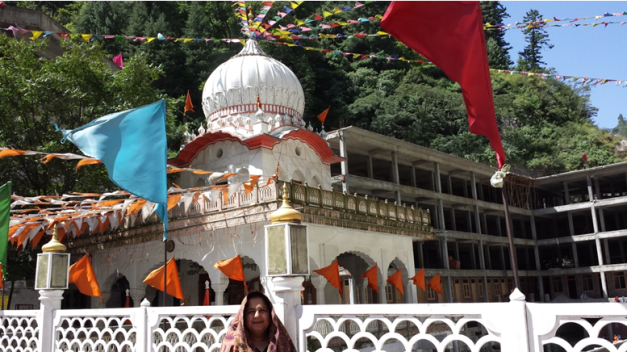
Guru Nanak once visited Manikaran with Bhai Mardana (one of his disciples). Mardana was hungry, and the villagers donated flour to make Rotis (round Indian bread). As they didn’t have the fire to cook, Guru Nanak ordered Mardana to lift a stone, and a hot spring was found. Mardana put the round bread in the hot spring to cook, but to his despair, the bread sank. They prayed to God, promising that if the bread floated back, they would donate one in God’s name. The bread floated back fully baked after the prayer. The Sikhs believe that anyone who gives in the name of God gets it back.
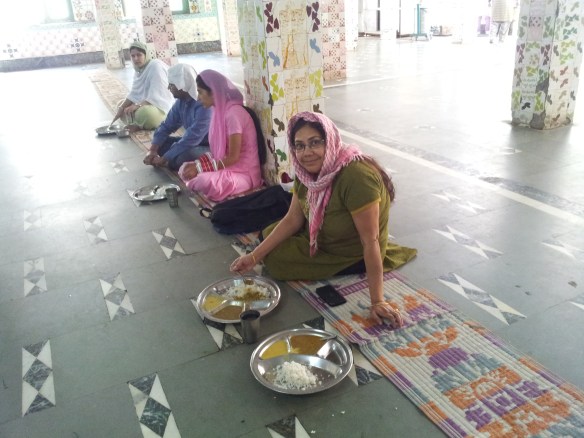
We were privileged to experience the feeling of ‘ONENESS’ as Sikhs offer food to everyone in the Langar, or community kitchen, of the Gurdwara, inspired by the value of giving back. People of all religions are welcome, and they sit together to have a free meal. We were privileged to be seated with people from different backgrounds to experience the feeling of ‘ONENESS’ in the Langar. It was pleasing to see people from other countries sitting cross-legged on the carpeted floor and enjoying the vegetarian lunch.
Manikaran is known for its hot, boiling sulphur springs, and its healing power is valued by millions of people. The popular belief is that hot springs can cure skin infections and ease the inflammation caused by gout. We thoroughly enjoyed our hot spring bath and came out rejuvenated. The ladies there helped us find a large plastic container to mix tap water for bathing, as the water in the spring was boiling hot and we couldn’t dip straight away.
I didn’t want to miss the chance to visit the Shiva-Parvati temple next to the Gurdwara. The temple is simply striking against the backdrop of the mountain. The statues of Shiva and Parvati inside the temple were beautiful as well.
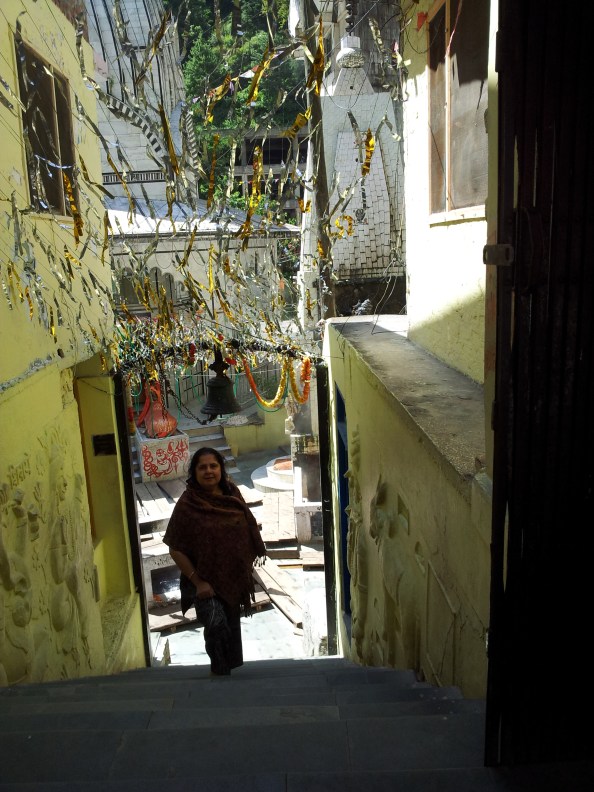
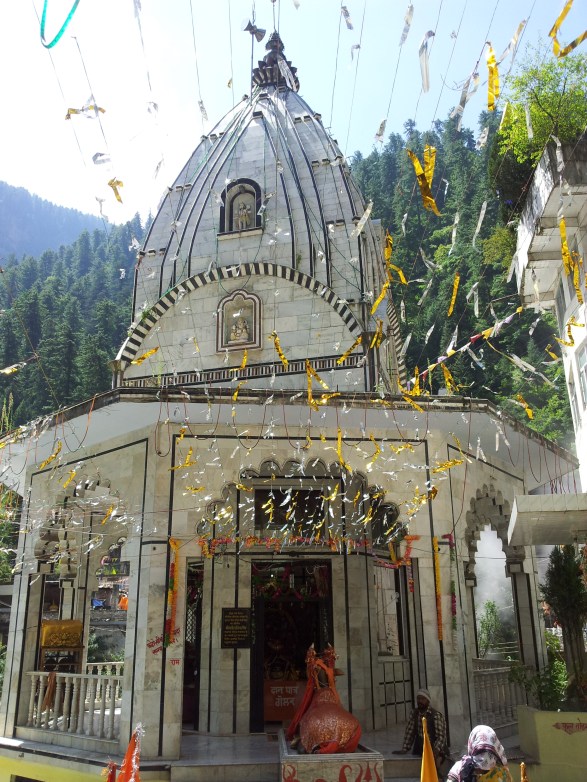
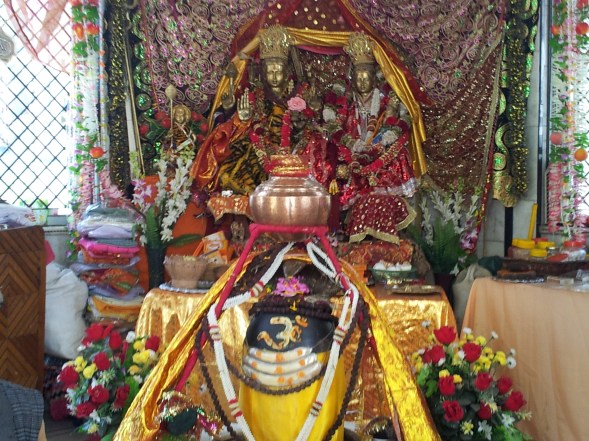
Next to the Shiva-Parvati temple, I saw a Sikh gentleman putting a sack full of rice into the hot spring. The gentleman told me that they cook the rice here. I loved watching the rice being cooked in the hot spring. Another memorable experience we were lucky to witness!

Impressive architecture in Naggar Castle
Naggar Castle is a magnificent historic building located in Naggar Town, amid the incredible hills. Naggar was the former capital of Kullu. Naggar Castle Palace was built in AD 1460 in an impressive blend of European and Himalayan architectural styles. We were impressed by the way the castle’s interiors are graced with fireplaces, fitting staircases, and magnificent stone and woodwork. Three small shrines in the premises hold immense religious importance. A weeping willow was a perfect match for the cute yard inside.
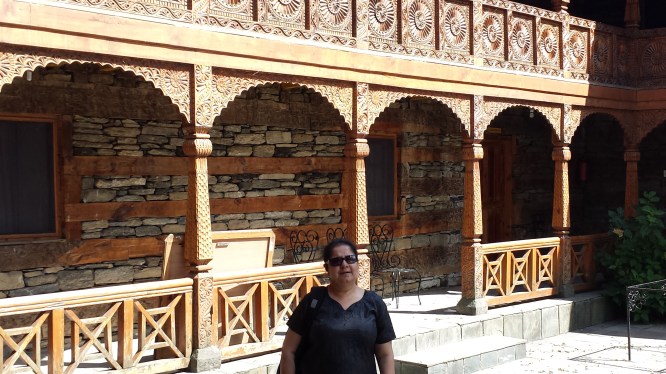
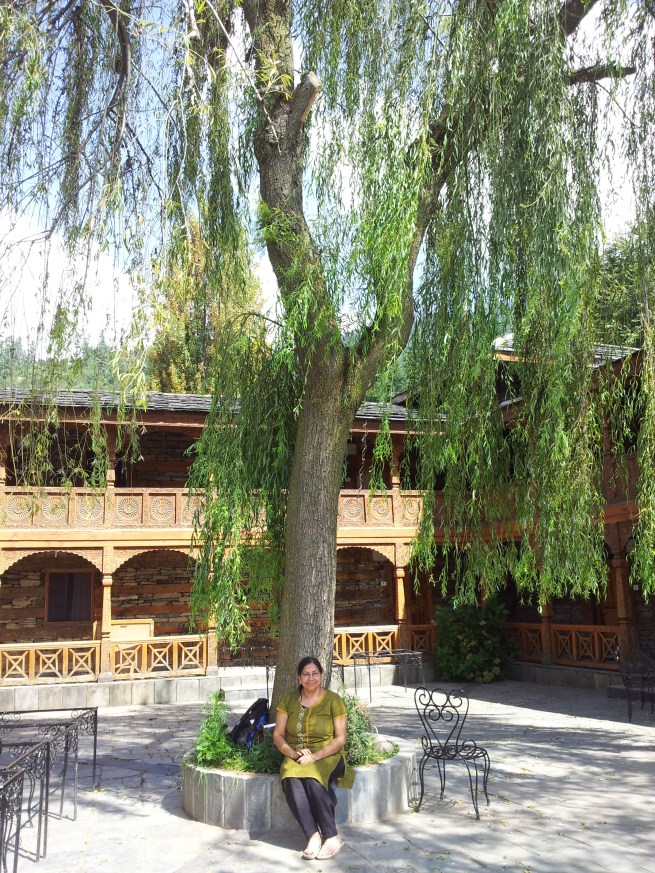
Located on the first floor, the restaurant served us grilled trout with sautéed vegetables and salads for me and mouth-watering Himachal fried rice with shahi paneer (ricotta cheese) for Suvra. If you visit Naggar Castle, you must try these dishes. I have never seen fried rice that looked and tasted so good.
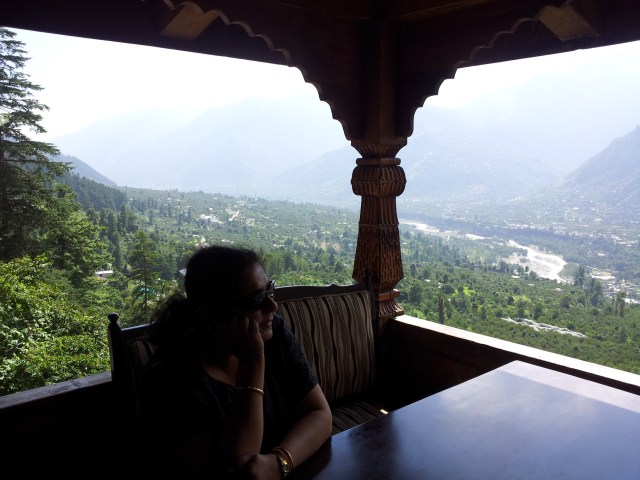

Roerich Art Gallery
The late Professor Nicholas Roerich, a reputed artist, chose Naggar as his home when he came to India in 1929. His house has now been converted into an art gallery. If you like paintings, don’t miss the chance to visit the gallery, which houses numerous rare paintings and other art. The unique works were based on the Himalayas and life in Kullu. The walk through the place gave us so much peace. Unfortunately, the main Art Gallery was getting renovated and was closed. I tried to take a quick peek through the half-open door of the main gallery and saw a couple of beautiful paintings.
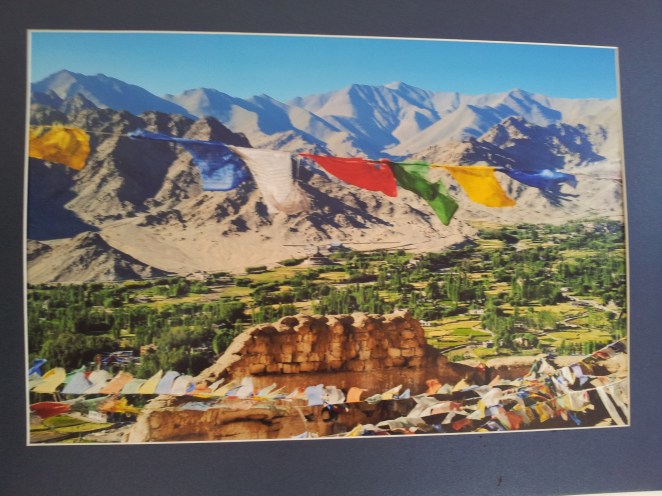
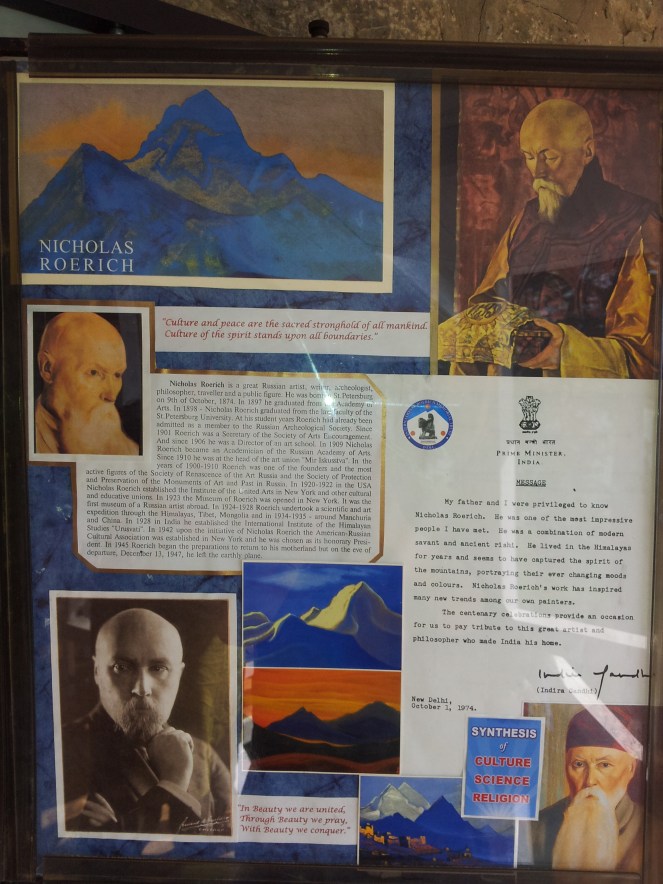
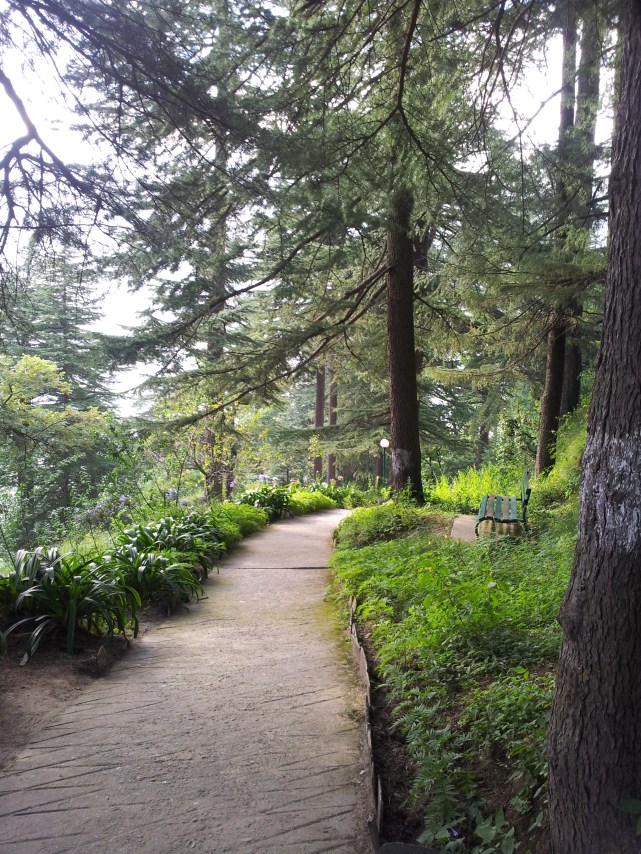
The garden was gorgeous. The uphill path to the replica museum was very satisfying to see, with beautiful Himalayan flowers and vegetation on both sides of the track! After 5 minutes inside the replica exhibition hall, the lights lost power, and we had to come back down.
The ambience and the views were definitely worth the trip!
Exploring the local area:
We saw a pagoda-style temple, the Tripura Sundari temple, on the way back from the Nicholas Roerich gallery. It was made of cedar wood and looked gorgeous from the top, with its 3-layered roofs.
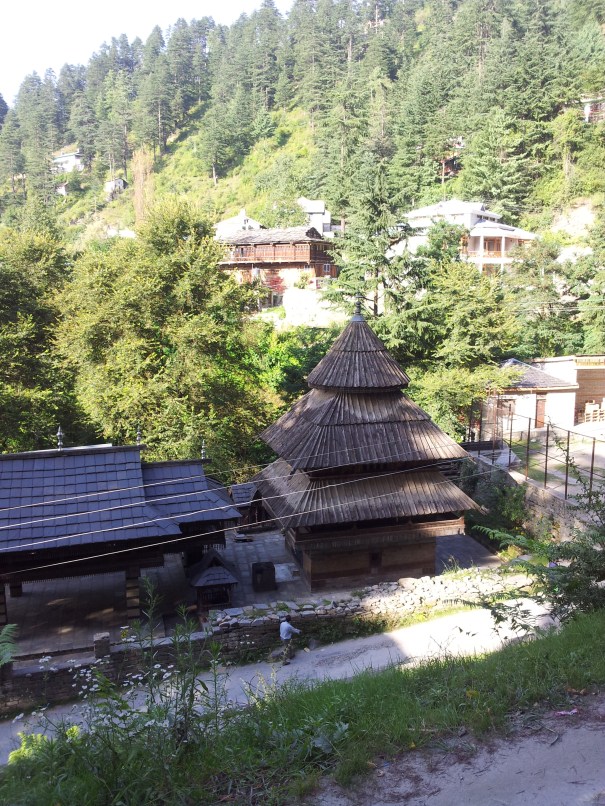
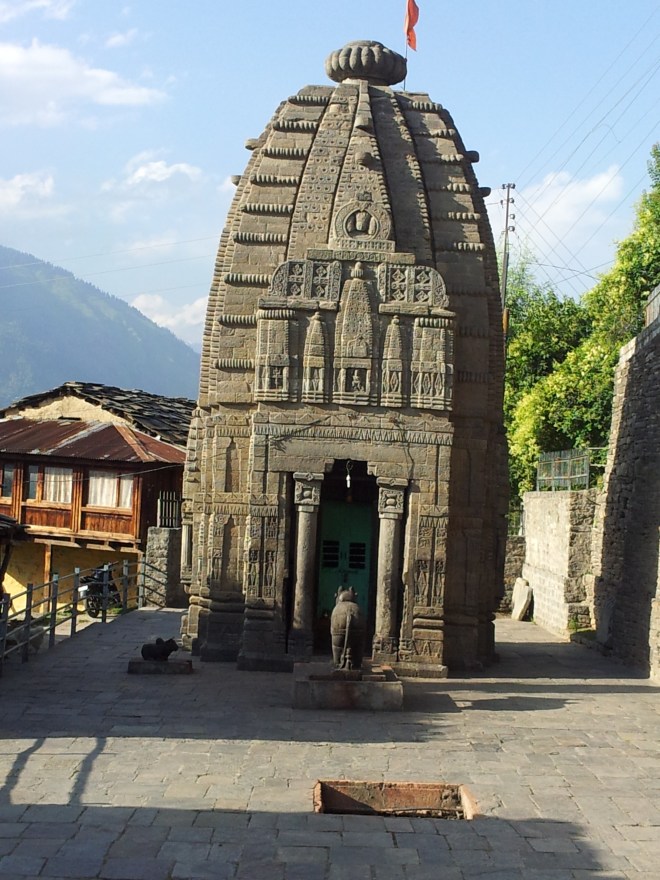
We didn’t get to visit this stunning temple because Suvra was in the mood to explore the area and wanted to find the Gauri Shankar temple. Unfortunately, Anil did not know the temple’s location. So, Suvra kept asking locals. Eventually, we found the way and went up, climbing a steep, unsealed road and found Gauri Shankar Temple with beautiful sculptures. The temple was closed, so we did not get to see inside.
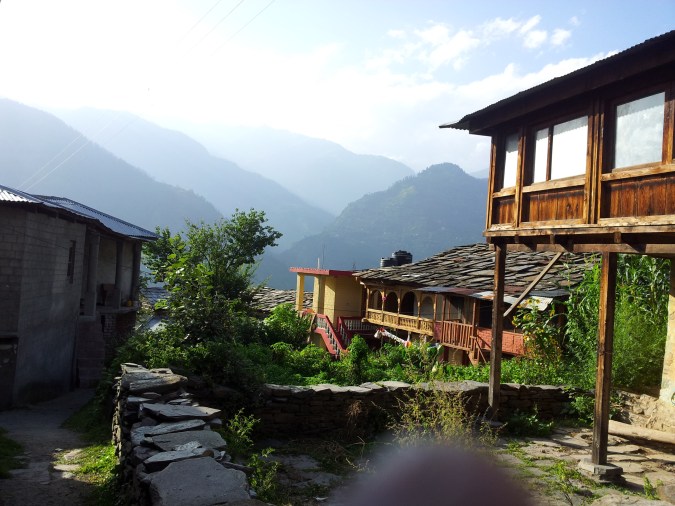
Suvra, being in the mood for more adventure, wanted to find a creek she had read about somewhere. We kept asking the locals, and we saw these little boys playing around the temple. Suvra asked them, “Can you show us the way to a creek?” I don’t know what they understood, but they took us through the Village, along a narrow pathway, past cows and people’s houses, through their yards, and led us towards a stream that looked more like a drain, which they thought was a creek. Hahaha! I teased Suvra for the “great adventure”, but in hindsight, it was insightful to see how the people in the area lived. That was a learning experience.
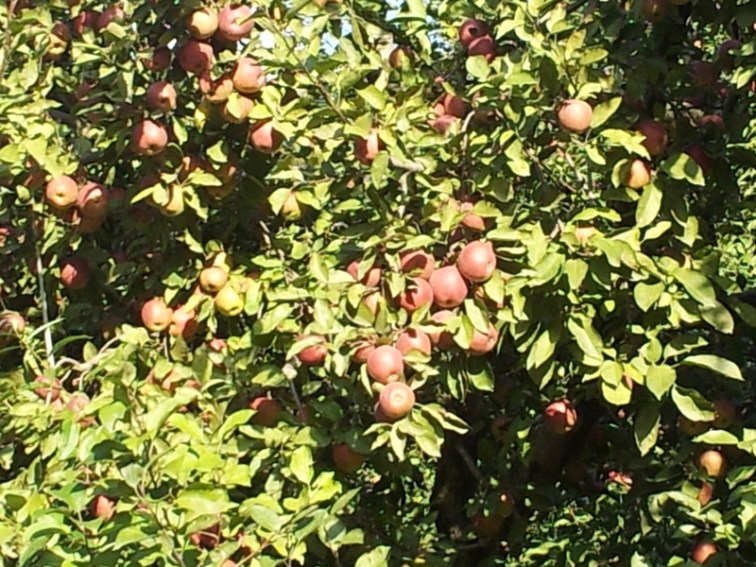
We passed many fruit orchards on the way and were very excited to discover red and green apples hanging from the roadside, but no one was stealing them. We stopped outside a farm to watch a live demonstration of how they pick the fruit and load it into boxes to send all around India. We were so thrilled to see apples in the open for the first time; we couldn’t help but stop and take photos a few times.
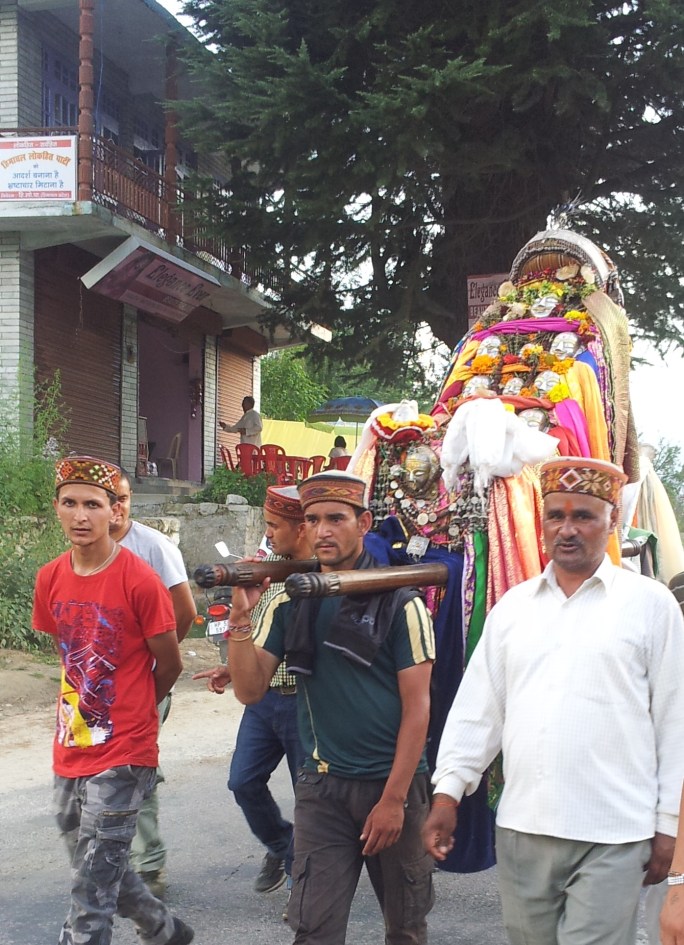
We were fortunate to witness a procession of the Kullu God, Srishti Narayana, in a Palanquin (a large box with horizontal handles on both sides) on the way. The devotees were marching, beating drums, blowing trumpets and transporting the God to Kullu, where the Gods from all parts of Himachal Pradesh assemble in Kullu Maidaan (Ground) during Dassera. It was our privilege to learn and experience the local religious culture.
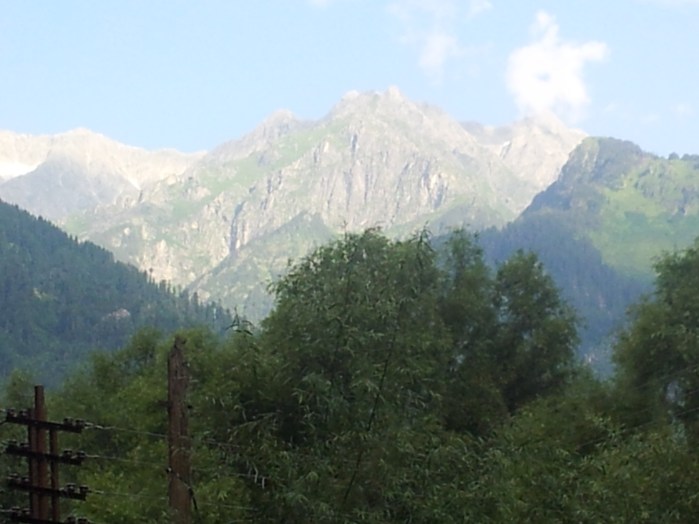
Picturesque Manali: Gateway to the adventurers
In the evening, we reached Manali. The town was congested with many cars. We went past our hotel to check the Manali Mall first. Some part of the Mall was under construction and very busy. Anil led the way to a sweet/snack shop for a tea break in a lane way off the Mall.
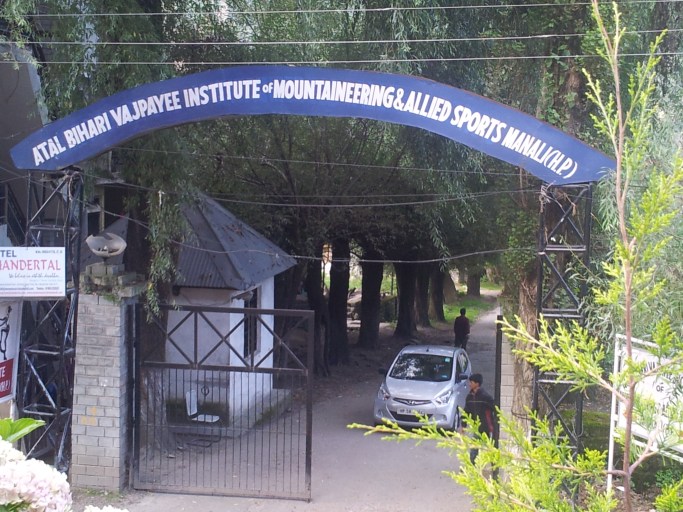
There were lots of clothing and souvenir shops. I went to buy an altitude sickness tablet from a local chemist as I had high blood pressure. We were going to Rohtang Pass the next day. The chemist did not sell me any medicine, saying, ‘You don’t need it.’ I insisted on buying, and he eventually told me, ‘If I sell, I make money but believe me you don’t need it. I am a heart patient myself, and I don’t need.’ I had no other choice but to believe him, as he was a local and knew about altitude sickness more than I did. We spent a couple of hours checking the shops and enjoying the atmosphere. Anil was in a bit of a hurry, ‘Can I drop you to the hotel?’ He would stay in his friend’s house in Manali and couldn’t wait.
To be continued…..
Apology for the poor photo quality
Photos: HP Tourism, Self and Suvra Mitra
 callofthefar.com