
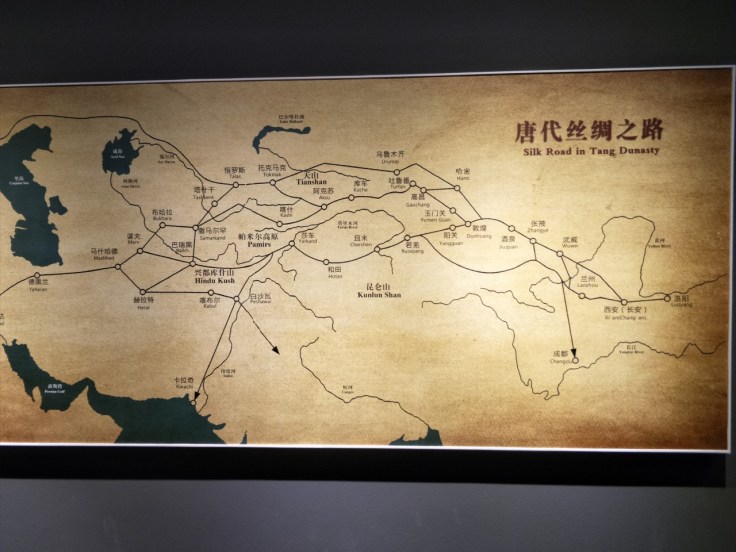
The history of the Ancient trade route Silk Road is dated back to the Western Han Dynasty (206 BC–220) and started from the old capital Luoyang (back then).
Chinese traders used to trade their products and passed through many countries on the way before reaching Europe. The route was not just one single route but a network of sea and land routes used by the ancient traders. There were lots of stories behind how Silk Road got its name. In Andy’s (our guide in Luoyang) version, ‘The merchants from China were proud of producing beautiful silks. They wore silk costumes to show off to the Europeans while on these business trips. They looked colourful and luxurious. The Europeans were fascinated by its vibrant colours and immensely pleased with the smoothness of the material. They requested the Chinese merchants to bring Silk instead when they came to trade along these routes. Thus Silk Road got its name.’
I heard about Silk Road from my childhood and always wanted to travel along the route. I imagined myself in the caravan that travelling tirelessly through the rugged lands and the deserts. I was thrilled to enjoy the experience of going along the path fulfilling my childhood dream, although not quite the way I used to imagine.
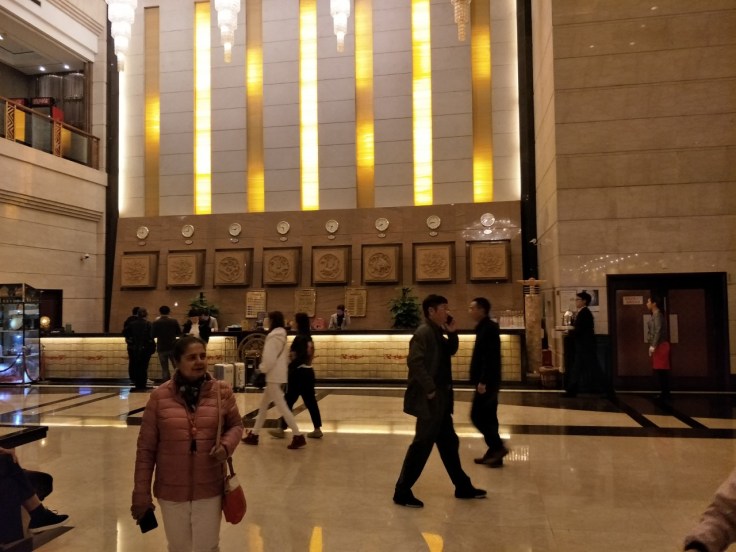
The hotels in China were of a very high standard. Creative ideas in either beautiful paintings or engraved artwork or statues decorated the entrance and the foyer in all the hotels we stayed at. The rooms were big and offered lots of valuable items for our use.
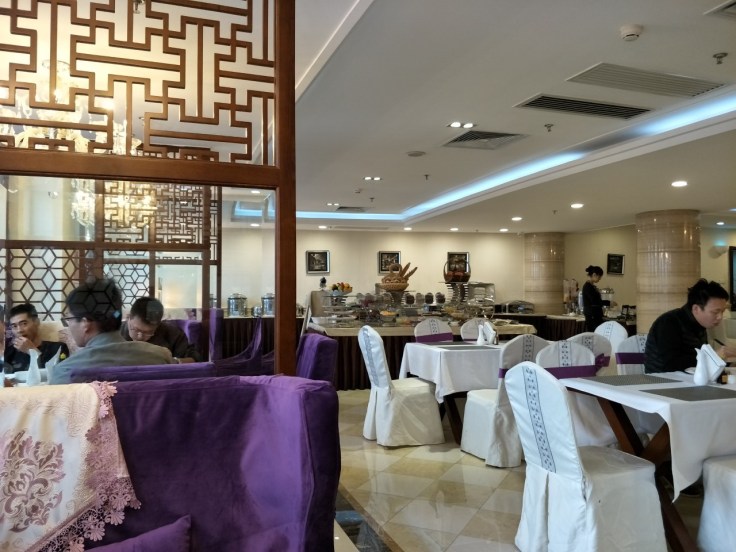
After a huge breakfast, we started our tour at 9:30 am with Andy. He was very courteous, right on time and waiting for us and seemed very well known in the hotel.
People in Luoyang love their peony flowers, and they call Luoyang “Capital of Peony.” They regard peony as the “finest flower under the heaven.” Peony flower is world-renowned for its rare beauty. Exhibiting everywhere in Luoyang, it was not surprising to find the name ‘Peony’ with most of the prominent places in Luoyang.
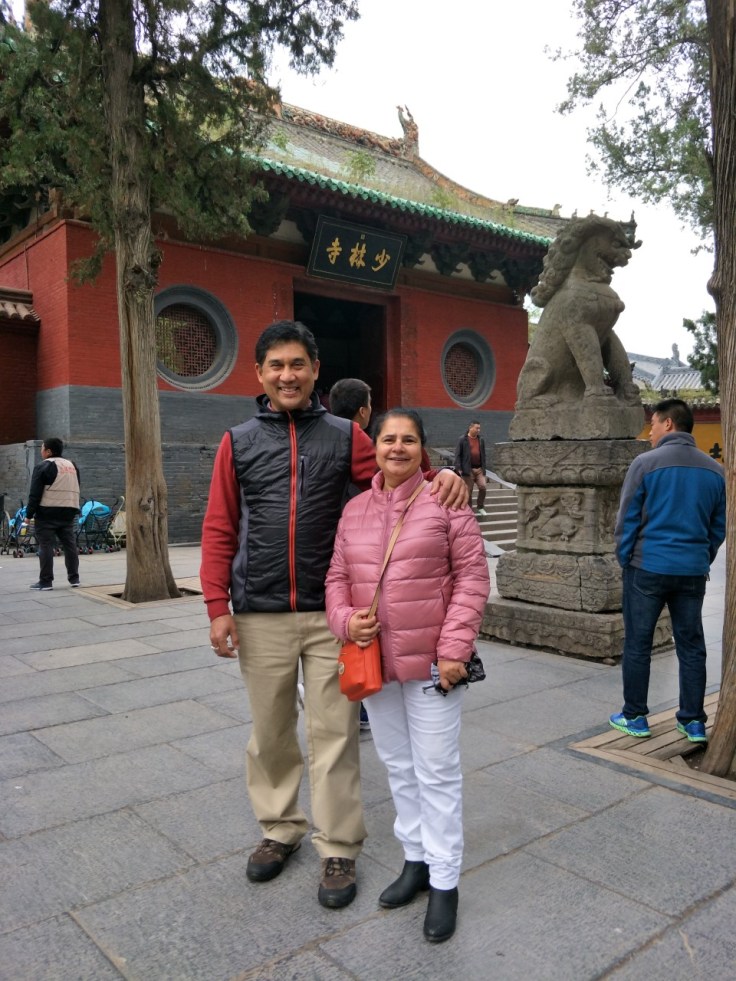
We were excited to visit Shaolin Temple as we heard so much about the Kung Fu training. Arpan, who practised Karate at a younger age, was very keen. So was I! This nostalgia came from a movie we watched long ago called ’36th Chambers of Shaolin’, which left us spellbound by how the disciples did their training. The Temple is famous for the culture of Chinese Zen Buddhism and the Shaolin Martial Arts.
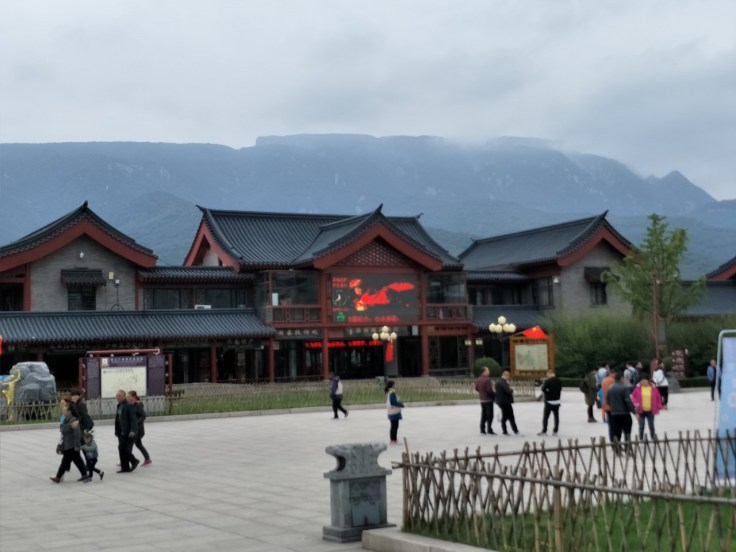
The way to Shaolin Temple was not very flash. The scenery got better towards the end, as the car was climbing the mountains. Shaolin Temple is a Unesco world heritage site in Song Mountain, Dengfeng City, in Henan Province. The name ‘Shaolin’ arrived from Shaoshi Mount as the Temple sits there and hides in the thick forest (called as Lin in Chinese). The Temple is nestled in a quaint valley at the backdrop of the majestic mountains.
Our visit was after the National Holidays so even though there were lots of people; it didn’t look overcrowded. The temple compound was vast and serene, and very peaceful. It was very relaxing walking by the road to the temples.
We visited all the temples and Hall of the Heavenly Kings, Mahavira Hall, and Dharma Cave, each filled with their exciting past. Andy was patiently detailing the history behind all these temples. Some of the temples were old, and some of them had been either restored or built recently.
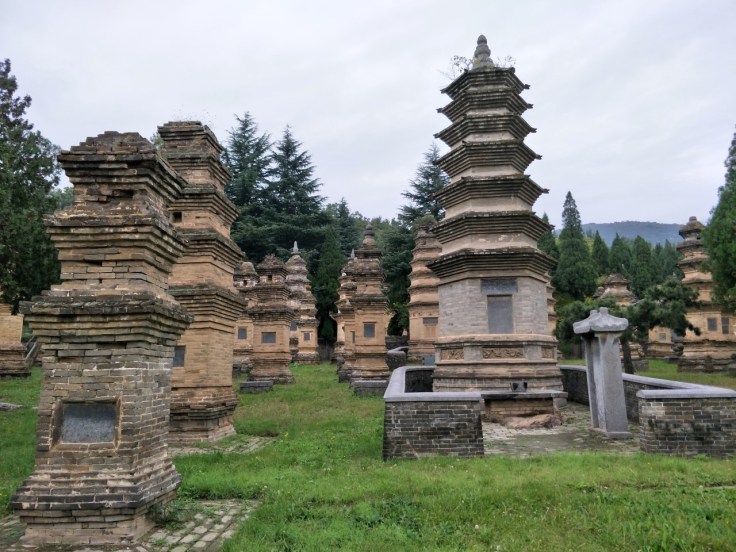
Andy took us to a beautiful resting place of the revered Monks, called Pagoda Forest. Pagoda Forest is another highlight of the Shaolin Temple. In there, instead of lying a stone slab on the top of the coffin, lovely little pagodas were built. We particularly liked the different shapes and sizes of the Pagodas.
Our primary purpose of visiting the Temple was to witness the live Kung Fu training.
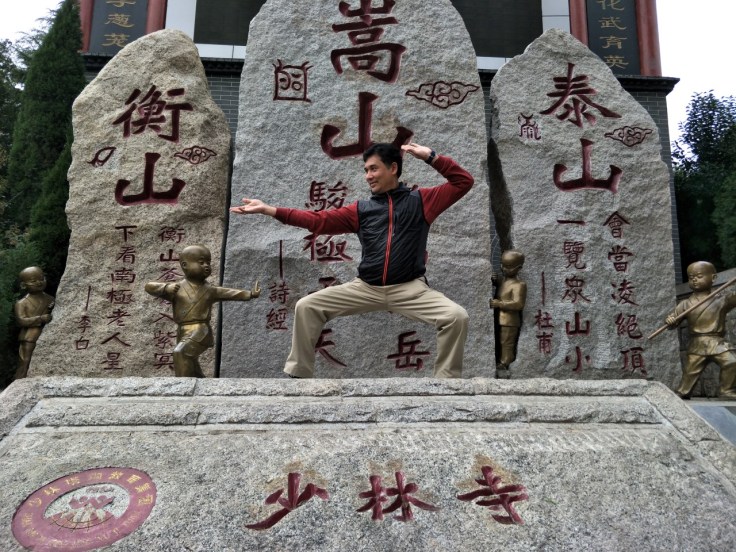
The next Kung Fu show was going to start in 45 minutes. So we had a bit of time exploring the surroundings of the Temple. As we went towards the performance centre, we saw hundreds of students marching towards the training ground. We were keen to watch the students training and enjoyed some Kung Fu techniques on the field while they were trained. The live student training and demonstration fulfilled the purpose of our visit. In Performance Centre, the groups of young Monks presented another great show. They performed different techniques to focus on bringing in the internal and external harmonies into effect. In one performance, the extreme concentration was evident in the look of the performer blowing a balloon by a needle on the other side of the glass wall. The trick was that he had to blow the balloon without breaking the glass. Mind-blowing experience!
After the inspirational and satisfying tour of the Temple, our primary concern was what we would land in our bellies! It was time to eat! We opted for a food chain called Dico’s (like KFC) and had a delicious chicken wrap for late lunch. Food chains were okay, but we would stay on the safe side in the main restaurants and have vegetarian only.
I asked Andy, ‘Could you please write this to help us in a restaurant?’

He prepared the above notes in Mandarin for the restaurants and directed us to a perfect restaurant before dropping us back to the hotel.
‘They prepare the best noodles in town.’ He assured.
It was still hard for them to understand, and the food was not quite what we expected. The serving of our vegetarian noodles was so big and tasteless that we could hardly eat anything.
Oh well, at least we had a wonderful day!
 callofthefar.com
Leave a Comment