
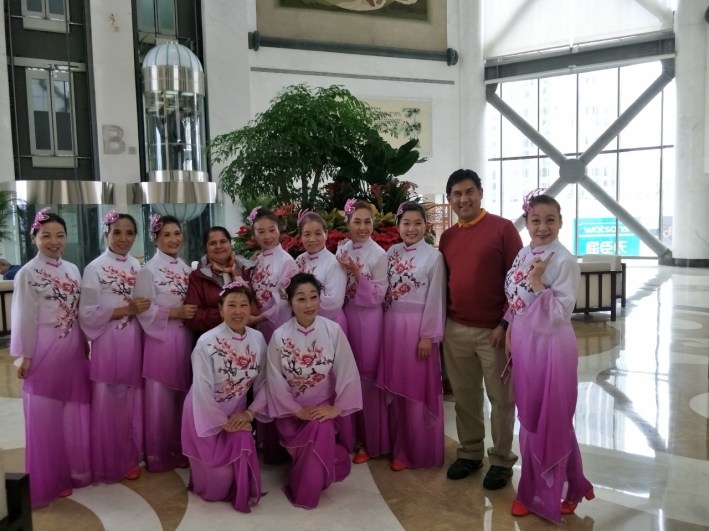
After a sumptuous breakfast in the hotel (with over 50 food items to choose from), we were about to start our day, but then hey, we met a brightly clad ladies dance troop in the foyer. They came out for a photoshoot wearing colourful costumes. Guess what? They came running to me as soon as they saw me and started taking photos with me instead. I found it amusing how they showed me to pose with them. It was an extraordinary experience. Chinese Ladies made me feel special. Arpan couldn’t wait to join in – an excellent start to the day.
Our guide, Tristan, an amiable guy with a very pleasing personality, patiently waiting for us to finish the photoshoot.
Six ring roads surrounded the city. The 6th ring road ran around 20 km from the city centre – wow! – made me wonder about the enormous size of Beijing city. They were building the 7th ring road at the time we visited to cover a more extensive area.
One thing we were concerned about was the smog. We read so much about Beijing’s pollution that Arpan installed an App to check the level every day. Even though it showed the pollution index was relatively high, the continuous rain kept it in check. The sky looked gloomy, but it didn’t hinder our spirit.
Little lush-green gardens on the way exhibiting colourful flowers and plants provided a softer look to the city to otherwise a metropolis with lots of tall buildings.
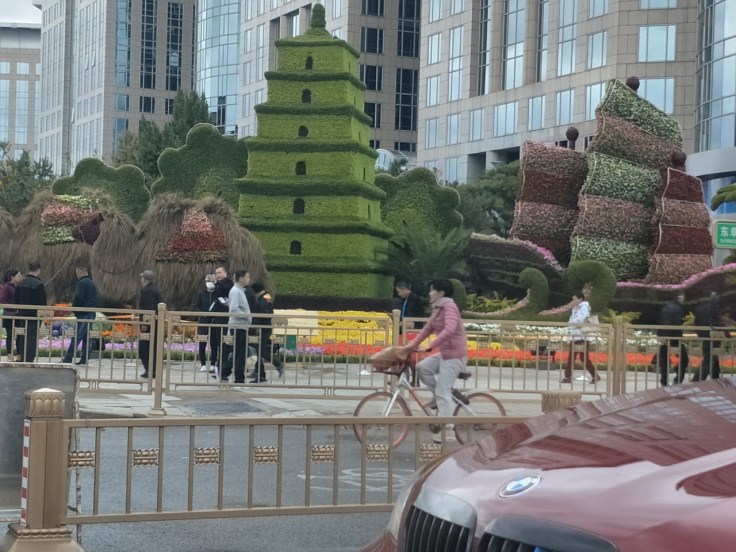
Manicured garden in Beijing
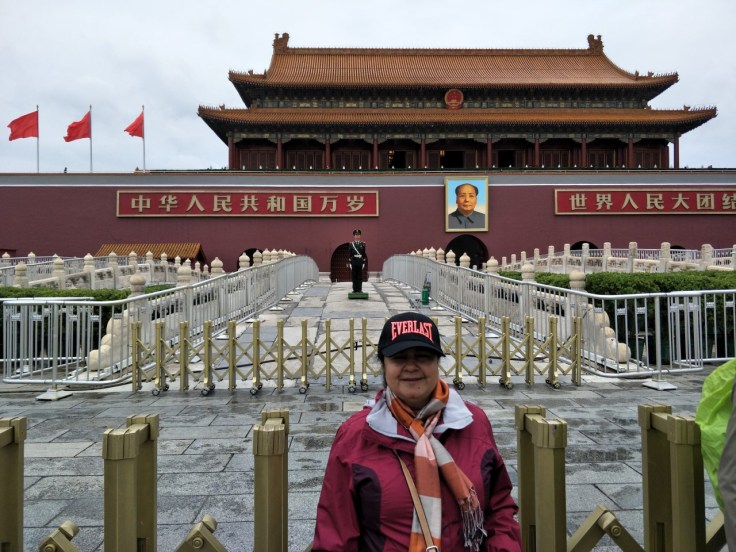
One of my purposes to come to Beijing was to visit Tienanmen Square (meaning the Gateway of Heavenly Place). I could vividly remember June 1989, when the Chinese students confronted the Government in this very place. I remember watching the procession on TV and the convoy of tanks on the Square. One image was framed in my memory forever where a student stood in front of the moving tanks in protest—such a heart-wrenching moment.
How could I not see and feel this place?
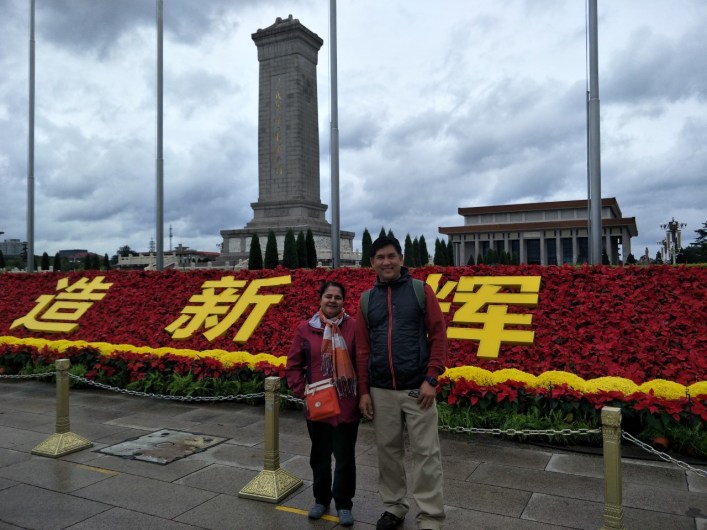
Tienanmen Square is a major tourist attraction now. Besides this historical event, it is an imposing city square and one of the largest in the world, standing 7th, area wise. It displays beautiful coloured flower beds all around. The main feature of this Square is the People’s Hero monuments commemorating those who died for the change and revolution in China. The place has a calligraphic inscription of Mao Zedong quote reads: “The People’s Heroes Live On Forever.”
I tried to work out the exact spot the lone student was standing in this beautiful Square. Tristan was only six years old when it happened and couldn’t give us any insight into what happened in June 1989.
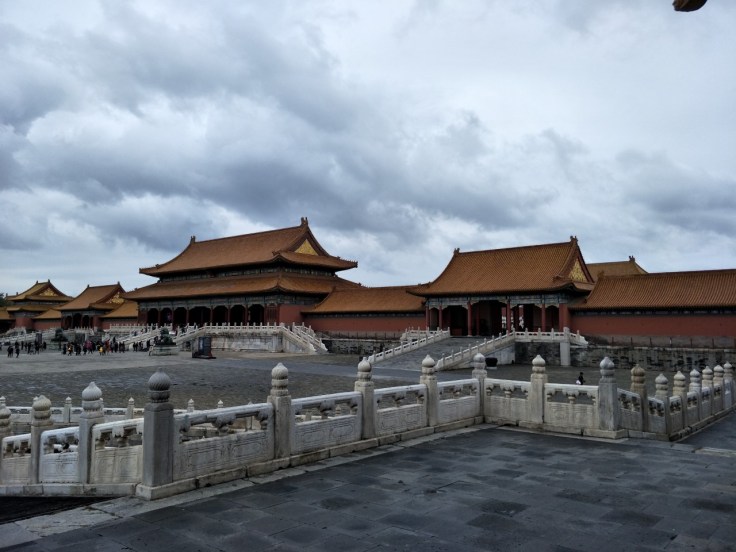
We entered the Forbidden City from the South Gate, which is directly opposite the Square. This place is in the centre of Beijing and open to the public. The site was named Forbidden City because this city was the imperial palace from the Ming (1420) to Qing (1912) Dynasties, and ordinary people were forbidden to enter. Hence the name “Forbidden City” came along. Forbidden City is now used as a Palace Museum and displays many antiques from the Ming to Qing Dynasties.
The area is vast, and the buildings inside are beautiful. It was a long but lovely walk from the South Gate entrance to the North Gate exit glancing at the ancient artefacts through the windows. Passing by its glorious gardens was another highlight and very relaxing amid the long walk. We were tired by the time we finished off the whole palace. It exhibits 9999 rooms filled with ancient artefacts. We stayed there for a few hours, but a history connoisseur could easily spend the entire day there.
The streets of Beijing were spick and span. Who would have thought? About 22 million people call Beijing home! (will be more now) Funnily enough, we couldn’t see many people walking on the road. Six million cars drive around Beijing. It was hilarious to find out that when it came to driving, they were a bit wayward. The city has vast roads with excellent wide lanes, but they drive bizarrely when they turn or cross the paths.
When we passed through the famous Hutong area, Tristan told us the surrounding area was the most expensive for buying a house there.
“The price of real estate is very high in the central city. We have to earn a lot of money to stay in the town, even in a tiny flat.”
He pointed out to the Bell and Drum Towers. Chinese people used the Bell and the drum to tell the time, ‘a morning bell to start the day and a dusk drum to finish work and time to go home.’ Great idea!
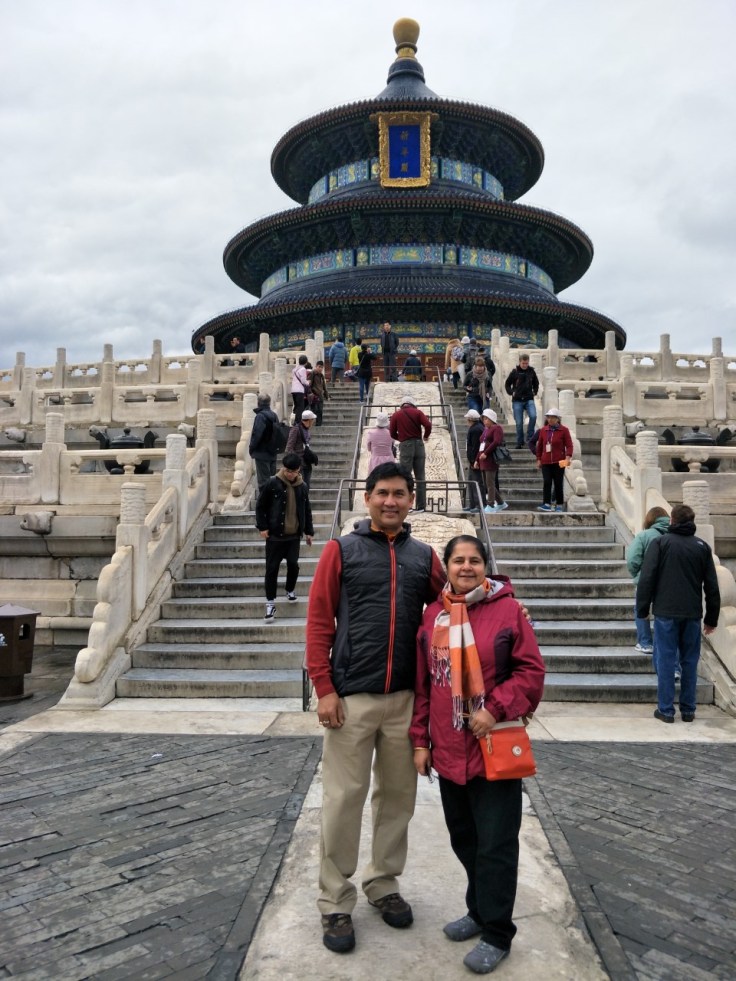
Temple of Heaven is the symbol of Beijing now. The emperors used to pray for harvest a long time ago in this religious building. The Temple of Heaven is acknowledged for its detailed plan, distinctive structure, and glorious decoration. The building reminded me of Peace Pagoda as the most representative example of Chinese ritual architecture. We walked around the main Temple and figuring out the old and new Beijing area’s distinct look.
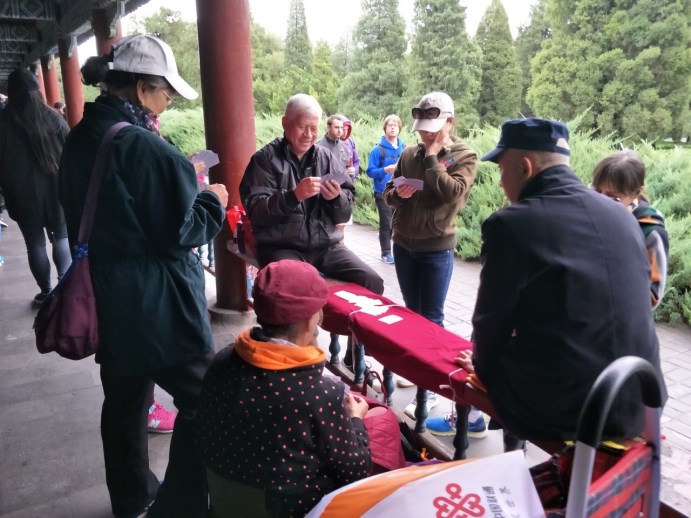
The Park surrounding the Temple was very peaceful and used as a rendezvous area by the locals to play cards, chess and mingle.
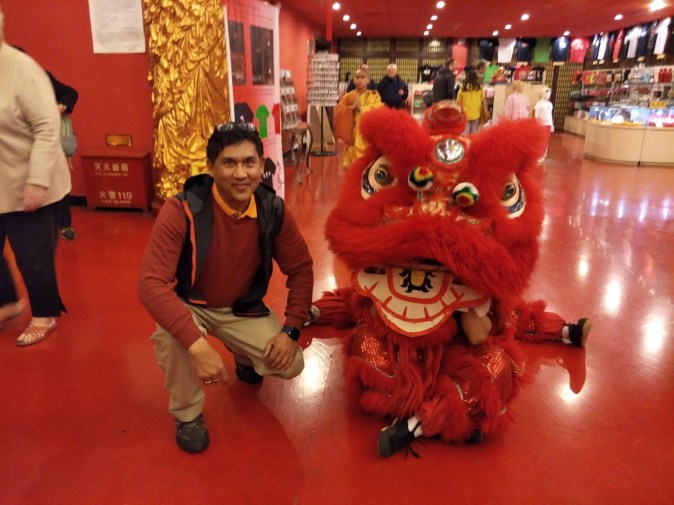
The day’s highlight was watching the Kung Fu show called ‘Legend of Kung Fu’ in the Red Theatre in Beijing. This show was a visual delight, a great indulgence from the dance composition to the entire production, not to mention the fantastic special effects. The performers, young and old, were very energetic, agile and exceptional. All the Kung Fu actions were just ‘Wow’! The show went for an hour and a bit and thoroughly entertained us. It was an unforgettable experience. We highly recommend ‘Legend of Kung Fu’ performance for the people visiting Beijing.
Watching Tai Chi practice by the locals in the open foyer outside the hotel was a peaceful and perfect way to unwind after our hectic day.
 callofthefar.com
Leave a Comment